Many homeowners assume that a larger ceiling fan is always better for cooling a room, but this is a common misconception that can lead to inefficient airflow and visual clutter. A properly sized fan is about finding the right balance between the room’s square footage and the blade span of the unit. When a fan is too small, it fails to circulate air effectively throughout the space, leaving corners stagnant. Conversely, an oversized fan can create an overwhelming visual presence and, in some cases, cause an uncomfortable wind-chill effect that feels more like a gale than a gentle breeze.
This Ceiling Fan Size Guide helps you navigate the technical specifications of blade span and motor performance to ensure your living space remains comfortable year-round. By focusing on the relationship between room dimensions and fan diameter, you can avoid common installation mistakes and ensure your investment provides the intended cooling or heat-destratification benefits. Whether you are outfitting a cozy bedroom or a sprawling great room, the following criteria will help you make an informed decision based on standard airflow principles.
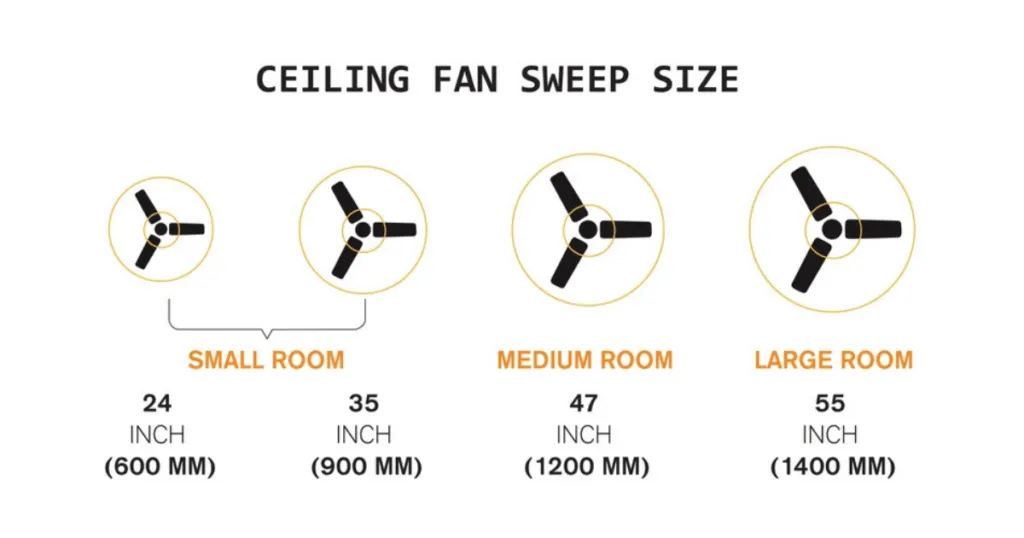
The Relationship Between Room Square Footage and Blade Span
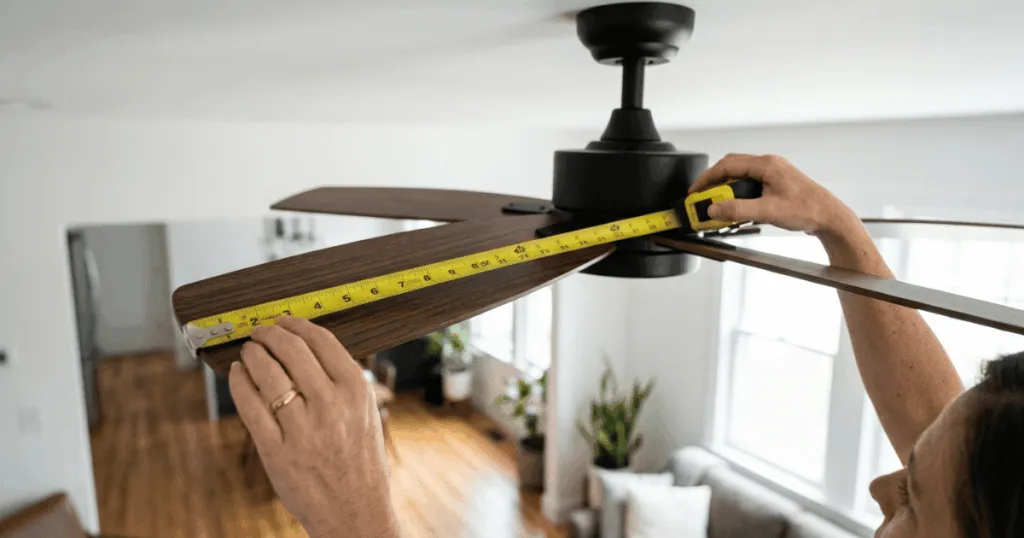
The primary factor in selecting a ceiling fan is the blade span, which is the diameter of the circle created by the blades as they rotate. Manufacturers generally categorize fans by this measurement, which is typically expressed in inches. Matching this span to your room’s square footage is the most reliable way to ensure the fan can move enough air to be effective.
For small rooms, such as home offices, walk-in closets, or small bedrooms under 75 square feet, a fan with a blade span of 29 to 36 inches is usually sufficient. These compact units provide enough circulation to prevent the room from feeling stuffy without dominating the limited ceiling space. If you install a larger fan in a very small room, the air movement may feel too intense, and the physical footprint of the blades can make the ceiling feel lower than it actually is.
Standard bedrooms and medium-sized living areas, typically ranging from 75 to 150 square feet, generally require a 42 to 48-inch fan. This size range is the most common for residential applications because it covers the majority of standard-sized rooms found in modern homes. A 44-inch fan, for example, provides a balanced airflow that is usually sufficient for a 12×12 foot room, ensuring that air reaches the perimeter of the space.
For larger areas, such as master suites, open-concept living rooms, or great rooms exceeding 225 square feet, you should look for fans with a blade span of 56 inches or larger. In very large or long rooms, a single massive fan might struggle to circulate air into the far corners. In these instances, it is often more effective to install two smaller fans rather than one oversized unit. This approach provides more uniform airflow and better coverage across the entire floor plan.
Practical Considerations for Ceiling Height and Mount Type
While square footage dictates the blade span, your ceiling height determines the mount type and the necessity of a downrod. The standard industry recommendation is to have the fan blades at least 7 feet above the floor for safety and optimal air movement. If your ceiling is lower than 8 feet, you should look for hugger or flush-mount fans that attach directly to the ceiling canopy.
If you have a standard 8-foot ceiling, a short downrod is often necessary to provide enough clearance between the blades and the ceiling. This gap is vital because it allows the fan to draw air from above the blades; if the fan is mounted too close to the ceiling, the motor may struggle to pull in enough air, which reduces the overall efficiency of the unit. A gap of 8 to 12 inches is generally considered the sweet spot for standard ceiling heights.
For rooms with vaulted or sloped ceilings, you will need a fan that is compatible with an angled mount or a sloped ceiling adapter. In these cases, the length of the downrod becomes even more critical. You want to ensure that the blades are positioned low enough to clear the slope of the ceiling while still maintaining that 7-foot clearance from the floor. Using an extension downrod is the standard solution for high ceilings, as it brings the fan down into the occupied zone of the room where the airflow is actually needed.
Why Proper Sizing Matters for Daily Comfort
The importance of this Ceiling Fan Size Guide extends beyond simple aesthetics; it directly impacts the energy efficiency of your home. A fan that is perfectly sized for its environment moves air more effectively at lower speeds, which reduces motor strain and noise. When a fan is undersized, you might be tempted to run it on its highest setting constantly, which increases power consumption and introduces unwanted mechanical noise into your living space.
Furthermore, ceiling fans are not just for cooling in the summer; they are also essential for heat destratification during the winter. By reversing the direction of the blades, a properly sized fan pushes warm air that has collected at the ceiling back down toward the floor. An incorrectly sized fan may struggle to move this volume of air effectively, meaning you lose the energy-saving benefits of using your fan to supplement your heating system.
Noise sensitivity is another factor that often gets overlooked. Larger fans with larger motors can often move the same amount of air as smaller fans at lower RPMs. If you are installing a fan in a bedroom or a quiet study, choosing a slightly larger fan that can run at a lower speed can result in a much quieter experience. This is a common strategy for homeowners who want the air movement without the constant hum of a motor working at maximum capacity.
Common Misconceptions About Fan Performance
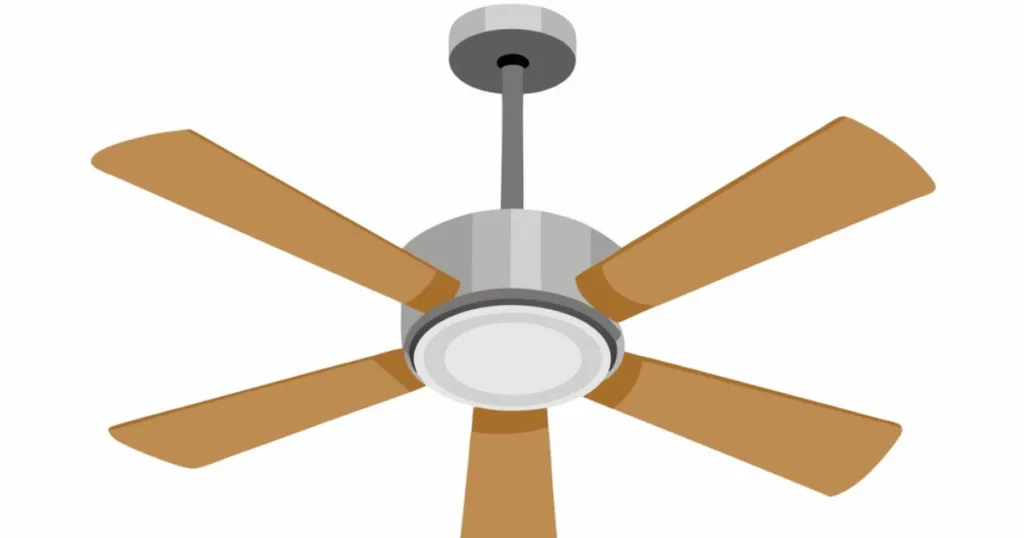
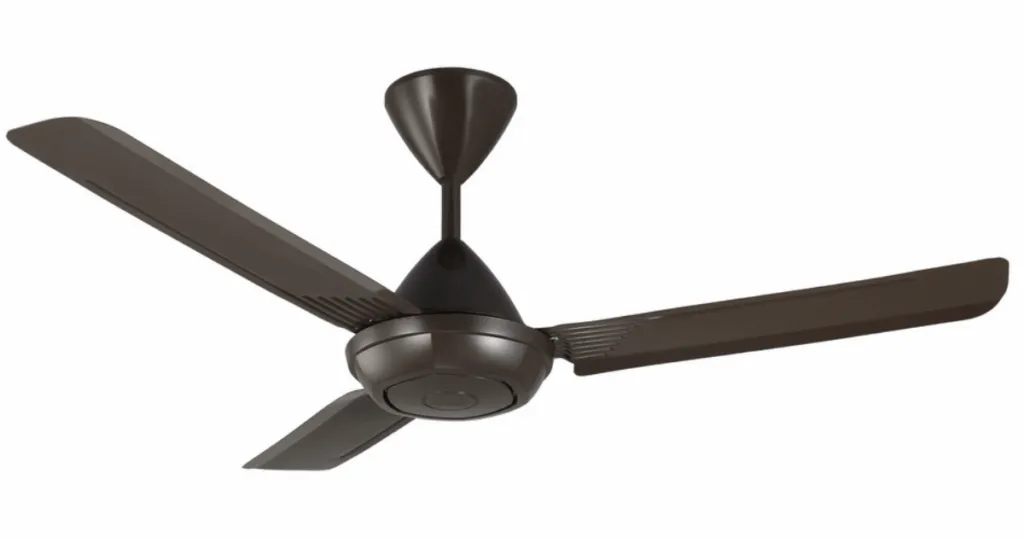
A frequent error is the belief that more blades equal more air movement. In reality, the number of blades is largely an aesthetic choice. While a higher blade count can sometimes reduce the noise generated by the fan, it also adds weight and drag to the motor. A three-blade fan can be just as efficient as a five-blade fan if the pitch and motor quality are optimized for the room size.
Another misconception is that the fan size should be determined by the light kit rather than the blades. Some homeowners prioritize the size of the light fixture, assuming it needs to be proportional to the room. However, the light kit is a secondary feature. Always prioritize the blade span for air circulation first, and then select a light kit that complements the room’s lighting needs. If you find a fan that is the perfect size for your room but has a light kit that is too dim, you can often swap the bulbs or the light assembly itself, but you cannot change the blade span.
Finally, many people assume that ceiling fans should be placed exactly in the center of a room. While this is often the most visually balanced location, it is not always the most functional. If your room has an unusual shape or if your furniture is clustered in one specific area, you may find that placing the fan closer to the seating area or the bed provides better results. The goal is to maximize the airflow in the space where you spend the most time, not necessarily to create a perfectly symmetrical ceiling layout.
Advanced Sizing Dynamics: Blade Pitch and Airflow Volume
Beyond simple diameter, the blade pitch—the angle at which the blade is set—plays a significant role in how much air a fan moves. A steeper blade pitch, typically between 12 and 15 degrees, is generally more effective at pushing air than a flatter blade. When you are selecting a fan based on this Ceiling Fan Size Guide, remember that a smaller fan with a steep blade pitch can sometimes outperform a larger fan with a shallow pitch. This is a critical nuance for rooms where space is limited but high-volume air movement is desired.
When evaluating fan motor performance, consider the relationship between the motor size and the blade span. A high-quality motor is essential for maintaining consistent speed and minimizing mechanical noise. If you are choosing a larger fan, ensure the motor is rated for that specific diameter. An underpowered motor struggling to turn long, heavy blades will not only be less efficient but will also likely have a shorter lifespan due to the increased strain on the internal components.
Evaluating Room Geometry and Airflow Obstructions
Room shape is just as important as total square footage. A long, narrow room, such as a galley-style living area or a long hallway, presents unique challenges for air circulation. In these spaces, a single large fan might create a concentrated “tunnel” of air directly beneath it, leaving the ends of the room stagnant. In such cases, the best practice is to use multiple smaller fans spaced evenly along the ceiling. This ensures that the air movement is distributed throughout the entire length of the room, rather than just in the center.
Furthermore, consider architectural obstructions. If your room has exposed beams, low-hanging light fixtures, or decorative ceiling molding, these can disrupt the airflow pattern of the fan. Always ensure that the blade path is clear of any obstructions. If a fan is mounted too close to a wall or a tall piece of furniture, the blades can create a “chopping” sound as they pass through the air, which is a common source of noise complaints. Maintaining a clearance of at least 30 inches from the blade tip to the nearest wall or large obstacle is a standard guideline to prevent this issue.
The Role of Ceiling Fan Controls and Smart Integration
Modern ceiling fans often come with a variety of control options, from wall switches to remote controls and smart home integration. While these do not change the physical size of the fan, they do impact how you interact with the unit’s performance. For instance, a fan with a variable speed control allows you to fine-tune the airflow to match the room’s current temperature and occupancy. In a bedroom, being able to set the fan to a very low, whisper-quiet speed for sleeping is often more important than having a high-velocity setting for quick cooling.
When planning your installation, think about the accessibility of the controls. If you are installing a fan in a high-ceiling room, a remote control or a wall-mounted controller is essential. Some newer models also offer smart features that allow you to adjust the fan speed based on the room’s temperature, which can help maintain a consistent comfort level without manual intervention. These features, while not strictly related to sizing, enhance the overall utility of the fan and ensure that the size you have chosen is being utilized to its full potential.
Final Considerations for Long-Term Satisfaction
Choosing the right fan is a balance of science and preference. By adhering to the principles outlined in this guide—prioritizing blade span for the room size, ensuring proper ceiling clearance, and considering the room’s unique geometry—you can create a comfortable and efficient environment. Remember that the goal is to achieve a gentle, consistent breeze that enhances your home’s comfort, rather than creating a high-velocity wind tunnel. If you are ever in doubt between two sizes, it is usually safer to lean toward the larger size, provided you have the ceiling space, as it can move the same amount of air at a lower, quieter speed.
FAQ
Can I install a large ceiling fan in a small room?
While technically possible, it is generally discouraged. A large fan in a small room can create an overwhelming wind-chill effect and make the ceiling feel lower. It is better to choose a fan size that matches the square footage to ensure comfortable, balanced airflow.
What is the minimum ceiling height for a ceiling fan?
For safety and effective operation, the blades should be at least 7 feet above the floor. If your ceilings are 8 feet or lower, use a flush-mount or hugger-style fan to maintain this clearance.
Does the number of blades affect the performance of the fan?
The number of blades is primarily an aesthetic preference. Modern motors are designed to move air efficiently regardless of whether a fan has three, four, or five blades. Focus on the blade span and motor quality rather than the blade count.
How do I determine the correct downrod length for my ceiling?
To calculate the downrod length, subtract the height of the fan motor housing and the desired blade-to-floor clearance (7 feet) from your total ceiling height. For example, in a 10-foot ceiling room, you would typically need a 12 to 18-inch downrod to place the blades at the optimal height for air circulation.
Is it better to have one large fan or two small fans in a large room?
In rooms larger than 225 square feet or rooms with an elongated shape, two smaller fans are often superior to one large unit. Multiple fans provide more uniform air distribution and prevent the “dead zones” that can occur when a single large fan is unable to push air into the far corners of the space.