When you are selecting a new ceiling fan, the mounting system is often the most overlooked technical detail. Dual-mount ceiling fans offer a practical solution for homeowners who need flexibility, as they are designed to be installed either flush against the ceiling or suspended by a downrod. This versatility makes them a reliable choice for homes with varying ceiling heights or those undergoing renovations where the final mounting location might change.
By choosing a model with dual-mount capability, you avoid the common frustration of realizing a fan is too low for a standard room or too close to the ceiling to move air effectively in a larger space. Understanding how these systems function allows you to make an informed decision that balances aesthetics with the mechanical requirements of your specific room.
Beyond simple height adjustments, dual-mount ceiling fans represent a strategic approach to home climate control. By selecting a unit that can adapt to the room’s specific geometry, you ensure that the fan operates at its peak potential, providing consistent air circulation without the need for specialized hardware or complex modifications. This adaptability is particularly valuable in multi-story homes or properties with mixed ceiling styles, such as flat ceilings in bedrooms and vaulted or sloped ceilings in common areas.
The Mechanics of Dual-Mount Ceiling Fans
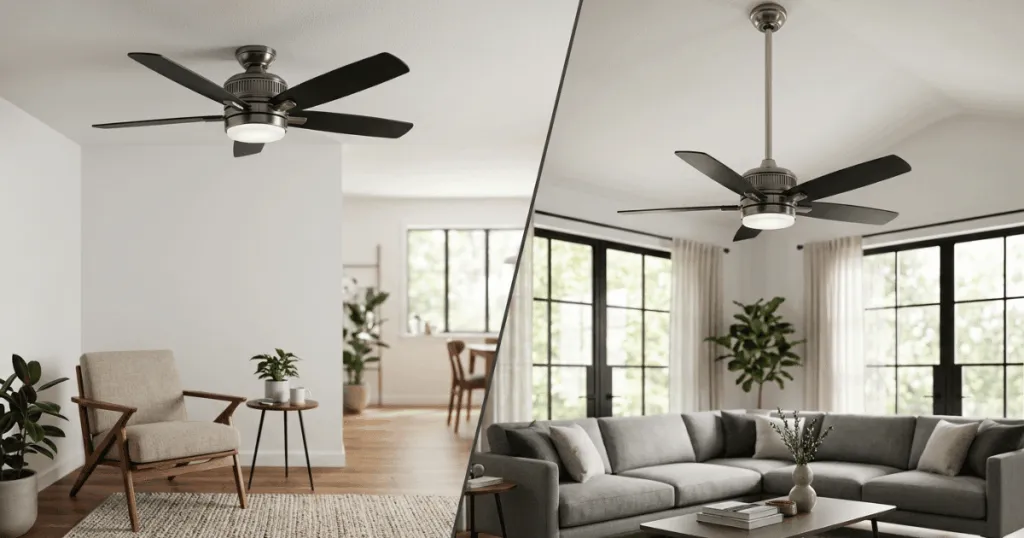
At its core, a dual-mount system is an engineering choice that allows the same fan motor housing to connect to two different types of ceiling brackets. The primary advantage is the ability to switch between a hugger-style installation and a downrod-style installation without needing to purchase a different unit. This is particularly useful in older homes where ceiling heights can vary significantly from one room to the next.
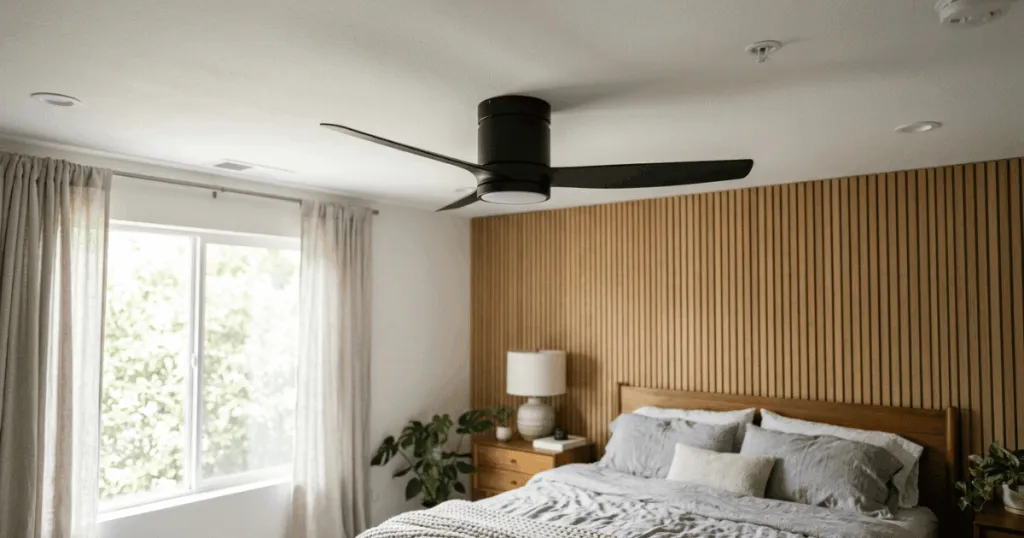
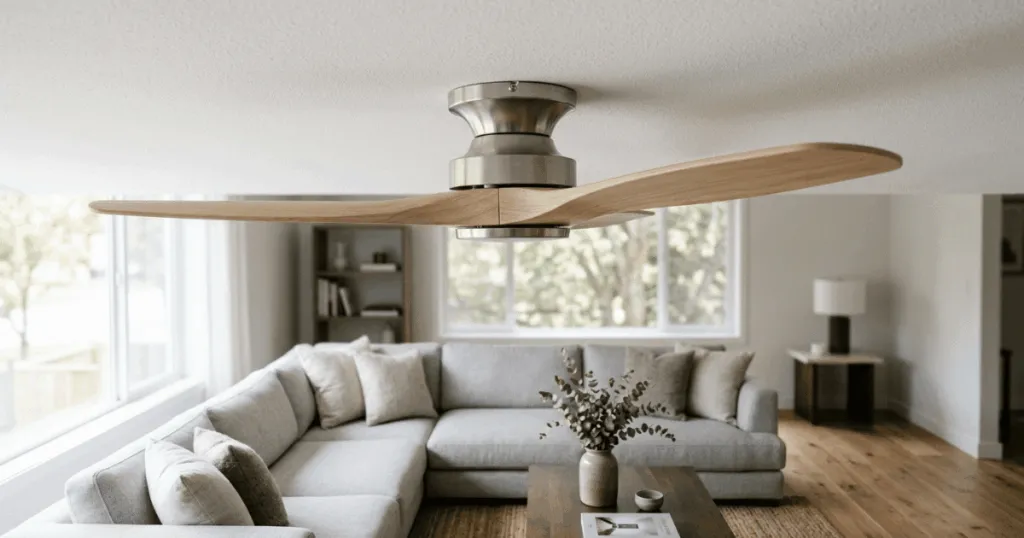
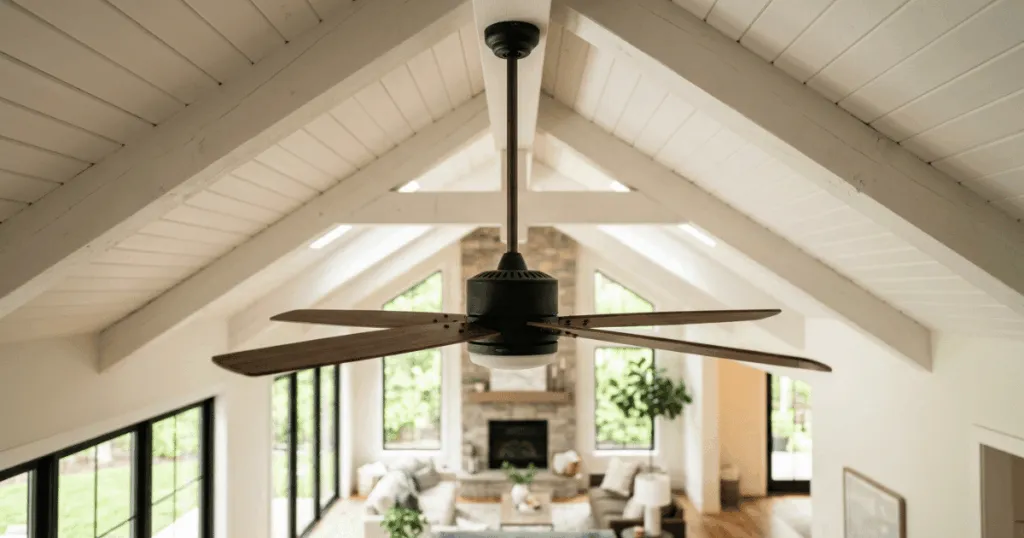
In a standard flush-mount configuration, the fan motor housing attaches directly to the mounting bracket. This minimizes the distance between the ceiling and the fan blades, which is essential for low-ceiling applications. Conversely, the downrod configuration uses a metal pipe to suspend the motor housing further away from the ceiling, which is the preferred method for high or sloped ceilings to ensure proper air circulation.
The internal architecture of these fans is designed to accommodate both mounting styles through a modular canopy system. The canopy—the decorative cover that hides the mounting bracket and electrical connections—is usually larger in dual-mount models to house the necessary hardware for both configurations. This design choice ensures that the electrical wiring remains protected and organized regardless of whether you choose a low-profile look or a suspended installation.
Why Flexibility Matters in Ceiling Height
Ceiling height is the single most important factor in fan performance. If a fan is mounted too close to the ceiling in a large room, the blades cannot pull enough air from above to create a consistent breeze. If it is mounted too low in a small room, it can create a cramped, claustrophobic feeling and potentially pose a safety risk for taller individuals.
Dual-mount ceiling fans bridge this gap by providing the necessary hardware for both scenarios. When you opt for a downrod, you are essentially optimizing the fan’s reach. This allows the blades to capture air from a more open space, which significantly increases the effective airflow. In practice, this means you can achieve a more comfortable environment in rooms with 9-foot or 10-foot ceilings while still maintaining the option to install the same model in a bedroom with a standard 8-foot ceiling.
Furthermore, airflow efficiency is heavily dependent on the distance between the fan blades and the ceiling. Industry standards generally suggest that for optimal performance, there should be at least 8 to 10 inches of clearance between the ceiling and the blades. In a flush-mount setup, this is often difficult to achieve, which is why dual-mount fans are so effective; they allow you to transition to a downrod if you find that the flush-mount configuration is not providing the desired cooling effect in a specific room.
Real-World Context for Installation
Consider a scenario where you are updating your home’s lighting and cooling. You might be planning to install a fan in a living room with a vaulted ceiling and another in a smaller guest bedroom. With dual-mount units, you can purchase the same aesthetic style for both spaces, ensuring a cohesive look throughout your home while adapting the installation method to suit the specific architectural constraints of each room.
Another common situation involves sloped ceilings. Many dual-mount kits include a canopy that is specifically designed to accommodate a degree of pitch. This allows the downrod to hang vertically even when the ceiling itself is angled. Without this, you would be forced to seek out specialized slope-mount adapters, which can be difficult to match to the finish of your fan.
When dealing with sloped ceilings, the dual-mount system provides a significant advantage by including a ball-and-socket joint in the mounting bracket. This joint allows the downrod to hang plumb even on angled surfaces, preventing the fan from hanging at an awkward, non-vertical angle. This is a critical feature for maintaining the structural integrity of the fan and preventing unnecessary stress on the motor housing during operation.
Practical Considerations for DIY Installation
When installing a dual-mount fan, the process begins with selecting the appropriate bracket. Most manufacturers provide two distinct mounting plates or a convertible bracket system. If you choose the flush-mount route, you will typically secure the motor housing directly to the canopy. This requires careful management of the wiring, as there is less space inside the canopy compared to a downrod installation.
If you decide on the downrod, you must ensure the rod is securely fastened to the motor housing using the provided locking pins and set screws. A common mistake is failing to tighten the set screws sufficiently, which can lead to a wobbling fan over time. Always verify that the downrod is plumb—meaning it hangs perfectly straight—before finishing the installation, especially on sloped ceilings.
Homeowner safety is paramount during this process. Always ensure that the electrical box in the ceiling is rated for the weight of a ceiling fan. Even if the fan is lightweight, the torque generated by the motor during high-speed operation requires a secure, fan-rated junction box. When performing a DIY installation, take the time to balance the blades if you notice any vibration, as this is often a result of uneven weight distribution rather than a fault in the mounting system itself.
Why This Choice Matters for Long-Term Comfort
The decision to use dual-mount ceiling fans is fundamentally about future-proofing your home. Homeowners often move furniture, renovate rooms, or even change the purpose of a space. A fan that can be reconfigured from a downrod to a flush mount can move with your home’s evolution. If you eventually move the fan from a high-ceiling living area to a lower-ceiling basement or office, you retain the ability to adjust the mounting height.
Furthermore, these fans often come with a more robust motor housing design to accommodate the dual-mount hardware. This can sometimes result in a slightly more durable build quality compared to dedicated low-profile hugger fans, which are often built with smaller, more compact motors. By choosing a dual-mount model, you are prioritizing mechanical versatility that supports consistent air movement regardless of the room’s geometry.
Beyond the physical installation, consider the long-term impact on HVAC efficiency. By placing the fan at the correct height, you maximize the movement of air, which can help distribute conditioned air more effectively throughout the room. This can reduce the load on your central heating and cooling system, potentially leading to more balanced temperatures in rooms that are prone to hot or cold spots. The ability to adjust the mounting height ensures that you can always position the fan for maximum impact, regardless of how your furniture layout changes over time.
Common Misconceptions About Mounting
One frequent misunderstanding is that all ceiling fans can be converted to any height. In reality, a dedicated low-profile fan cannot be converted to a downrod mount, and a heavy-duty industrial fan may not have the hardware to sit flush against the ceiling. Assuming that a fan is “universal” is a mistake; you must verify that the specific model is explicitly labeled as a dual-mount unit.
Another misconception is that flush-mount fans are always less effective. While it is true that they have less air intake space, modern blade pitch designs have improved significantly. If you are working with an 8-foot ceiling, a flush-mount installation is actually the correct choice for safety and aesthetics. The goal is not to have the longest downrod possible, but to place the blades at the optimal height for your specific room’s dimensions and air circulation needs.
It is also worth noting that the “dual-mount” label does not automatically imply that the fan comes with every possible length of downrod. Most manufacturers include a standard 3-inch or 4-inch downrod in the box. If you have exceptionally high ceilings, you may still need to purchase a longer downrod separately. Always check the manufacturer’s specifications to ensure that the fan is compatible with extended downrods, as not all models are designed to support them safely.
Evaluating Your Space for Optimal Mounting
Before finalizing your purchase, take a moment to measure your ceiling height and evaluate the room’s layout. For ceilings under 8 feet, a flush mount is almost always the safest and most visually appealing option. For ceilings between 8 and 9 feet, a short downrod can provide a slight improvement in airflow without compromising head clearance. For ceilings 10 feet and higher, a longer downrod is essential to bring the fan into the effective zone of the room.
Consider the aesthetic impact of the mounting style as well. A flush-mount fan tends to blend into the ceiling, making it a good choice for smaller rooms or spaces where you want the fan to be less conspicuous. A downrod-mounted fan creates a more prominent visual statement and can help anchor the room’s design, especially in large, open-concept living areas. By choosing a dual-mount fan, you retain the freedom to experiment with these different looks during the initial installation phase, allowing you to see what works best for your specific interior design goals.
Finally, remember that the mounting system is just one part of the equation. The quality of the motor, the blade pitch, and the overall build quality of the ceiling fan manufacturer all play a role in how well the unit performs. A dual-mount fan is a tool that provides you with the flexibility to adapt to your home’s unique requirements, but it is still important to select a model that meets your needs for style, noise levels, and airflow capacity.
FAQ
Can I convert any ceiling fan to a dual-mount system?
No. A ceiling fan must be specifically engineered and marketed as a dual-mount unit to support both flush and downrod installations. Attempting to modify a standard fan to change its mounting type can compromise its safety and structural integrity.
How do I know if I need a downrod or a flush mount?
The rule of thumb is to keep the fan blades at least 7 feet above the floor for safety. If your ceiling is 8 feet high, a flush mount is usually best. For ceilings 9 feet or higher, a downrod is recommended to bring the blades into the optimal airflow zone.
Does a dual-mount fan cost more than a standard fan?
Generally, dual-mount fans are priced similarly to other models in the same quality tier. The added versatility is a standard feature in many mid-range and high-end residential fans, so you are not necessarily paying a premium for the mounting flexibility itself.