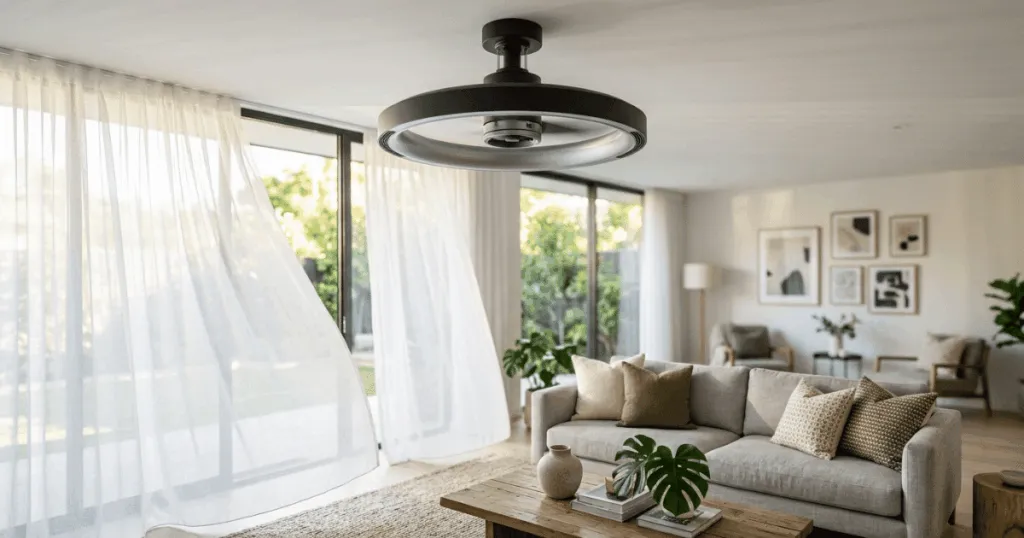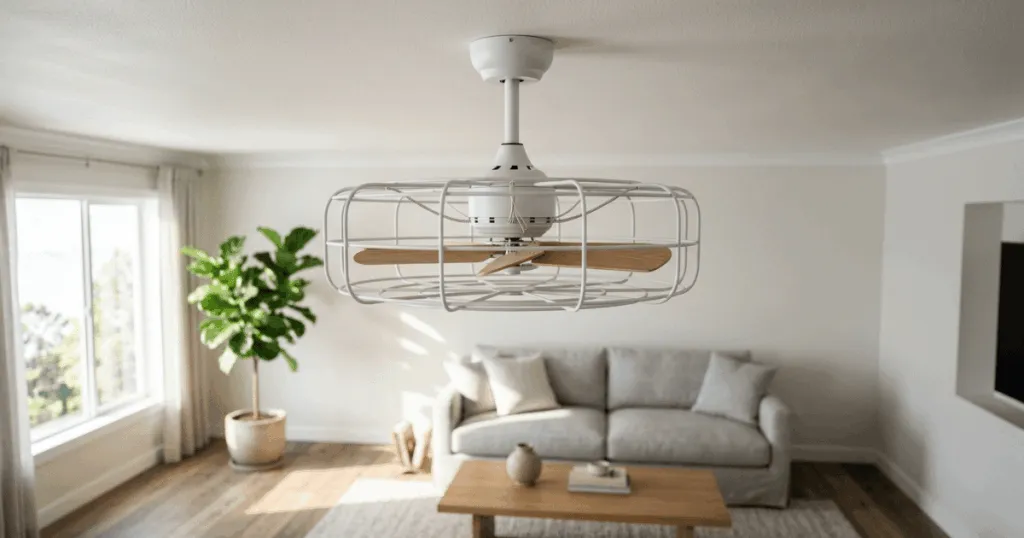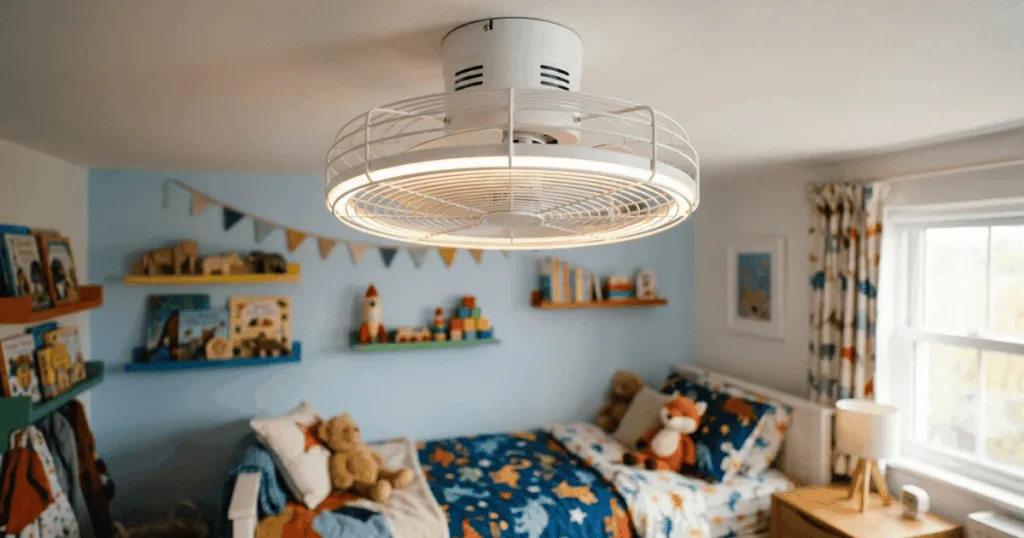
Retractable blade ceiling fans have gained popularity primarily because they solve a specific aesthetic dilemma: the desire for air circulation without the permanent visual presence of traditional fan blades. For many homeowners, a standard ceiling fan can feel like an intrusive fixture in a room where they prefer a clean, minimalist look. These specialized fans offer a transformation, transitioning from a sleek, light-fixture-only appearance when idle to a functional fan when in use.
Understanding whether these units are a practical choice for your space requires looking beyond their visual appeal. While the mechanical innovation is impressive, it introduces specific considerations regarding motor maintenance, airflow efficiency, and installation requirements that differ from standard fixed-blade models. If you are weighing the benefits of a modern ceiling fan that hides its blades, it is essential to evaluate how these factors align with your daily comfort needs and room layout.
The Mechanics of Retractable Blade Ceiling Fans
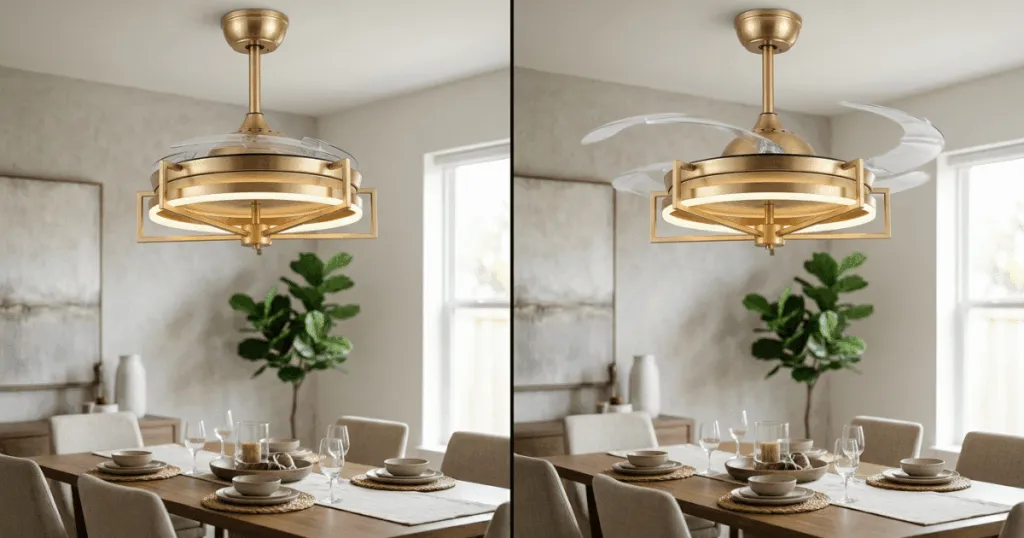
The core appeal of retractable blade ceiling fans lies in their centrifugal design. When you activate the fan, the motor spins, and the blades extend outward due to centrifugal force. Once the motor stops, the blades automatically retract or fold back into the housing, leaving behind a profile that looks like a standard chandelier or flush-mount light fixture. This design is engineered specifically for rooms where a permanent fan presence might feel overwhelming, such as smaller bedrooms or areas with lower ceiling heights.
In practice, this means the fan serves two distinct roles. When the blades are retracted, the unit functions purely as a light source. This is particularly useful in guest rooms or home offices where you might want the option of a fan during the summer but prefer a clutter-free ceiling during the winter or when the room is not in use. The transition is usually seamless, often controlled via a remote or wall switch that manages both the lighting and the motor speed simultaneously.
However, the complexity of the internal mechanism is a factor to consider. Because the blades must move in and out, the motor housing is typically larger and heavier than that of a traditional fan. This extra mass requires secure mounting, especially on older ceilings or junction boxes that were not originally designed to support the weight of a motorized, retractable assembly. Always verify that your ceiling junction box is rated for the specific weight of the unit you select.
Evaluating Airflow and Performance
A common question among homeowners is whether these fans move as much air as their fixed-blade counterparts. Generally, retractable blade ceiling fans are capable of providing effective cooling, but they often operate differently than large, high-torque industrial fans. The blades are frequently made of lightweight materials like polycarbonate to ensure they can extend and retract reliably without straining the motor.
Because the blades must be flexible enough to fold, they may have a slightly different pitch or shape compared to rigid wood or metal blades. In a standard living room or bedroom, this is usually sufficient for creating a comfortable breeze. However, if you are looking for heavy-duty air movement in a large, open-concept space, you might find that the airflow is more localized. The effective reach of the air depends heavily on the diameter of the fan when fully extended.
Noise sensitivity is another practical consideration. The mechanical process of the blades extending can sometimes produce a soft clicking or whirring sound upon startup. While most modern models are designed to be quiet, the presence of moving internal parts means there is slightly more potential for mechanical noise over time compared to a simple, fixed-blade motor. Regular cleaning is essential; dust accumulation on the folding hinges can cause the blades to stick or operate unevenly, which may lead to wobbling or increased noise during operation.
Real-World Context for Installation
When planning for a retractable blade ceiling fan, consider the room’s ceiling height first. These fans are excellent for rooms with standard 8-foot ceilings because they reduce the visual “choppiness” that traditional blades can create in a lower space. By hiding the blades, the room feels more open and less confined. This makes them a frequent choice for modern interior designs that prioritize clean lines and uncluttered ceilings.
In contrast, if you have very high or vaulted ceilings, the retractable feature might be less impactful. In those spaces, the fan is often positioned further from the eye level, meaning the visual clutter of traditional blades is less of a concern. Furthermore, the distance from the ceiling to the floor in a vaulted room may require a downrod, which can complicate the aesthetic benefit of a retractable design. These fans are almost exclusively designed for flush or near-flush mounting, making them less versatile for non-standard ceiling configurations.
Another practical tip involves the lighting integration. Because these fans are designed to look like light fixtures, the light kit is often non-negotiable. If you have specific requirements for brightness, color temperature, or smart-home compatibility, check the specifications of the light kit carefully. Many units use integrated LED modules, which are efficient but may not be replaceable if they fail. Choosing a model with a standard, replaceable bulb or a widely supported LED driver can extend the functional life of the fixture significantly.
Why This Choice Matters for Your Home
Selecting a ceiling fan is often a trade-off between function and form. Retractable blade ceiling fans represent a specific decision to prioritize the aesthetic of the room without sacrificing the ability to cool the space when needed. For many, this is the ideal middle ground between a traditional fan that is always visible and the absence of a fan entirely, which leaves you without a cooling option during warmer months.
The real value comes down to how you use your living space. If you are designing a guest bedroom that doubles as a reading nook, you likely want a clean, serene environment. A traditional fan might dominate the ceiling and detract from the decor. A retractable unit allows you to maintain that serene environment while providing the necessary air circulation to keep guests comfortable. It is a solution for the “hidden utility” approach to home improvement, where the goal is to have the benefits of technology without the visual footprint.
Ultimately, the decision to install these fans should be based on your tolerance for maintenance and your specific design goals. If you are comfortable with a slightly more complex installation and the occasional need to clear dust from the blade hinges, the payoff is a unique, multi-functional fixture that adapts to your needs. If you prioritize maximum, high-volume airflow and minimal mechanical complexity, a standard, high-quality fixed-blade fan remains the industry standard for a reason.
Common Misconceptions
One of the most frequent misconceptions is that retractable blades are flimsy or prone to breaking. While they are certainly more complex than a static blade, modern engineering has made them quite durable. The primary risk is not mechanical failure, but rather neglect. If dust and debris build up in the tracks or hinges, the mechanism will struggle, leading to uneven extension. A simple, routine dusting of the blade assembly is usually enough to keep them functioning smoothly for years.
Another misconception is that these fans are “smart” fans by default. While many come with remote controls, not all retractable fans feature advanced smart-home integration. If you are looking to control your fan via voice commands or an app, do not assume the retractable feature includes this connectivity. Always verify the control method, as some base models rely strictly on a handheld remote, which can be easily misplaced.
Finally, some believe that these fans are only for small rooms. While they are perfect for smaller areas, they are available in various sizes. The limiting factor is not the room size, but the ceiling height and the aesthetic preference for a clean look. As long as you select a diameter appropriate for your room dimensions, they can be just as effective as any other ceiling fan in a large living area.
Deep Dive: Maintenance and Longevity
Beyond the initial setup, the long-term viability of a retractable fan depends on how you manage the mechanical components. Unlike standard fans, which are essentially static, these units rely on a dynamic hinge system. Over time, friction can increase if the lubrication or cleanliness of these hinges is ignored. Homeowners should treat these fans with the same care they would give a high-end appliance. Using a soft, dry cloth to remove dust from the blade tracks every few months prevents the buildup that can cause the blades to hesitate or click during the opening sequence.
Furthermore, consider the motor’s duty cycle. Because the motor is tasked with both spinning the fan and engaging the retraction mechanism, it is under a specific type of load. Avoid rapid switching between speeds or frequent toggling of the power, as this can put unnecessary stress on the internal gears. By allowing the fan to reach a steady state, you preserve the life of the motor and ensure the blades remain balanced.
Design Considerations and Room Integration
When integrating these fans into a home, think about the “visual weight” of the fixture. A bulky, ornate housing can negate the minimalist benefits of the retractable blades. Look for designs that match your existing ceiling color or trim to ensure the unit blends in when the blades are tucked away. In rooms with low ceilings, a white-on-white or neutral finish is often the best choice to keep the ceiling from feeling like it is closing in on you. Conversely, in a modern industrial space, a matte black or brushed nickel finish can turn the fan into a deliberate design statement.
Also, consider the light output. Many retractable fans feature a central light kit that is relatively small. If this is the only light source in a large bedroom, you may find the room feels dim. Supplementing with floor lamps or bedside lighting is a common strategy to ensure the space remains functional for reading or working. The goal is to view the retractable fan as one part of a layered lighting plan, rather than the sole provider of illumination.
Final Decision Criteria
To summarize, the decision to choose a retractable blade fan should be driven by your specific room requirements. If you have a low ceiling, a need for a clean aesthetic, and a willingness to perform light, regular maintenance, these fans are an excellent choice. They provide the cooling you need without the visual clutter. However, if your space requires massive air movement, or if you prefer a “set it and forget it” approach to home hardware, a standard, fixed-blade fan will likely serve you better in the long run. By balancing these factors, you can make an informed choice that enhances both the comfort and the style of your home.
FAQ
Are retractable blade ceiling fans harder to clean than standard fans?
Yes, they require slightly more attention. Because the blades fold into a housing, dust can accumulate in the hinges and tracks. You should periodically wipe down the blade mechanisms to prevent sticking, whereas standard fans only require wiping the flat blade surfaces.
Can I install a retractable blade ceiling fan on a sloped ceiling?
Most retractable blade ceiling fans are designed for flat, flush-mount installations. They are generally not compatible with sloped or vaulted ceilings unless the manufacturer explicitly states that the specific model includes a compatible mounting bracket or downrod adapter.
Do these fans provide the same airflow as traditional ceiling fans?
They provide effective airflow for most residential rooms, but they are generally not designed for high-volume, industrial-style air movement. Their performance is comparable to standard residential fans, provided the blade diameter is correctly sized for the room.