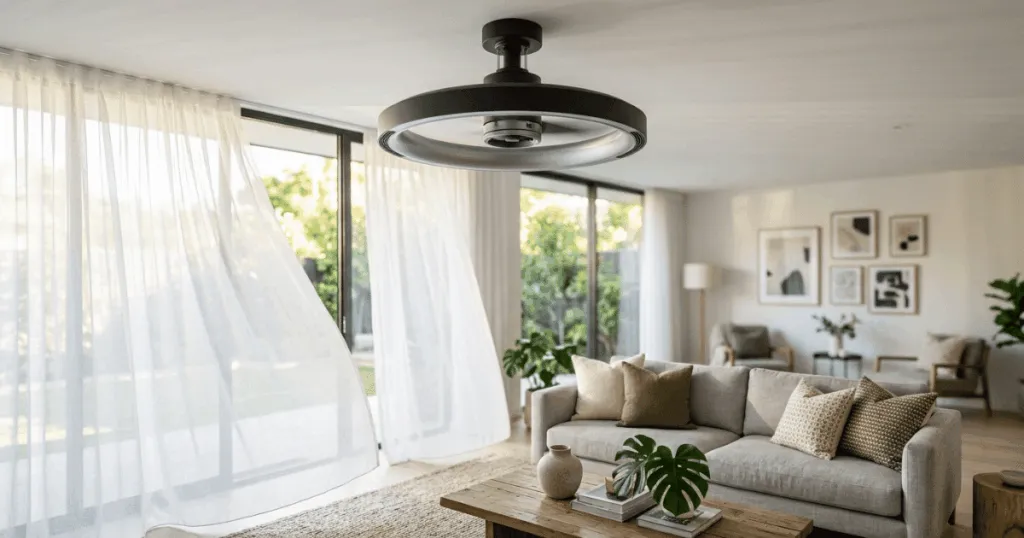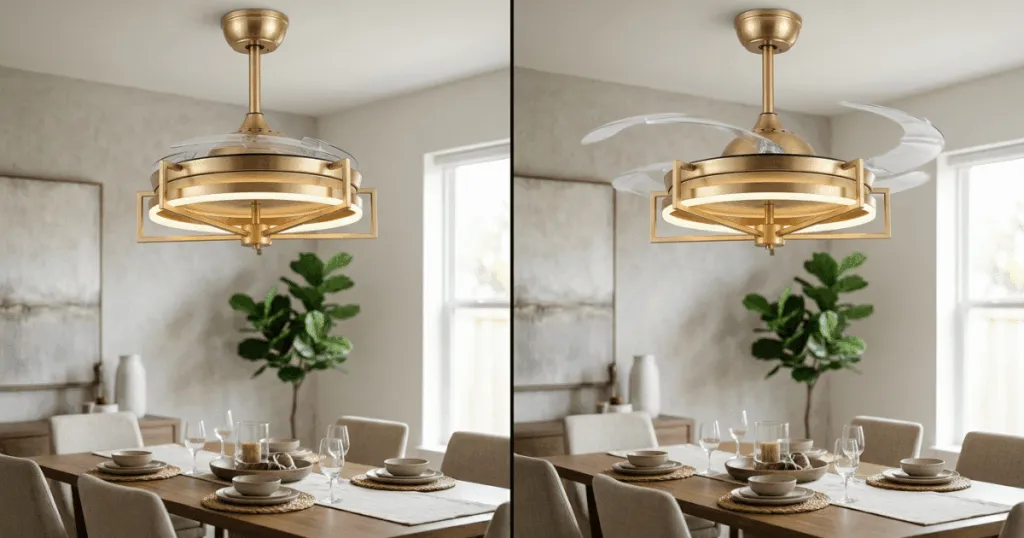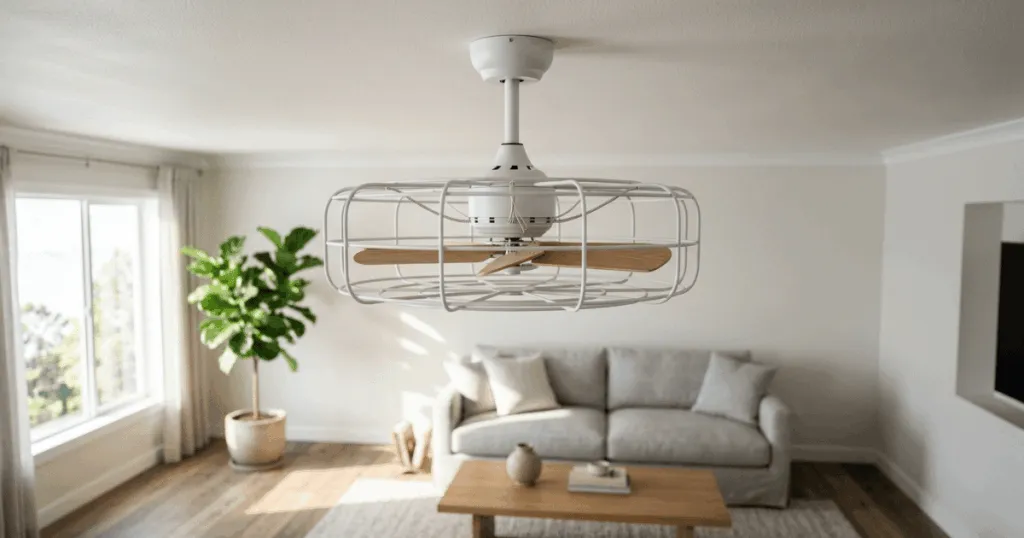
Enclosed ceiling fans, often referred to as caged fans or flush-mount drum fans, provide a specialized solution for rooms where standard blade clearance is a concern or where safety is the primary priority. Unlike traditional designs that feature exposed, sweeping blades, these units house the fan mechanism within a protective structure, typically a decorative metal or mesh cage. This design choice fundamentally changes how the fan interacts with the room’s environment, offering a compact footprint that fits seamlessly into tighter architectural spaces.
For many homeowners, the decision to install an enclosed unit is driven by the physical limitations of a room, such as low ceilings or bunk beds that create clearance hazards. By containing the blades, these fans eliminate the risk of accidental contact while maintaining the necessary airflow to keep a space comfortable. Understanding how these units function and where they offer the most value can help you determine if this style is the right fit for your specific home layout.
Factors Influencing the Performance of Enclosed Ceiling Fans
The primary factor to consider with enclosed ceiling fans is the trade-off between aesthetic containment and total air displacement. Because the blades are restricted by the housing, they often operate differently than traditional open-blade fans. The cage design can influence the angle of the airflow, directing it more vertically or in a tighter column rather than pushing air across a wide horizontal plane. This makes them highly effective for localized cooling in smaller rooms or specific seating areas.
Motor efficiency and blade pitch remain critical, even within a cage. Many modern enclosed fans utilize DC motors, which are generally quieter and more energy-efficient than traditional AC motors. When selecting a unit, look for the manufacturer’s airflow rating, often measured in cubic feet per minute (CFM). While enclosed models may have a lower total CFM compared to large-diameter open fans, they compensate by providing consistent, targeted movement that is ideal for bedrooms, home offices, or walk-in closets.
Safety and Clearance Considerations
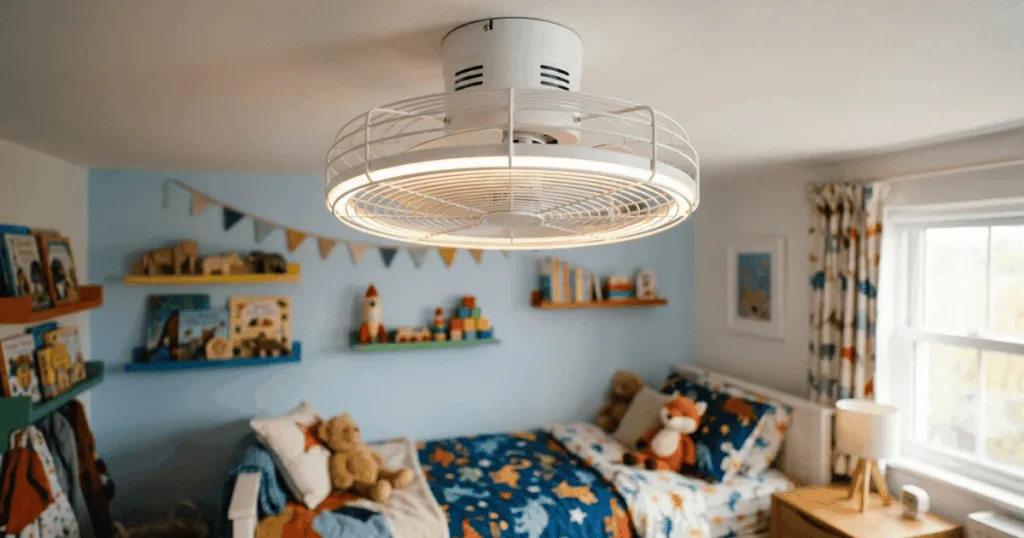
Safety is the most significant advantage of this fan category. In rooms with low ceilings, standard fans can feel intrusive or even dangerous if someone stands on furniture or reaches upward. The enclosed design creates a physical barrier, making it a preferred choice for children’s rooms or areas with bunk beds. This protective housing ensures that the mechanical parts are shielded from contact, providing peace of mind without sacrificing the benefits of active air circulation.
Aesthetic and Structural Integration
From a design perspective, these fans often act as a focal point, resembling a light fixture more than a traditional fan. The cage material—whether it is matte black metal, industrial bronze, or a woven mesh—can complement various interior styles, from farmhouse to modern industrial. Because they are typically flush-mounted or semi-flush-mounted, they minimize the visual clutter on the ceiling, helping a room feel more open and less crowded compared to fans with long downrods.
Real-World Context for Installation
In practice, the best application for enclosed ceiling fans is in rooms where the ceiling height is eight feet or lower. In these environments, a standard fan with a downrod can hang too low, violating building codes or simply creating an uncomfortable visual obstruction. An enclosed unit sits tight against the ceiling, maximizing the available headroom and keeping the fan within the aesthetic profile of the room’s lighting.
Consider the noise level in relation to the cage design. Some metal cages can vibrate if the fan is not perfectly balanced or if the motor speed is set too high. High-quality models include dampening materials between the motor housing and the cage to prevent this rattling. When installing, ensure the junction box is rated for fan support, as the weight of the cage and the motor assembly can be heavier than a standard light fixture. A secure, vibration-free installation is essential for maintaining a quiet, comfortable environment.
Why This Design Choice Matters for Homeowners
Choosing an enclosed fan is about balancing functionality with the physical constraints of your home. Many homeowners struggle with the ‘fan vs. light’ dilemma in smaller rooms, where a traditional fan might look oversized or overwhelming. These units solve that problem by blending the two functions into a single, cohesive piece of hardware. It allows you to maintain air movement in a space that would otherwise be too cramped for a standard ceiling fan.
Beyond the physical fit, these fans reflect a shift toward purposeful, integrated design. Instead of viewing a ceiling fan as a purely utilitarian tool that must be hidden or minimized, the enclosed style treats the fan as a decorative element. This approach is particularly useful in modern homes where every square foot counts and where the visual harmony of a room is as important as its temperature control. By selecting a unit that fits the scale of your room, you ensure that the fan enhances the space rather than dominating it.
Common Misconceptions About Enclosed Fans
A common misconception is that enclosed ceiling fans are ineffective at moving air. While it is true that they do not move air across a large living room as effectively as a 60-inch open-blade fan, they are not intended for that purpose. They are highly efficient for their intended use cases, such as smaller bedrooms or kitchens. Another frequent error is assuming that the cage restricts the light output. Most modern models are designed with integrated LED arrays that project light through the gaps in the cage, providing ample illumination that is often more diffused and less harsh than traditional exposed bulbs.
Finally, some assume that these fans are difficult to clean. While the cage does require a bit more effort to dust than a simple blade, it is not a significant maintenance burden. Using a soft brush or a compressed air canister is usually sufficient to keep the interior components and the cage itself clear of dust buildup. Regular cleaning ensures that the motor remains cool and the airflow remains unobstructed, which is key to the longevity of any ceiling fan, regardless of its design.
Technical Considerations for Optimal Airflow
When evaluating enclosed ceiling fans, homeowners should look closely at the blade geometry. Because the blades are contained, their pitch and shape are engineered specifically to pull air through the cage structure. This is a departure from open-blade fans that rely on the length of the blade to generate torque and air volume. In an enclosed unit, the motor speed is often higher to compensate for the resistance created by the cage. This is why choosing a model with a high-quality DC motor is beneficial; these motors provide better torque control and allow for more precise speed adjustments, which helps in managing both noise and airflow efficiency.
Another technical aspect is the proximity to the ceiling. Because these units are typically flush-mount ceiling fans, they can sometimes suffer from air starvation if they are mounted too close to a flat ceiling surface. Most manufacturers design the housing with a slight gap or a specific intake port to allow air to be drawn into the fan. When installing, ensure that the ceiling surface is flat and that the mounting bracket is properly seated. If the fan is installed on a ceiling with heavy texture or a slight crown, it may impede the intake, leading to reduced performance. Always check the installation manual for specific clearance requirements between the top of the housing and the ceiling.
The Role of Caged Ceiling Fans in Modern Interior Design
The rise of caged ceiling fans has coincided with the popularity of industrial and farmhouse aesthetics. These styles often favor exposed hardware, metal finishes, and geometric shapes. An enclosed fan fits perfectly into this design language, serving as a functional piece of art. Unlike traditional fans that can look dated or bulky, a well-chosen enclosed fan can elevate the room’s decor. For example, a matte black cage in a room with white walls creates a striking contrast, while a metallic bronze finish can add warmth to a room with wood accents.
Furthermore, the integration of smart technology into these units has expanded their utility. Many modern enclosed fans now come with remote controls or wall-mounted switches that allow for dimming the integrated LED light and adjusting the fan speed without needing to reach for a pull chain. This is particularly useful in bedrooms where you might want to adjust the lighting or airflow from the comfort of your bed. The combination of safety, style, and convenience makes these fans a smart investment for homeowners looking to modernize their living spaces without undergoing major renovations.
Maintenance and Longevity Tips
To ensure your enclosed ceiling fan remains a reliable part of your home comfort system, regular maintenance is key. While the cage provides a protective barrier, it can also act as a trap for dust and debris. Over time, this buildup can restrict airflow and put extra strain on the motor. To clean the fan, start by ensuring it is turned off and the light is cool.
Use a vacuum with a brush attachment to gently remove dust from the exterior of the cage. For a deeper clean, a microfiber cloth can be used to wipe down the individual blades and the interior housing. If the cage is removable, taking it off once or twice a year for a thorough cleaning will help maintain optimal performance.
Additionally, keep an eye on the mounting hardware. Over time, the vibration from the fan can cause screws to loosen slightly. Periodically checking that the fan is securely attached to the junction box will prevent mechanical vibration and ensure the fan operates quietly. If you notice any unusual clicking or humming sounds, it is often a sign that a blade is slightly out of alignment or that the cage needs to be tightened. Addressing these minor issues promptly will extend the life of your fan and keep your home environment comfortable for years to come.
FAQ
Are enclosed ceiling fans suitable for large living rooms?
Generally, no. Enclosed ceiling fans are designed for smaller spaces like bedrooms, home offices, or walk-in closets. Their airflow is typically more concentrated and less expansive than traditional open-blade fans, making them less effective for large, open-concept living areas.
Do enclosed ceiling fans provide enough light?
Yes, most modern enclosed ceiling fans feature integrated LED lighting. Because the light is housed within or behind the cage, it often creates a soft, diffused glow. Check the lumen output of the specific model to ensure it meets your brightness requirements for the room.
Can I install an enclosed ceiling fan on a sloped ceiling?
This depends on the specific model. While many enclosed fans are designed for flush mounting, some manufacturers offer models with sloped-ceiling adapters. Always verify the manufacturer’s specifications regarding mounting angles before purchasing.