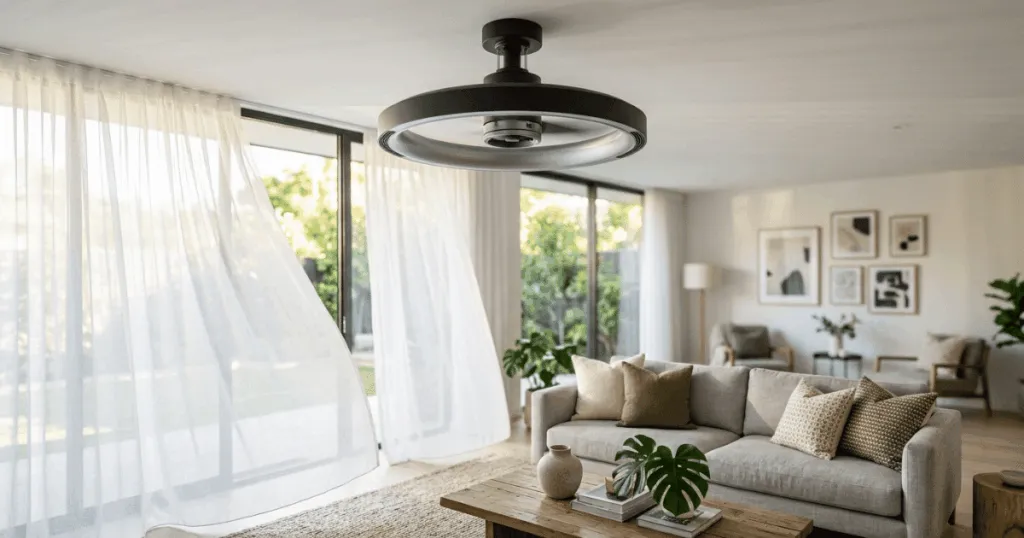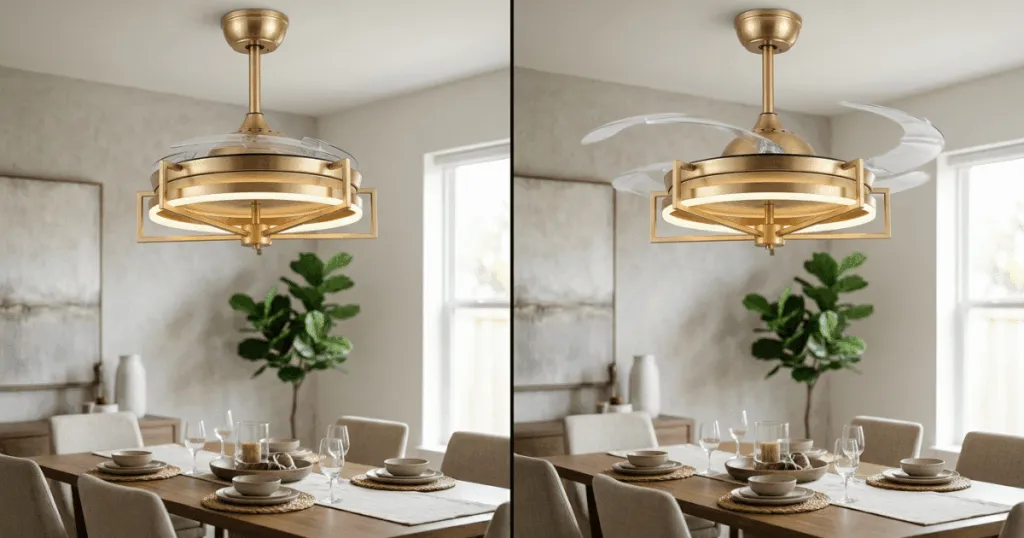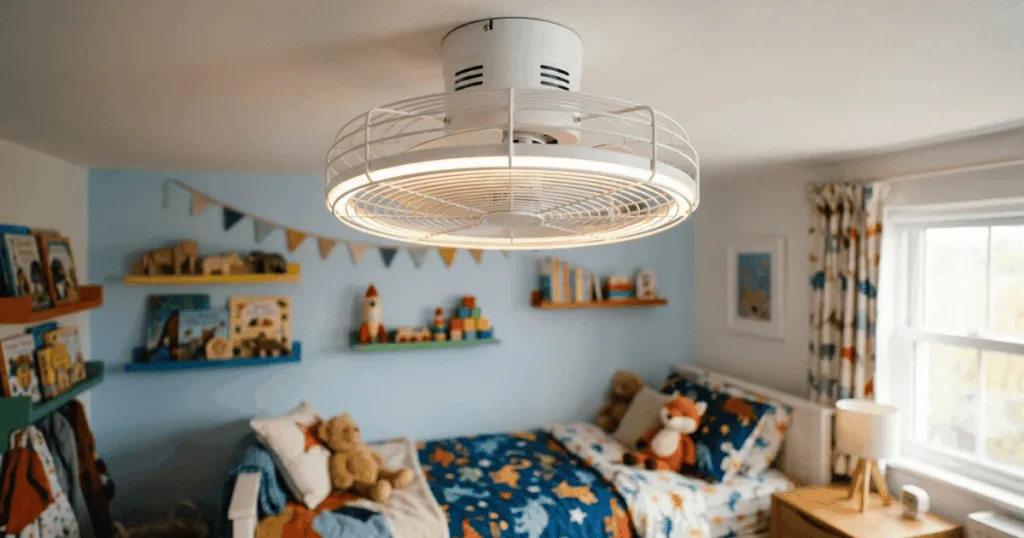
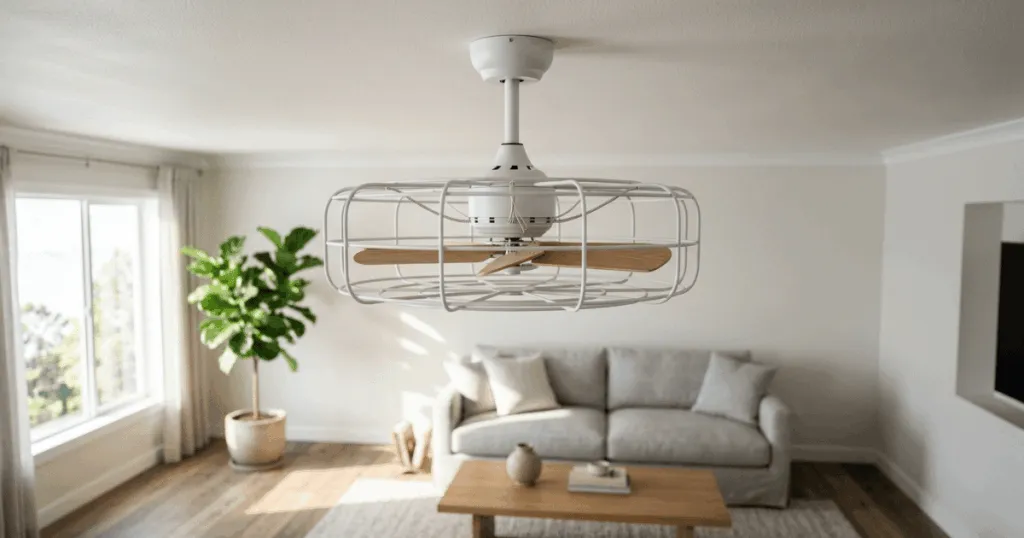
Caged ceiling fans, often referred to as industrial or farmhouse-style enclosed fans, offer a distinct departure from traditional blade-heavy designs. By housing the fan blades within a protective metal or decorative cage, these units prioritize a compact, structural aesthetic that bridges the gap between vintage lighting fixtures and modern air circulation. For many homeowners, the primary appeal lies in their ability to fit into smaller, lower-ceilinged spaces where a standard, wide-sweeping fan might feel visually overwhelming or physically obstructive.
While their appearance is a major draw, understanding how these fans perform in practice is essential for long-term satisfaction. Because the blades are enclosed, the airflow dynamics differ significantly from open-blade models. Choosing a caged ceiling fan requires balancing your specific room dimensions, ceiling height, and desired air movement against the unique design constraints inherent in this style. This guide breaks down the technical and practical factors you should consider before selecting one for your living space.
The Mechanics of Airflow in Enclosed Designs
The most important factor to recognize with caged ceiling fans is that the cage itself acts as a physical barrier. Unlike traditional fans that move air across a wide, unobstructed radius, these models typically use smaller, often steeper-pitched blades to push air through the enclosure. This design choice results in a more concentrated, downward-focused airflow pattern rather than a broad, room-wide breeze.
In practice, this means the cooling effect is most noticeable when you are standing or sitting directly beneath the fixture. If you are looking to circulate air throughout a large, open-concept living room or a high-ceilinged great room, a caged fan may underperform compared to a standard 52-inch or 60-inch blade fan. These units are generally better suited for localized comfort, such as over a bed, in a small home office, or in a tight hallway.
Blade Pitch and Motor Efficiency
Because the blades are smaller and constrained by the cage, manufacturers often compensate by increasing the blade pitch—the angle at which the blade meets the air. A steeper pitch allows the fan to move more air at lower revolutions per minute (RPM). However, this can also increase the strain on the motor if the cage design is too restrictive.
When reviewing specifications, pay attention to the motor type. DC motors are increasingly common in these designs because they offer better torque control and energy efficiency. A high-quality motor is critical for a caged fan because it must overcome the air resistance created by the cage structure itself. If you notice a fan that feels sluggish or generates significant motor hum, it may be struggling to pull air through the enclosure effectively.
Practical Considerations for Room Placement
The physical footprint of a caged ceiling fan makes it a versatile choice for specific architectural challenges. If you have a room with low ceilings—typically 8 feet or less—a standard fan can pose a safety risk or simply look out of proportion. Caged fans are frequently designed as flush-mount or low-profile fixtures, which keeps the blades safely tucked away and maintains necessary head clearance.
Beyond height, consider the room’s primary use. In a kitchen, where you might want to clear steam or odors, the concentrated airflow of a caged fan can be an advantage. In a bedroom, the focused breeze is often preferred for sleeping comfort without creating a draft that chills the entire room. Conversely, in a large, multi-use space, you might find that the air feels stagnant just a few feet away from the center of the fan.
Installation and Maintenance Realities
Installing a caged ceiling fan is similar to standard models, but the cage adds a layer of complexity to regular maintenance. Dust tends to accumulate on the inner surfaces of the cage and the blades, which are often harder to reach than the open blades of a traditional fan. You will likely need to remove the cage or use specialized cleaning tools to keep the fan running efficiently and looking clean.
Always verify the mounting requirements before purchase. Some caged fans are designed specifically for sloped ceilings, while others are strictly for flat, flush-mount installations. Because the cage adds weight and structural density, ensure your junction box is rated for the specific weight of the fixture. A common mistake is assuming that because the fan is small, it is lightweight; the metal cage construction can often make these units heavier than they appear.
Why Caged Ceiling Fans Matter for Modern Interiors
The resurgence of caged ceiling fans is largely driven by a shift toward industrial and rustic design trends. They serve as a visual anchor, providing a sense of completion to a room that might otherwise feel empty. For homeowners who dislike the look of large, spinning blades, the cage provides a sense of security and a more refined, fixture-like appearance that blends seamlessly with lighting designs.
From a functional standpoint, these fans represent a compromise. You are trading the high-volume air displacement of a traditional fan for a specific aesthetic and a safer, more compact profile. This is a valid trade-off for many, provided the expectations for cooling are managed correctly. If your goal is to cool a large space, you will likely be disappointed; if your goal is to add a stylish, low-profile air circulator to a bedroom or small den, these fans are an excellent solution.
Common Misconceptions About Enclosed Fans
One of the most frequent misconceptions is that all caged ceiling fans are inherently loud. While the cage can create turbulence if the design is poor, many modern units are engineered to minimize noise through balanced blades and high-quality bearings. If you are sensitive to noise, look for models that emphasize quiet operation in their technical documentation.
Another common error is the belief that the cage provides total protection. While it does prevent accidental contact with the blades, it does not make the fan indestructible or safe for areas with extremely low clearance where someone could still reach inside the gaps. Always prioritize the manufacturer’s recommended installation height to ensure both safety and optimal airflow performance.
Finally, many buyers assume that because a fan is smaller, it is less effective. Effectiveness is not just about size; it is about the relationship between the motor, the blade pitch, and the housing. A well-designed caged fan can move a surprising amount of air, provided it is placed in a room size appropriate for its specific output capacity. Always check the CFM (Cubic Feet per Minute) rating rather than relying solely on the physical diameter of the cage.
Optimizing Airflow and Performance
To maximize the utility of a caged ceiling fan, homeowners should focus on the interaction between the fan’s output and the room’s environment. Because these fans often feature smaller blade spans, they are not intended to create a massive “wind chill” effect across a wide area. Instead, they function best as localized air movers. In a home office, for example, positioning the fan directly above the desk area ensures that the concentrated airflow provides relief during warmer months without blowing papers or creating excessive noise that might interfere with video calls.
When assessing performance, consider the “throw” of the air. Some caged designs feature oscillating heads or directional vents that allow you to aim the airflow. This adds a layer of versatility that traditional fans lack. If you are choosing between a fixed cage and an oscillating model, evaluate whether you need a constant, steady breeze or the ability to adjust the direction of the air as your needs change throughout the day.
Evaluating Build Quality and Materials
The materials used in the construction of the cage are not just for aesthetics; they impact the longevity and maintenance of the fixture. Metal cages, often finished in matte black, oil-rubbed bronze, or brushed nickel, are durable but can be prone to vibration if the mounting hardware is not tightened correctly. During installation, ensure all screws are secure to prevent the “rattle” that can occur when the fan is running at high speeds.
Additionally, look for the density of the cage mesh. A very tight mesh may look visually appealing and offer higher safety, but it can also restrict airflow more significantly than a wider, more open cage design. Balancing the density of the cage with the power of the motor is key to finding a unit that provides both the desired look and the necessary air circulation for your home.
Integrating Caged Fans into Your Home’s Climate Strategy
While a caged ceiling fan is rarely a replacement for central HVAC, it can be a valuable supplement. By keeping air moving in stagnant corners or small rooms, these fans help prevent the buildup of heat pockets. In the winter, if the fan has a reverse switch, it can be used to push warm air down from the ceiling, improving the overall efficiency of your heating system. When shopping, always confirm that the model includes a reverse function, as this is a critical feature for year-round comfort.
Final Decision Criteria for Homeowners
Before finalizing your choice, ask yourself three questions: What is the primary function of the room? Is the ceiling height sufficient for a standard fan, or is a low-profile caged fan necessary? And finally, what is my tolerance for maintenance? If you prioritize a clean, industrial look and have a smaller space, a caged fan is likely the perfect fit. If you are cooling a large, high-ceilinged room, you may need to reconsider the scale of the fan or look for models specifically engineered for high-volume air movement despite their compact size.
FAQ
Are caged ceiling fans effective for large rooms?
Generally, no. Caged ceiling fans are designed for concentrated airflow and are best suited for smaller rooms, bedrooms, or home offices. They typically lack the blade span and air displacement capacity required to effectively cool large, open-concept living areas.
Do caged ceiling fans require more cleaning than standard fans?
Yes, they often require more frequent and careful cleaning. Dust accumulates on the cage wires and the blades inside. Because the cage acts as a barrier, you may need to unscrew or remove parts of the housing to thoroughly clean the blades, whereas standard blades are easily wiped down.
Can I install a caged ceiling fan on a sloped ceiling?
It depends on the specific model. While many caged ceiling fans are designed for flush-mount or flat-ceiling installations, some manufacturers offer models compatible with sloped ceilings. Always check the product specifications or installation manual to confirm the maximum allowed slope degree before purchasing.