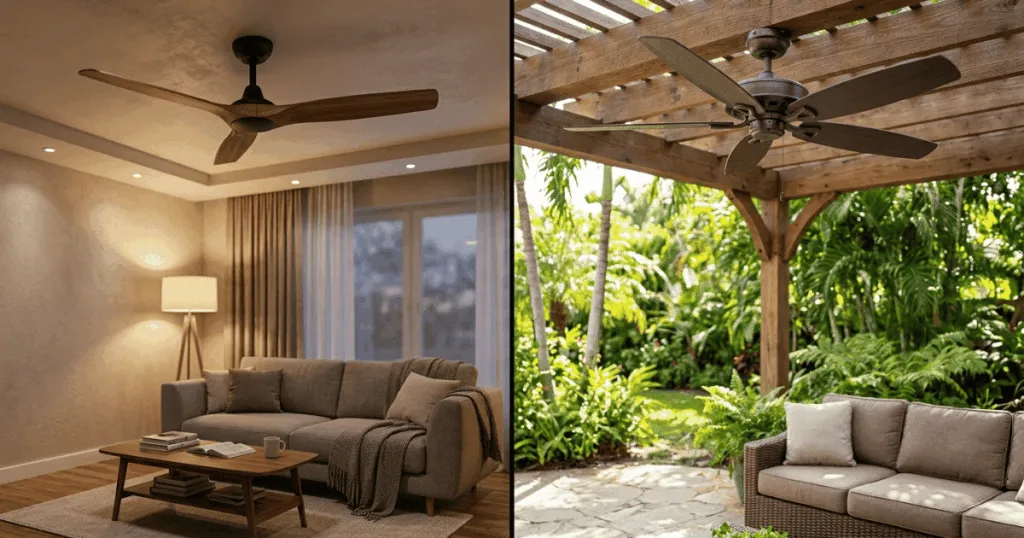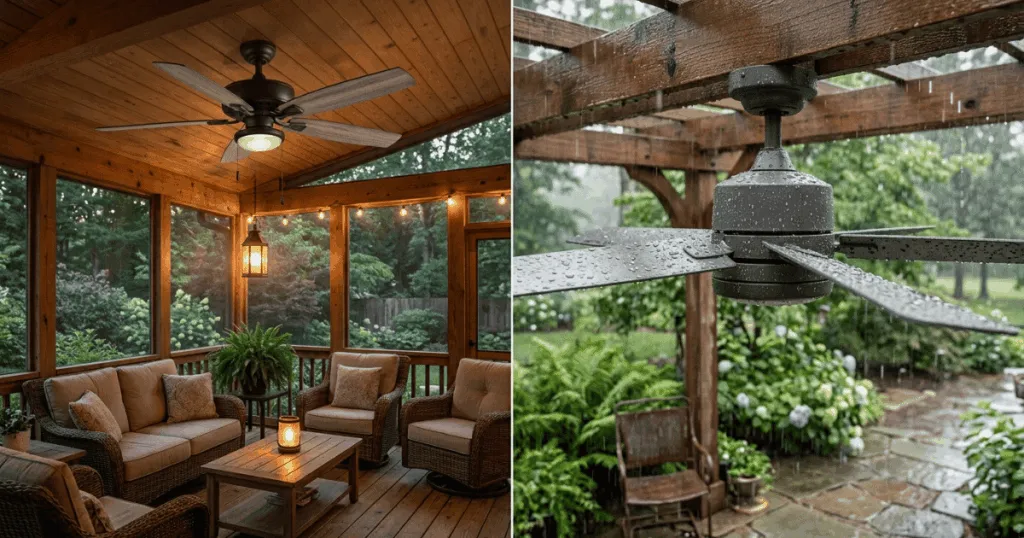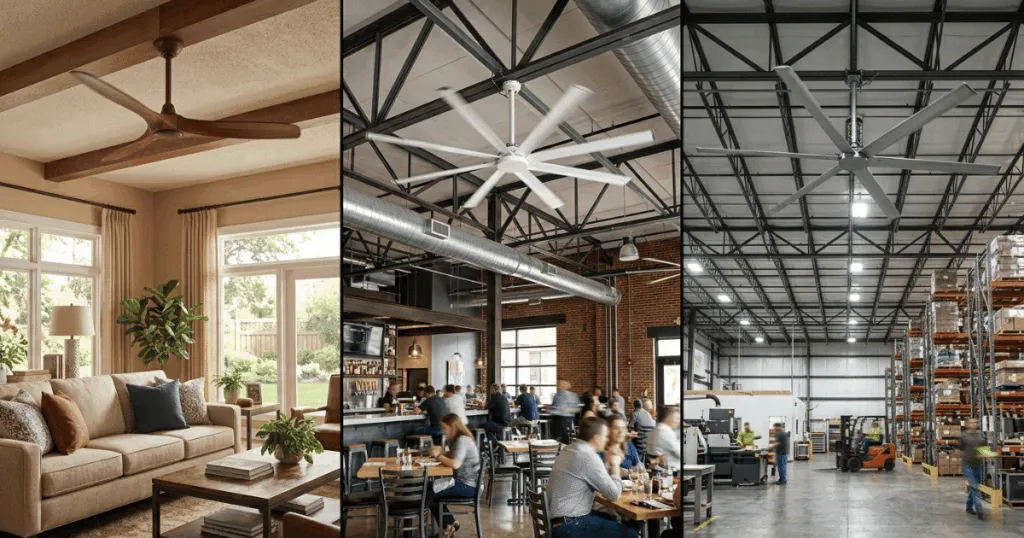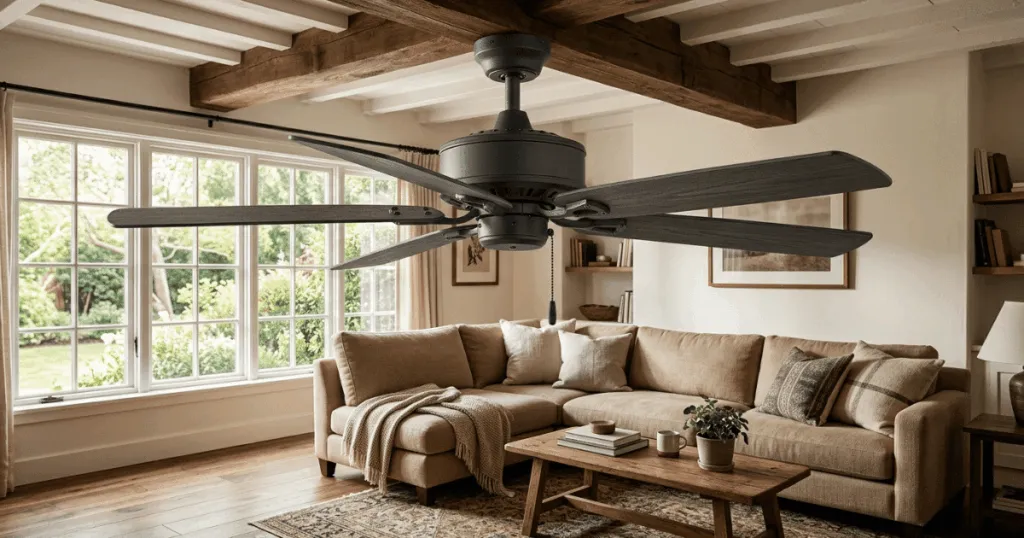
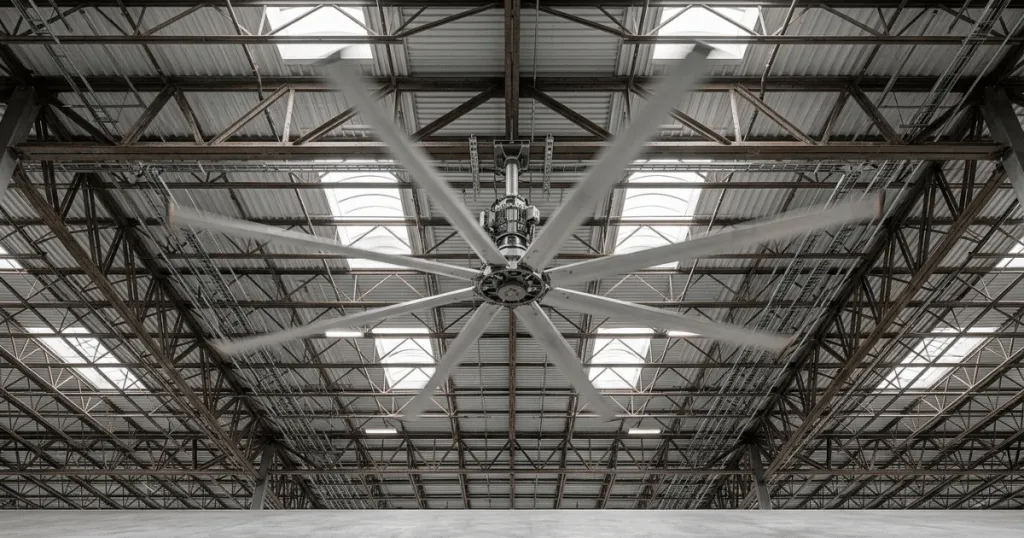
When exploring cooling solutions for large residential spaces, you may encounter the term High-Volume Low-Speed Fans, often abbreviated as HVLS. The fundamental distinction that separates these units from standard ceiling fans is their reliance on massive blade spans and slow, deliberate rotation to move air, rather than the rapid, choppy airflow produced by smaller, high-velocity models. Understanding this mechanical difference is the key to determining whether such a system is appropriate for your specific ceiling height and room volume.
While traditional fans focus on creating a localized wind-chill effect directly beneath the blades, these specialized units are designed to circulate air throughout an entire volume. This creates a gentle, consistent breeze rather than a concentrated blast. For the average homeowner, this distinction often dictates the difference between a comfortable, evenly cooled room and a space that feels drafty or stagnant.
The Mechanics of Air Movement
The primary goal of any ceiling fan is to facilitate air movement, but the method used by High-Volume Low-Speed Fans is distinctively different. These units typically utilize blades ranging from six to twenty-four feet in diameter. Because of this massive surface area, the fan does not need to spin quickly to displace a significant volume of air. In fact, they often operate at speeds as low as 10 to 50 rotations per minute.
This slow rotation creates a laminar airflow pattern. Unlike standard fans that create turbulent, high-velocity air, these large blades push a column of air downward that spreads out across the floor and rises back up the walls. This process, known as destratification, is highly effective at mixing the air in rooms with vaulted or cathedral ceilings. By preventing warm air from pooling at the peak of the ceiling, the fan helps maintain a more uniform temperature throughout the occupied space.
Blade Design and Aerodynamics
The efficiency of these fans is largely due to the airfoil design of the blades. Manufacturers often draw inspiration from aeronautical engineering, using wing-shaped profiles that maximize lift and air displacement. This design allows the fan to move a massive amount of air with minimal power consumption, making them surprisingly efficient despite their sheer size.
In practice, this means the fan operates with very little noise. Because the tips of the blades are not breaking the sound barrier or creating excessive turbulence, the acoustic footprint is significantly lower than that of smaller, high-speed industrial fans. For homeowners with open-concept living areas or large hobby rooms, this quiet operation is a major benefit, as it provides cooling without interfering with conversation or media enjoyment.
Real-World Context for Home Installation
Installing a fan of this magnitude is not a standard DIY project. The weight, torque, and mounting requirements are vastly different from a typical residential ceiling fan. Before considering this type of installation, you must evaluate the structural integrity of your ceiling joists or rafters. These units often require specialized mounting hardware that can handle not just the dead weight of the fan, but also the dynamic load created by the movement of such large blades.
Ceiling height is another critical factor. Most manufacturers specify a minimum clearance from the floor to the bottom of the blades to ensure safety and optimal airflow. If your ceiling is too low, the air column will not have enough space to spread out, resulting in a localized “dead zone” directly under the fan. Conversely, if the ceiling is too high, the fan may struggle to push air all the way to the floor without the help of properly angled blades.
Room Size and Spatial Planning
These fans are most effective in large, open-plan homes, such as converted lofts, great rooms, or expansive workshops. If you are trying to cool a standard bedroom or a small dining area, a standard residential ceiling fan is almost always the better choice. Attempting to force a large-diameter fan into a constrained space often leads to awkward aesthetics and poor performance, as the blades may be too close to walls or furniture.
Consider the layout of your furniture as well. Because these fans create such a wide, gentle air pattern, they are less likely to blow papers off a desk or disturb light objects compared to high-velocity fans. However, they can still create a noticeable breeze in areas where you might not want one, such as near a fireplace or a dining table. Strategic placement is essential to ensure the airflow enhances your comfort rather than becoming a nuisance.
Why This Matters for Your Comfort
The primary reason homeowners look into these systems is to improve thermal comfort in challenging spaces. In large rooms, air temperature often varies significantly from floor to ceiling. By using a fan to gently circulate this air, you can reduce the load on your HVAC system. During the summer, the gentle breeze provides a cooling effect that allows you to set your thermostat a few degrees higher without sacrificing comfort.
During the winter, the reverse function is equally important. By running the fan at a very low speed in reverse, you can push the warm air that has collected at the ceiling back down into the living zone. This simple act of destratification can make a room feel significantly warmer, potentially reducing the frequency at which your furnace needs to cycle on. This is a practical, energy-conscious way to manage comfort in homes with high ceilings.
Common Misconceptions
A frequent mistake is assuming that bigger is always better. Many homeowners see these fans in commercial settings like warehouses or gyms and assume they will provide the same benefit in a standard living room. In reality, the scale of these fans is often overkill for residential use. If a room is not large enough, the fan will not be able to create the intended air pattern, and you may find yourself dealing with an oversized, cumbersome appliance that provides little functional benefit.
Another misunderstanding involves the perceived power of the fan. Because they move slowly, some people assume they are not doing anything. However, the volume of air being moved is immense. It is a common error to try to speed up these fans to feel more “wind,” which can actually disrupt the laminar flow and reduce the fan’s efficiency. Trust the design; these units are meant to move air subtly, not aggressively.
Evaluating the Structural and Electrical Requirements
Beyond the aesthetic and airflow considerations, the technical installation of High-Volume Low-Speed Fans requires a rigorous assessment of your home’s infrastructure. Unlike standard ceiling fans that can often be supported by a standard electrical box, HVLS units exert significant torque on the mounting point. This torque is a result of the massive blade span and the inertia required to start the rotation of such large components. If the mounting point is not reinforced, the vibration can lead to ceiling damage or, in extreme cases, structural failure.
Electrical requirements also demand attention. Many of these fans utilize variable frequency drives (VFDs) to control the speed and direction of the motor. This is not a simple on/off switch. You may need to run dedicated circuits or install specific wall controls that are compatible with the fan’s motor type. Failing to account for these electrical needs during the planning phase often leads to costly retrofitting or the inability to operate the fan at its full potential. Always review the technical specifications provided by the manufacturer regarding voltage and amperage before purchasing.
Assessing Ceiling Height and Clearance
The relationship between ceiling height and fan diameter is the most critical factor for performance. For an HVLS fan to function as intended, it needs sufficient “headroom” above the blades to draw air in and enough space below the blades to allow the air column to expand. If the blades are too close to the ceiling, the fan will be starved of air, leading to motor strain and reduced airflow. Conversely, if the blades are too low, the air column will not have the space to disperse, resulting in a narrow, high-velocity stream that defeats the purpose of the gentle, wide-reaching breeze.
For most residential applications, a minimum ceiling height of 12 to 15 feet is recommended to allow for proper air circulation. If your home features vaulted ceilings, the mounting angle must be carefully calculated. Some fans are designed specifically for flat ceilings, while others offer specialized mounting kits for sloped surfaces. Ignoring these limitations can result in an unbalanced fan that wobbles during operation, creating noise and potential safety risks.
The Role of Airflow Patterns in Large Spaces
To truly understand why HVLS fans are unique, one must look at the physics of air displacement. A standard fan creates a “cone” of air directly beneath it. If you step outside that cone, you feel very little effect. An HVLS fan, by contrast, creates a massive “floor jet.” As the air hits the floor, it moves outward in all directions until it hits a wall, where it then travels up and back toward the ceiling to be recirculated. This creates a continuous, gentle loop of air movement that touches every corner of a large room.
This pattern is particularly beneficial in open-concept living spaces where the kitchen, dining area, and living room are combined. In such spaces, temperature pockets often form—the kitchen might be warm due to appliances, while the living area remains cool. The consistent, low-speed circulation provided by an HVLS fan helps to equalize these temperatures, ensuring that the entire space feels comfortable regardless of where you are standing. This is a significant advantage over traditional fans, which would require multiple units to achieve the same level of coverage, potentially creating a cluttered ceiling aesthetic.
Maintenance and Long-Term Reliability
Because these fans are often installed in hard-to-reach locations, maintenance is a key consideration. While they are generally robust, the sheer scale of the components means that any mechanical issue can be difficult to address. Most high-quality units are designed for longevity, with industrial-grade motors and sealed bearings that require minimal intervention. However, it is important to periodically inspect the mounting hardware and the blade connections to ensure that the dynamic load has not caused any loosening over time.
Unlike standard fans that might be replaced every few years, an HVLS fan is a long-term investment in your home’s infrastructure. When selecting a unit, look for manufacturers that provide clear guidance on maintenance intervals and offer accessible support. Because these are specialized products, you want to ensure that you can source replacement parts or technical assistance if needed. The goal is to install the fan once and enjoy years of reliable, energy-efficient comfort without the need for frequent repairs or adjustments.
FAQ
Can I install a High-Volume Low-Speed Fan in a standard bedroom?
Generally, no. These fans are designed for large, open-concept spaces with high ceilings. In a standard bedroom, the blade span is typically too large, which can create safety hazards, poor airflow distribution, and an overwhelming aesthetic.
Are these fans quieter than standard ceiling fans?
Yes, they are often quieter. Because the blades rotate at a much lower speed, they produce less aerodynamic noise and turbulence compared to smaller, high-speed fans that must spin rapidly to move a similar volume of air.
Do I need a special electrical setup for these fans?
Often, yes. Due to their size and the torque required to start and stop such large blades, they may require specific voltage or control systems that differ from standard residential fan wiring. Always consult the manufacturer’s installation manual and a qualified electrician.