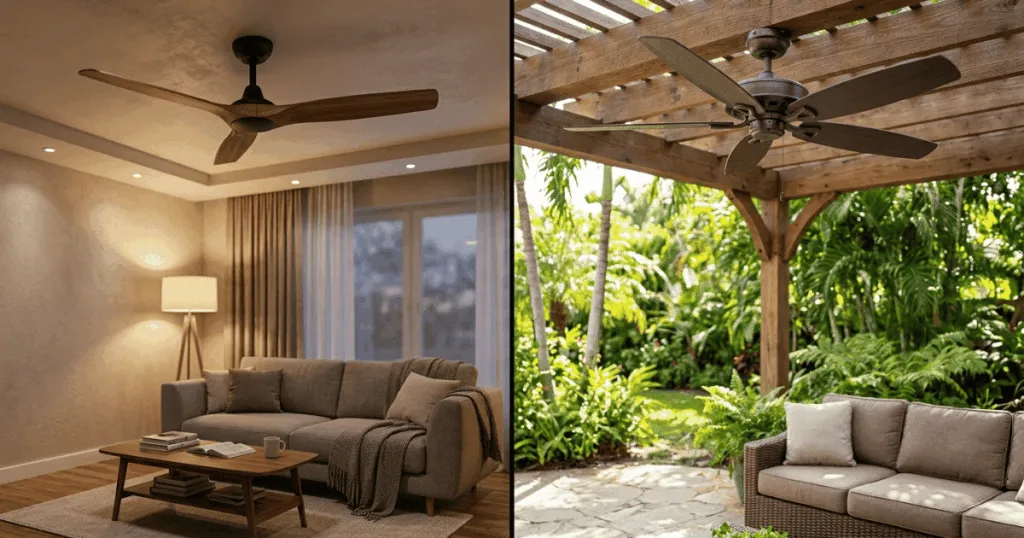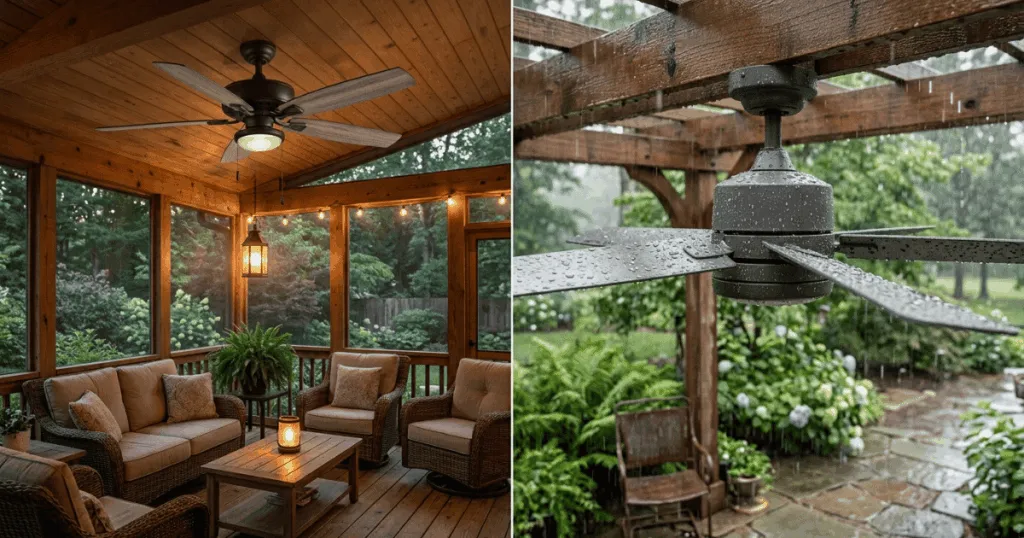
Quick Answer: Yes, you can use an outdoor ceiling fan indoors. In fact, damp-rated or wet-rated fans are often preferred for indoor rooms with high humidity, such as bathrooms, laundry rooms, or sunrooms, because they offer superior protection against moisture and corrosion compared to standard dry-rated indoor fans.
Many homeowners find themselves drawn to the rugged, stylish designs of outdoor ceiling fans, often wondering: Can you use an outdoor ceiling fan indoors to achieve a specific look or to handle high-humidity areas like bathrooms or sunrooms? While the short answer is yes, it is not as simple as swapping one unit for another without considering the technical specifications and safety ratings involved. Understanding the distinction between damp-rated, wet-rated, and dry-rated fans is essential for ensuring both the longevity of your appliance and the safety of your home environment.
Choosing the right fan involves more than just aesthetics; it requires a basic understanding of how moisture protection affects motor housing, blade materials, and electrical components. By evaluating your specific room conditions—such as potential moisture exposure or simply a desire for a particular aesthetic—you can determine whether an outdoor-rated model is a practical addition to your indoor living space.
Understanding Fan Ratings and Safety Standards
The primary difference between indoor and outdoor fans lies in their construction and testing standards. Manufacturers categorize fans based on their ability to withstand environmental elements, specifically moisture and debris. These ratings are not merely suggestions; they are indicators of the internal protection provided to the motor and electrical housing. Adherence to standards set by organizations like UL (Underwriters Laboratories) ensures that the equipment meets the necessary safety benchmarks for the National Electrical Code (NEC).
Dry-Rated Fans
Dry-rated fans are designed exclusively for indoor, climate-controlled spaces. These units are built with materials that are not intended to handle humidity or temperature fluctuations. If you install a dry-rated fan in a bathroom or a semi-enclosed porch, you risk premature failure of the motor, corrosion of the internal wiring, and potential safety hazards. These fans are the standard for bedrooms, living rooms, and dining areas where the environment remains stable.
Damp-Rated Fans
Damp-rated fans are engineered to handle moisture in the air but not direct contact with water. These are excellent choices for indoor spaces that experience high humidity, such as bathrooms, laundry rooms, or covered sunrooms. They feature internal components that are better sealed against condensation. If you are looking to bring an outdoor-style fan into a high-humidity indoor room, a damp-rated model is often the safest and most effective bridge between indoor and outdoor specifications.
Wet-Rated Fans
Wet-rated fans are built to withstand direct exposure to rain, snow, and cleaning with a hose. These units feature fully sealed motors and water-resistant blade materials, such as ABS plastic or treated composites. While you certainly can use a wet-rated fan indoors, it is often overkill for a standard living room. However, if you have a unique indoor architecture, such as an indoor pool room or a greenhouse-style atrium, these fans provide the highest level of protection against moisture-related damage.
Real-World Context for Indoor Installations
When considering whether to install an outdoor fan in an indoor room, you must look at the specific environmental stressors of that space. A kitchen, for instance, may seem like a good candidate for a damp-rated fan due to steam from cooking, but a standard dry-rated fan is usually sufficient if the room has proper ventilation. The decision often comes down to the balance between the fan’s build quality and the room’s actual moisture profile.
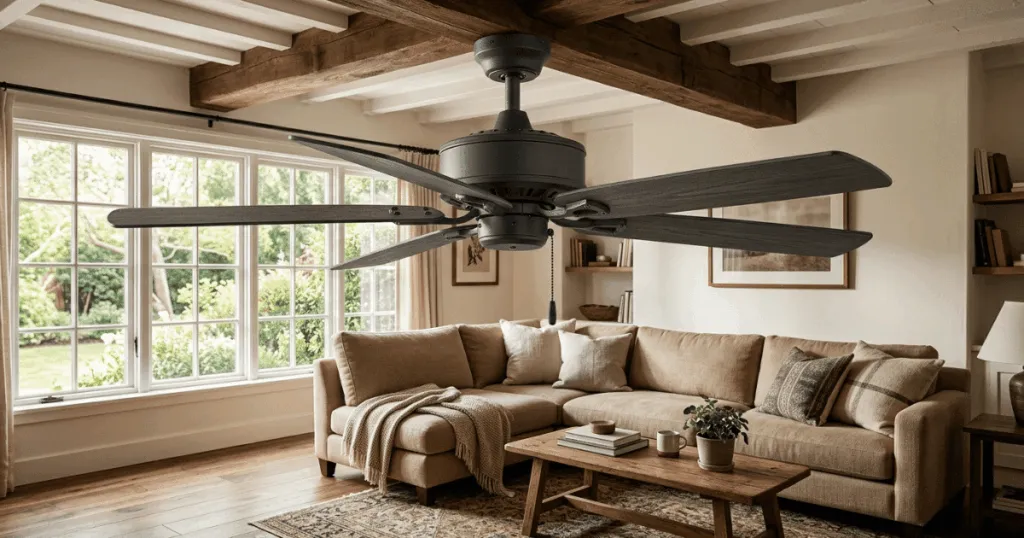
Consider the aesthetic impact as well. Outdoor fans often feature more robust blade designs, industrial finishes, or specialized hardware that might look out of place in a formal dining room. Conversely, in a rustic, farmhouse-style living room, an outdoor-rated fan with a dark bronze finish and wood-look blades can provide the exact design anchor you need. The key is ensuring that the style does not compromise the functional requirements of the space.
Another factor is the motor size and airflow capacity. Outdoor fans are frequently designed for larger, open-air spaces, meaning they may have higher CFM (cubic feet per minute) ratings. In a small, enclosed indoor bedroom, an overly powerful fan might create an uncomfortable draft, even on its lowest setting. Always check the airflow specifications to ensure the fan’s performance aligns with the square footage and ceiling height of your room.
Why This Decision Matters for Homeowners
The most significant risk in selecting the wrong fan rating is the degradation of the ceiling fan motor housing. Indoor fans are not built with the same level of gasket sealing as outdoor models. If you install an indoor-rated fan in a space with high humidity, moisture will eventually penetrate the motor casing, leading to rust, electrical shorts, and potentially dangerous overheating. This is not just a performance issue; it is a long-term maintenance concern.
Furthermore, using an outdoor fan indoors can sometimes impact your warranty coverage. Manufacturers design their products for specific environments. If a motor fails because it was installed in a damp environment for which it was not rated, the manufacturer may void the warranty. By choosing a fan that matches the environmental rating of your room, you protect your investment and ensure that the product performs as intended for its full lifespan.
Finally, noise sensitivity is a common, often overlooked factor. Outdoor fans are sometimes built with more robust, heavy-duty motors that can be slightly louder than high-end, whisper-quiet indoor fans. If you are installing a fan in a bedroom or home office, you may find that the mechanical hum of an industrial-style outdoor fan is more noticeable than the silent operation of a dedicated indoor model. Prioritizing comfort alongside durability is the hallmark of a well-planned installation.
Common Misconceptions About Fan Ratings
One of the most persistent myths is that all outdoor fans are inherently better or more durable than indoor fans. While they are more resistant to moisture, they are not necessarily “better” in terms of energy efficiency, light integration, or quiet operation. Many high-end indoor fans offer superior motor technology and light-dimming capabilities that simply aren’t prioritized in outdoor models.
Another misconception is that you can safely use any fan in a bathroom as long as it is not directly above the shower. While this is technically true in some building codes, it ignores the reality of steam and condensation. Even if a fan is not sprayed with water, the humidity in a bathroom can be high enough to warrant a damp-rated unit. Do not assume that distance from a water source is the only factor that matters; ambient humidity is just as damaging to internal electronics over time.
Finally, many homeowners believe that outdoor fans are too heavy for standard indoor ceiling boxes. While some outdoor fans are indeed heavier due to their weather-resistant materials, most are designed to mount to standard junction boxes. Always verify the weight of the fan against the rating of your ceiling electrical box, regardless of whether the fan is labeled for indoor or outdoor use. Safety in installation is universal, regardless of the fan’s environmental rating.
Evaluating Blade Materials and Maintenance
When you opt for an outdoor-rated fan, you are often choosing materials engineered for corrosion resistance. This is a significant advantage in indoor environments that are prone to fluctuations in temperature and humidity, such as a sunroom or a basement. Outdoor blades are frequently crafted from ABS plastic, stainless steel, or treated wood composites. These materials are less likely to warp or sag over time compared to the pressed-board blades often found on budget-friendly indoor fans.
Ceiling fan maintenance is also influenced by your choice of fan. A wet-rated fan, for instance, allows for easier cleaning. Because the components are sealed, you can often wipe down the blades and motor housing with a damp cloth without worrying about moisture seeping into the electrical connections. This is a practical benefit for homeowners who prefer low-maintenance home improvement solutions. However, always ensure the power is off before cleaning, and avoid using harsh chemical cleaners that could damage the finish of the fan.
The Role of Airflow and Room Dynamics
Indoor air circulation is critical for comfort, and the choice between an indoor and outdoor fan should be guided by how the air moves in your specific room. Outdoor fans are often designed to move large volumes of air in open spaces, which can result in a more aggressive airflow pattern. In an indoor setting, this might be too intense for a smaller room. When selecting a fan, look at the CFM ratings provided by the manufacturer. A high CFM rating is great for a large great room, but it might be overkill for a small home office or a nursery where you want a gentle breeze rather than a wind tunnel effect.
Additionally, consider the ceiling height. If you are installing an outdoor fan in a room with a standard eight-foot ceiling, ensure that the downrod length is appropriate. Outdoor fans often come with longer downrods to accommodate vaulted or high ceilings common in porches. If the fan hangs too low, it can create an unsafe environment and an uncomfortable draft. Always prioritize the clearance requirements to ensure the fan operates safely and effectively within your indoor space.
Final Considerations for Your Installation
Ultimately, the decision to use an outdoor ceiling fan indoors comes down to matching the product’s capabilities with the room’s environmental demands. If you are looking for a specific style that only exists in an outdoor line, or if you are dealing with a room that has higher-than-average humidity, an outdoor-rated fan is a perfectly valid and often superior choice. By focusing on the environmental rating, the motor’s noise profile, and the airflow requirements, you can achieve a result that is both aesthetically pleasing and functionally sound. Remember that the goal is to enhance your indoor air quality and comfort, and choosing the right fan is a key part of that process.
FAQ
Can I install a wet-rated fan in my kitchen?
Yes, a wet-rated fan is safe for a kitchen, though a damp-rated or even a high-quality dry-rated fan is often sufficient unless you have extreme moisture issues. The primary benefit of a wet-rated fan in a kitchen is its ease of cleaning, as it can withstand wiping with damp cloths or even mild spray-downs.
Will an outdoor fan be too loud for my bedroom?
It depends on the specific model. Some outdoor fans use heavy-duty motors that produce more noise than whisper-quiet indoor models. Check the manufacturer’s decibel ratings or user reviews regarding motor noise if you are sensitive to sound in sleeping areas.
Does using an outdoor fan indoors void the warranty?
Generally, no, as long as the installation environment is at least as protected as the fan’s rating. However, if you install a dry-rated indoor fan in a damp outdoor or semi-outdoor space, that will likely void the warranty. Always check the specific manufacturer’s documentation.