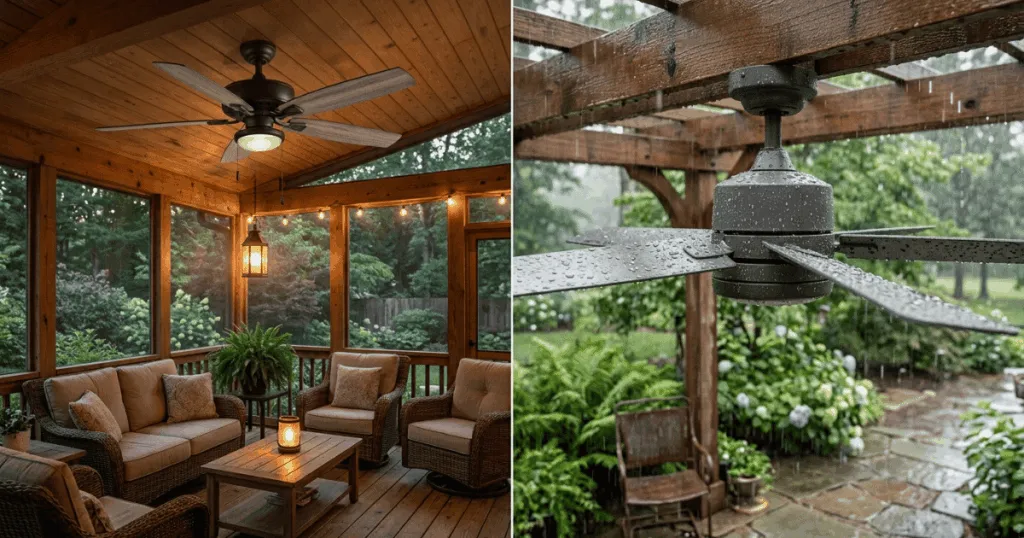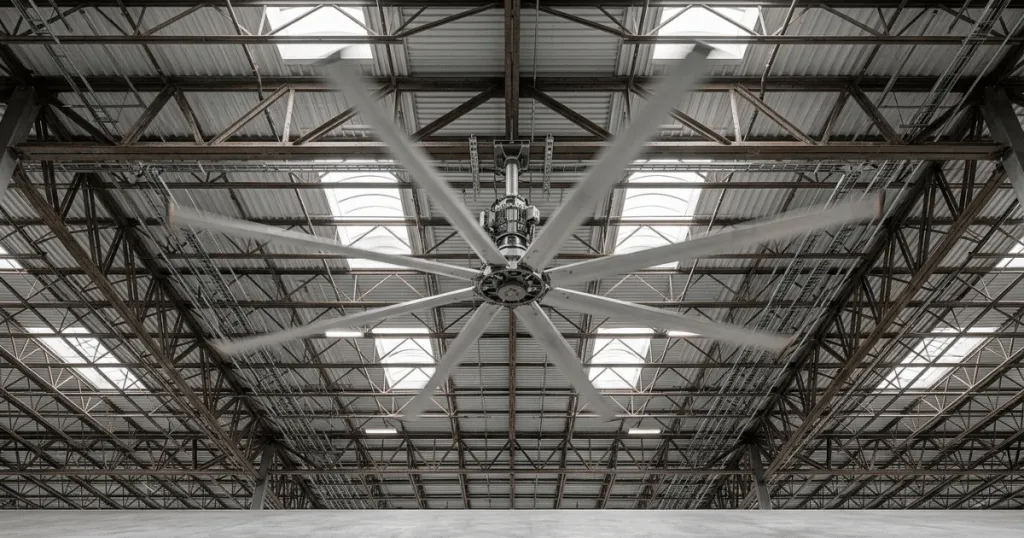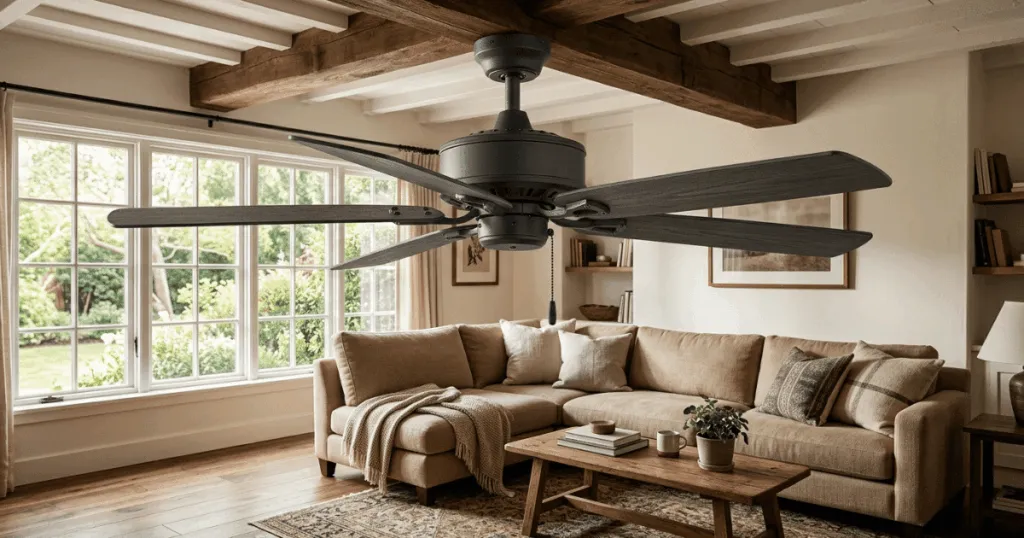
Bottom Line: The choice between indoor and outdoor ceiling fans depends entirely on moisture exposure. Use indoor fans only in climate-controlled, dry rooms. Use damp-rated fans for covered porches and bathrooms, and use wet-rated fans for any area exposed to direct rain or extreme environmental conditions.
When deciding between indoor vs outdoor ceiling fans, the primary factor is not style or airflow, but the specific environmental rating of the motor and housing. If you are installing a fan in a climate-controlled living room, a standard indoor model is perfectly sufficient. However, if your installation site involves even minimal exposure to humidity, moisture, or direct weather, you must select a fan specifically engineered for those conditions to ensure safety and longevity.
The most common mistake homeowners make is assuming that a covered porch or a bathroom is “indoor enough” for a standard fan. In reality, these spaces often require damp-rated or wet-rated fixtures. Choosing the wrong type can lead to corroded internal components, warped blades, and electrical hazards. This guide breaks down the technical differences and provides a clear framework for selecting the right fan for your specific space.
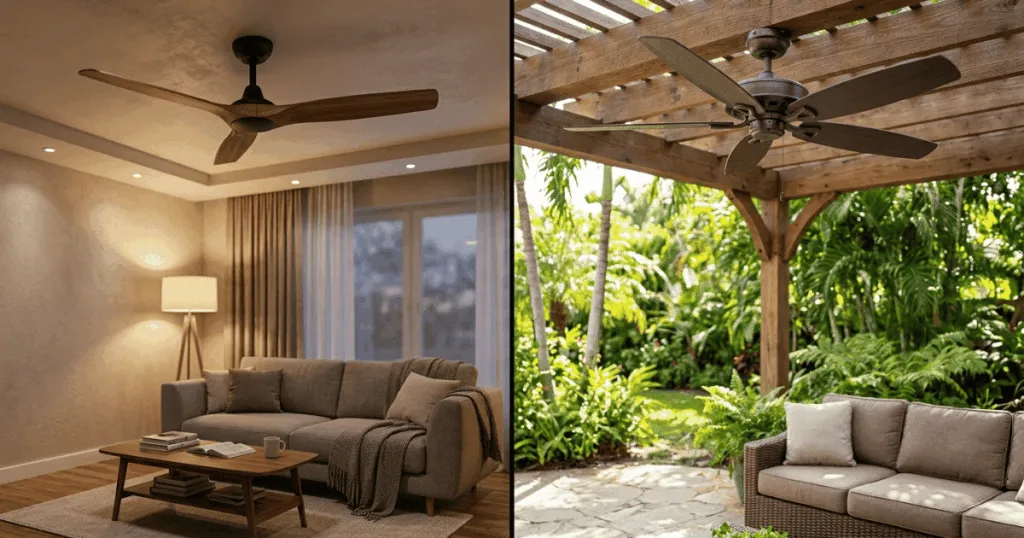
Comparison of Fan Ratings and Environmental Suitability
| Feature | Indoor Fans | Damp-Rated Fans | Wet-Rated Fans |
|---|---|---|---|
| Moisture Resistance | None | Resistant to humidity | Resistant to rain/water |
| Motor Housing | Standard | Sealed | Fully sealed/waterproof |
| Blade Material | Wood/MDF | Treated wood/Plastic | Plastic/All-weather composite |
| Best Use Case | Living rooms, bedrooms | Covered porches, bathrooms | Open patios, pergolas |
Understanding Indoor Ceiling Fans
Indoor ceiling fans are designed exclusively for dry, climate-controlled environments. Their construction prioritizes aesthetics and quiet operation over weatherproofing. The motors are typically not sealed against the elements, and the blade materials are often made of furniture-grade wood or medium-density fiberboard (MDF) that will absorb moisture and warp if exposed to high humidity.
Because these fans are intended for stable temperatures, they lack the specialized gaskets and corrosion-resistant coatings found in higher-tier models. If you install an indoor fan in a space that experiences temperature swings, such as an unheated sunroom or a garage, you risk premature motor failure. The internal electronics are sensitive to condensation, which can cause short circuits or erratic performance over time.
From a design perspective, indoor fans offer the widest range of finishes, decorative glass, and intricate blade shapes. Since they do not need to withstand harsh conditions, manufacturers have more freedom to use delicate materials like fabric shades or intricate metal filigree. If your goal is to enhance the interior decor of a bedroom or dining area, the indoor category provides the best variety for your aesthetic needs.
Analyzing Outdoor Ceiling Fans: Damp vs. Wet Ratings
Outdoor ceiling fans are categorized by their ability to handle moisture, which is defined by their Underwriters Laboratories (UL) or ETL certification. Understanding the distinction between damp-rated and wet-rated models is critical for safety and long-term reliability. A damp-rated fan is designed for areas that are covered but not directly exposed to rain, such as a screened-in porch or a bathroom with a shower.
These fans feature moisture-resistant finishes and sealed motors that prevent humidity from damaging the internal wiring. However, they are not built to withstand direct water contact. If water splashes onto the motor housing or the blades, a damp-rated fan may still suffer from electrical issues or surface corrosion. They serve as a middle ground for spaces that are protected from the elements but still humid.
Wet-rated fans are the heavy-duty option, engineered to withstand direct exposure to rain, snow, and high-pressure cleaning. These models feature fully sealed motors, stainless steel hardware, and blades made from all-weather plastics or composites. You can literally hose these fans down without damaging the motor. If you are installing a fan in an open-air pergola, a deck, or a coastal area with salt air, a wet-rated fan is the only safe and durable choice.
Key Differences in Construction and Durability
The most significant difference between these categories lies in the engineering of the motor housing and the materials used for the blades. Indoor fans use standard steel or aluminum housings that are prone to rust if exposed to even slight moisture. In contrast, outdoor fans utilize specialized coatings and high-grade materials like stainless steel or powder-coated aluminum to prevent oxidation.
Blade construction is another major differentiator. Indoor fans often use wood or MDF, which is lightweight and aesthetically pleasing but acts like a sponge in humid conditions. Once these blades absorb moisture, they lose their balance, leading to the dreaded fan wobble. Outdoor fans use ABS plastic, resin, or treated composites that remain rigid and balanced regardless of the humidity level or temperature fluctuations.
Electrical safety is the final, most critical component. Outdoor fans include sealed electrical compartments that prevent moisture from reaching the capacitor and wiring. This sealing process is what makes the fan “rated” for its specific environment. Using an indoor fan in an outdoor setting bypasses these safety features, creating a significant risk of electrical shorts or fire hazards, especially in areas where rain or condensation can accumulate.
Best Use Cases for Every Room
For standard living areas like bedrooms, kitchens, and living rooms, indoor fans are the standard choice. They provide the necessary airflow without the added cost and industrial aesthetics of outdoor-rated models. If your kitchen is well-ventilated, a standard indoor fan is usually sufficient, though some homeowners prefer a damp-rated fan if the kitchen is prone to heavy steam or grease buildup.
For bathrooms, laundry rooms, or covered porches, a damp-rated fan is the practical choice. These areas experience significant humidity but are protected from direct rainfall. The damp rating ensures that the fan can handle the moisture-laden air without the motor housing corroding or the blades sagging. This is a common upgrade for homeowners looking to improve circulation in a steamy bathroom.
For open-air spaces, such as exposed patios, gazebos, or coastal homes, a wet-rated fan is mandatory. These environments subject the fan to direct weather, salt spray, and extreme temperature changes. A wet-rated fan is designed to withstand these stressors, ensuring that your investment lasts for years rather than failing after the first season of heavy rain or winter exposure.
The Role of Climate in Fan Selection
Beyond the immediate installation site, the regional climate plays a significant role in the longevity of your ceiling fan. Homeowners in high-humidity regions, such as the Southeast or coastal areas, face unique challenges. Even if a fan is installed on a covered porch, the ambient humidity can be high enough to cause “sweating” on metal surfaces. In these environments, opting for a wet-rated fan, even for a covered area, provides an extra layer of protection against corrosion that a damp-rated fan might not fully mitigate over time.
Coastal environments introduce the additional factor of salt air. Salt is highly corrosive and can degrade standard finishes and internal components rapidly. When selecting a fan for a coastal home, look for marine-grade finishes or high-quality powder coatings. Stainless steel hardware is non-negotiable in these areas. While the initial cost of these specialized fans may be higher, the reduction in maintenance and the extended lifespan of the unit provide better long-term value.
Installation Considerations and Safety Standards
Proper installation is just as important as selecting the correct rating. When installing a fan in an outdoor or damp environment, ensure that all electrical connections are properly sealed. Many outdoor fans come with gaskets designed to keep moisture out of the canopy and switch housing. If these gaskets are omitted during installation, the integrity of the rating is compromised, effectively turning your wet-rated fan into an indoor-rated one.
Furthermore, consider the mounting hardware. Standard indoor fans often come with zinc-plated hardware that can rust when exposed to moisture. If you are installing a fan in a damp or wet location, verify that the mounting bracket and all screws are stainless steel or otherwise corrosion-resistant. This attention to detail prevents rust streaks from forming on your ceiling and ensures that the fan remains securely attached to the mounting box over its entire lifespan.
Navigating Aesthetic Trade-offs
A common concern among homeowners is that outdoor fans lack the style variety of indoor models. While it is true that indoor fans have historically offered more ornate designs, the market has shifted significantly. Today, you can find wet-rated fans that feature modern, minimalist, or even traditional aesthetics that rival their indoor counterparts. The use of advanced materials like high-density polymers allows manufacturers to mimic the look of wood grain or metal finishes without the associated vulnerability to moisture.
If you are struggling to find an outdoor fan that matches your interior decor, remember that you can always install a wet-rated fan indoors. This is an excellent strategy if you want a consistent look throughout your home, especially in open-concept floor plans where an indoor living space flows directly into an outdoor patio. By using the same wet-rated model in both areas, you achieve a seamless visual transition while ensuring that every fan is built to withstand the most demanding environment in your home.
Which One Should You Choose?
Choosing between indoor vs outdoor ceiling fans should be guided by the “worst-case scenario” for your installation site. If there is any chance of moisture reaching the fan, even through condensation or high humidity, opt for a damp-rated model at minimum. If the fan will be exposed to rain, you must choose a wet-rated model. Do not let style or price dictate this decision; safety and longevity are the primary concerns.
Professional installers generally prioritize the UL rating over the visual appeal of the fan. A common mistake is buying a fan based on its blade style, only to find that it is not rated for the intended environment. If you are unsure about the humidity levels in your space, it is always safer to choose a higher-rated fan. A wet-rated fan can be installed indoors, but an indoor fan can never be installed outdoors.
If you are working with a limited budget, you might be tempted to use an indoor fan in a covered porch. We strongly advise against this. The cost of replacing a damaged motor or dealing with a rusted fixture far outweighs the initial savings. For most homeowners, the peace of mind that comes with a properly rated, weather-resistant fan is well worth the investment, especially when considering the labor involved in replacing a faulty unit.
FAQ
Can I install a wet-rated fan inside my home?
Yes, you can install a wet-rated fan in any indoor room. While they are built for harsh conditions, they function perfectly well indoors, though they may have a more industrial design aesthetic.
What happens if I use an indoor fan on a covered porch?
Using an indoor fan in a non-climate-controlled space will likely lead to motor corrosion, blade warping, and electrical failure. The lack of sealed components makes them unsafe for environments with fluctuating humidity.
How do I know if a fan is damp or wet rated?
Check the product packaging or the manufacturer’s specification sheet for a UL or ETL rating. It will explicitly state ‘Dry’, ‘Damp’, or ‘Wet’ location suitability.