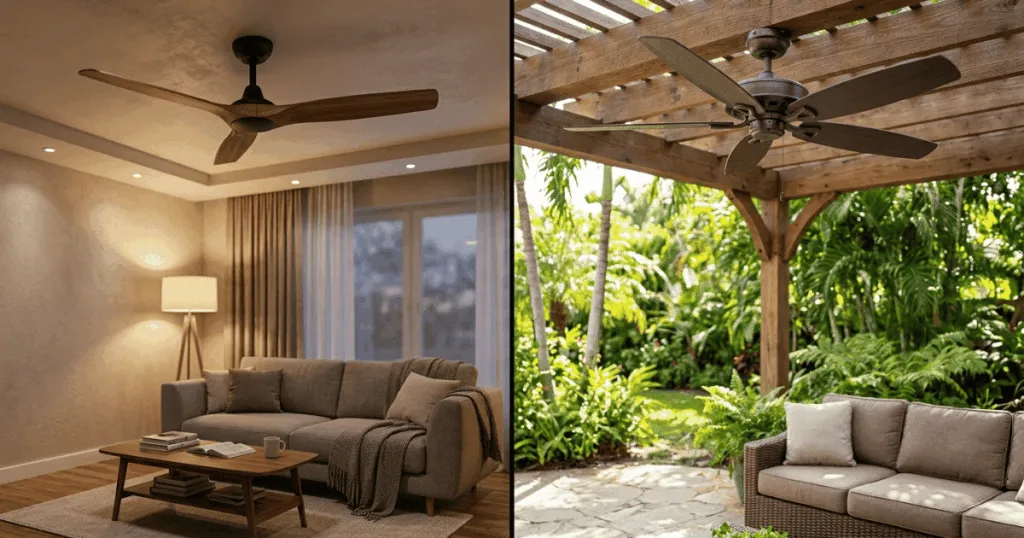
The Short Answer: Choose a damp-rated fan for covered areas like screened porches and bathrooms where the fan is protected from direct rain but exposed to humidity. Choose a wet-rated fan for any location exposed to direct rain, wind-driven spray, or outdoor elements, such as open patios or pergolas. When in doubt, always default to a wet-rated fan to prevent motor failure and ensure safety.
When selecting a ceiling fan for a non-conditioned space, understanding the difference between damp-rated and wet-rated fans is the most important step to ensure longevity and safety. If you are installing a fan in a covered porch or a bathroom, a damp-rated fan is usually sufficient. However, if the fan will be exposed to direct rain, spray, or heavy moisture, a wet-rated fan is mandatory. Choosing the wrong rating often leads to premature motor failure, corrosion of internal components, and potential electrical hazards that void your manufacturer warranty.
This guide breaks down the technical distinctions between these two classifications so you can make an informed decision based on your specific installation environment. By matching the fan’s ingress protection level to your local climate and exposure risks, you avoid the common mistake of overspending on unnecessary features or, worse, under-protecting your investment in a high-humidity area.
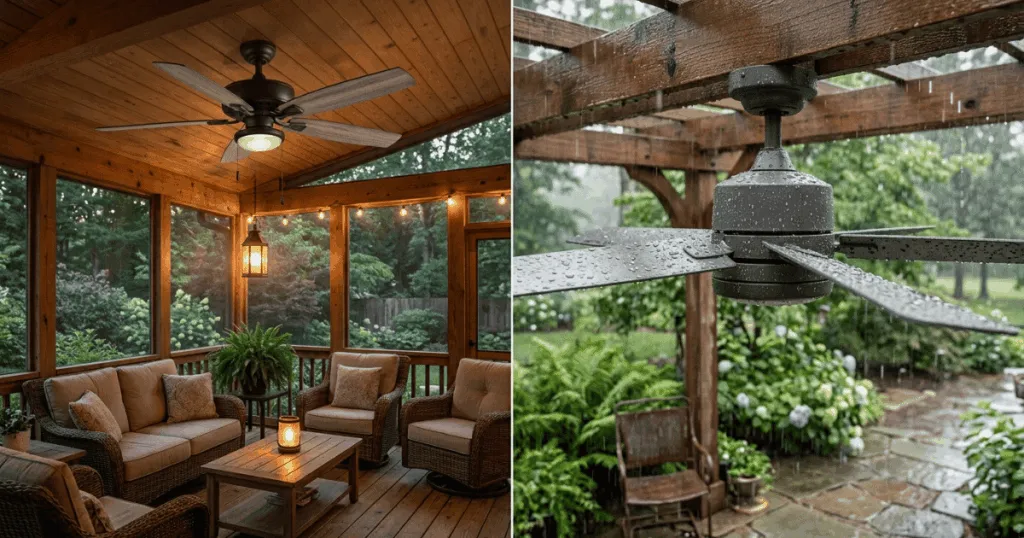
Comparison of Moisture Protection Standards
The primary distinction between these two ratings lies in the intensity of moisture exposure the fan is engineered to withstand. Manufacturers test these fans according to specific safety standards to ensure that water does not reach the internal electrical components, which would otherwise cause short circuits or structural degradation.
| Feature | Damp-Rated Fans | Wet-Rated Fans |
|---|---|---|
| Primary Use | Covered porches, bathrooms, laundry rooms | Open patios, pergolas, pool decks |
| Moisture Exposure | Humidity and indirect moisture | Direct rain, hose spray, heavy water |
| Internal Protection | Sealed motor, moisture-resistant finish | Fully sealed motor, waterproof housing |
| Blade Material | Often wood or treated composite | All-weather plastic, ABS, or metal |
| Warranty Risk | Void if exposed to direct rain | None for outdoor use |
Understanding Damp-Rated Fans
Damp-rated fans are designed for spaces that are protected from direct precipitation but are still subject to high levels of humidity or condensation. A common misconception is that these fans are waterproof; they are not. They feature moisture-resistant finishes and sealed motor housings that prevent ambient moisture from corroding the internal copper windings or the electrical connections.
These models are the standard choice for bathrooms, laundry rooms, and screened-in porches. In a bathroom, for instance, the steam generated by a shower can easily damage a standard indoor fan. A damp-rated unit handles this cyclic moisture exposure effectively. However, if you install a damp-rated fan in an area where rain can blow in through a screen or open side, you are inviting failure. The moisture will eventually penetrate the motor housing, leading to rust and electrical shorts.
Understanding Wet-Rated Fans
Wet-rated fans are engineered to be completely exposed to the elements. These units undergo rigorous testing to ensure that water can be sprayed directly onto the housing without entering the electrical cavity. This makes them the only appropriate choice for open-air structures like pergolas, uncovered patios, or areas near a pool where splashing is frequent.
The engineering behind a wet-rated fan goes beyond just a sealed motor. The hardware, including screws and mounting brackets, is typically made from stainless steel or treated with specialized anti-corrosive coatings. The blades are almost exclusively made of non-porous materials like high-grade ABS plastic or powder-coated aluminum, which will not warp, swell, or peel when subjected to rain or extreme temperature fluctuations. If your installation site lacks a solid roof or overhead protection, a wet-rated fan is not just a recommendation; it is a necessity for safety.
Key Differences and Trade-offs
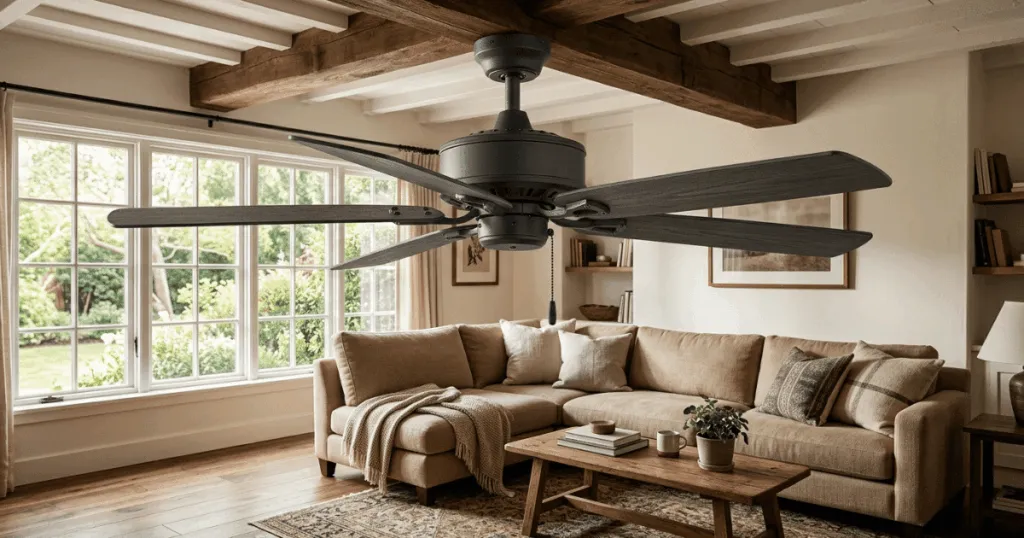
When comparing these two, the most significant trade-off is often aesthetic variety versus durability. Damp-rated fans are available in a much wider range of styles, finishes, and blade materials, including natural wood or decorative metal, because the environment is less punishing. You can often find damp-rated models that look indistinguishable from high-end indoor fans, allowing for a seamless transition between your interior design and your covered outdoor living space.
Conversely, wet-rated fans are more utilitarian in their design language. Because they must be constructed from materials that resist water saturation, you will find fewer options with natural wood blades or intricate, delicate finishes. While manufacturers have improved the aesthetics of wet-rated models, the focus remains on the integrity of the seal. Choosing a wet-rated fan for a damp location is never a technical mistake, but it may limit your design choices. Choosing a damp-rated fan for a wet location, however, is a fundamental error that compromises the safety of your home.
The Role of Ingress Protection in Ceiling Fan Maintenance
Understanding the technical side of ceiling fan moisture protection requires looking at how Underwriters Laboratories (UL) or similar testing bodies certify these products. The term “ingress protection” refers to the ability of the enclosure to prevent foreign objects and water from reaching the electrical components. For damp-rated fans, the testing focuses on the ability to withstand ambient humidity without the motor housing failing. In contrast, wet-rated fans must pass tests that simulate direct water spray from multiple angles.
This is why the motor housing on a wet-rated fan is often more robust, featuring gaskets and specialized seals that are absent in damp-rated or standard indoor models. For homeowners, this means that maintenance for a wet-rated fan is significantly easier; you can often clean the blades and housing with a damp cloth or even a light garden hose spray, whereas a damp-rated fan requires more delicate care to avoid forcing moisture into the housing.
Climate Suitability and Environmental Factors
Your local climate is a major factor in deciding between damp-rated vs wet-rated fans. If you live in a region with extreme seasonal changes, such as high-humidity summers followed by freezing winters, the expansion and contraction of materials become a concern. Wet-rated fans are generally better equipped to handle these temperature fluctuations because their components—specifically the ABS plastic blades and stainless steel hardware—are designed to maintain structural integrity under stress.
Damp-rated fans, which may utilize composite wood or thinner metal, can suffer from warping or finish degradation when exposed to rapid temperature shifts. Furthermore, if you are in a coastal environment, the salt content in the air acts as a catalyst for corrosion. Even if your porch is covered, the salt-laden air can penetrate the motor housing of a damp-rated fan. In these specific scenarios, opting for a wet-rated fan—even in a covered area—is a proactive measure to extend the lifespan of your ceiling fan.
Practical Guidance for Bathroom Ceiling Fan Requirements
Many homeowners mistakenly believe that a standard indoor fan is sufficient for a bathroom. However, the high volume of steam generated during a hot shower creates a micro-climate that mimics a humid outdoor environment. Damp-rated fans are the minimum requirement for these spaces. When selecting a fan for a bathroom, consider the airflow expectations.
A fan that is too small for the room will not circulate the air effectively, leading to condensation buildup on the ceiling and walls, which can eventually damage the fan’s finish. A damp-rated fan with a high-quality, moisture-resistant coating is essential here. If your bathroom is particularly large or has poor ventilation, you might consider a wet-rated fan, though it is rarely necessary unless the fan is positioned directly over a shower or tub where water spray is a constant risk.
Installation Considerations for Outdoor Living Spaces
When planning a patio ceiling fan installation, the physical location of the fan relative to the roofline is critical. It is a common error to assume that because a fan is under a roof, it is protected. Wind-driven rain can easily reach a fan that is mounted near the edge of a porch or patio. If your fan is mounted within three to five feet of the edge of your covered area, it is highly susceptible to rain.
In this case, a damp-rated fan is insufficient. You must install a wet-rated fan to ensure that the motor housing remains sealed against the elements. Additionally, consider the mounting type. For outdoor spaces, downrod mounts are often preferred over flush mounts because they allow for better airflow and prevent the fan from being too close to the ceiling, where moisture can become trapped. Always ensure that the electrical box used for the installation is also rated for outdoor use, as the fan’s rating is only as good as the electrical infrastructure supporting it.
Best-Use Scenarios
To determine which rating you need, evaluate the physical exposure of your installation site. A damp-rated fan is the ideal choice for any area that is fully covered and sheltered from direct rain. This includes three-season rooms, screened porches, and large, well-ventilated bathrooms. If you live in a coastal area with high salt air, a damp-rated fan may still struggle with corrosion over time, so look for models specifically marketed with marine-grade coatings.
A wet-rated fan is the only option for any space where the fan is exposed to the sky or direct wind-driven rain. This includes open gazebos, uncovered decks, and outdoor kitchens where cleaning might involve a hose. If you are ever in doubt about whether a porch is “covered enough” to protect a damp-rated fan, opt for a wet-rated model. The slight increase in cost is negligible compared to the expense of replacing a motor that has failed due to water ingress.
Which One Should You Choose?
The decision between damp-rated and wet-rated fans should be dictated by the worst-case weather scenario for your installation site. If your porch has a roof that extends well beyond the fan’s perimeter, a damp-rated fan is usually the best balance of style and function. It provides the necessary protection against humidity without forcing you into the more industrial aesthetic of a wet-rated unit.
However, if you are installing the fan in a location where you cannot guarantee the absence of water—such as an open patio or a coastal home where wind-blown rain is common—the choice is clear. Always select a wet-rated fan. Professionals prioritize the seal integrity over the aesthetic finish because the cost of a service call or a full replacement far outweighs the initial savings of a cheaper, lower-rated fan.
Do not assume that a covered porch is always safe; if your ceiling fan is close enough to the edge of the roof to catch rain during a storm, it is a wet-rated application. Prioritize longevity by matching the rating to the maximum potential exposure, not the average daily condition.
FAQ
Can I install a wet-rated fan inside my house?
Yes, you can safely install a wet-rated fan indoors. While they are built for harsh outdoor conditions, they function perfectly in indoor rooms like kitchens or bathrooms. However, you may find fewer style options compared to indoor-only or damp-rated models.
Does a damp-rated fan handle salt air in coastal areas?
Standard damp-rated fans are not specifically designed for salt air. If you live in a coastal region, look for a fan with a ‘marine-grade’ rating or specific anti-corrosive finishes, as salt air can corrode even damp-rated components over time.
Will a damp-rated fan void my warranty if installed on an open patio?
Yes, installing a damp-rated fan in an area exposed to direct rain typically voids the manufacturer’s warranty. Manufacturers specify these ratings based on testing, and using a product outside its intended environment is considered improper installation.