A wobbling ceiling fan is more than just a visual distraction. It creates an unsettling rhythm that can lead to premature wear on the motor and mounting hardware. When you notice your fan shaking, the most common solution is a Ceiling Fan Balancing Kit. These simple, inexpensive tools are designed to identify and correct weight distribution issues in the blade assembly, which is the primary cause of most fan instability in residential settings.
Understanding that a Ceiling Fan Balancing Kit is a corrective measure rather than a structural fix is vital for any homeowner. While these kits effectively neutralize minor imbalances, they cannot repair loose mounting brackets, bent blade irons, or damaged motor housings. Before you reach for a balancing kit, it is important to rule out mechanical failures that require tightening or replacement rather than just weight adjustment.
Understanding the Mechanics of Fan Imbalance
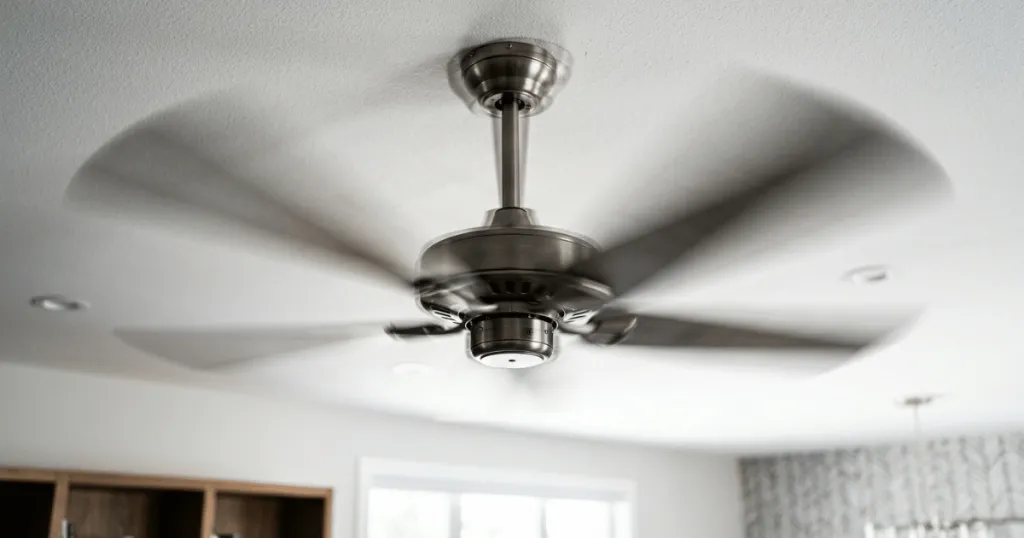
Ceiling fans operate on the principle of rotational equilibrium. When a fan is perfectly balanced, the center of mass aligns with the axis of rotation. Even a slight variation in the weight of a single blade, or a minor misalignment in the blade iron, shifts this center of mass. This shift creates centrifugal force that manifests as a wobble. In practice, this means that even a difference of a few grams between blades can cause the entire assembly to oscillate at higher speeds.
The most common culprit for this imbalance is the weight of the blades themselves. Over time, wood or composite materials can absorb moisture differently, or a single blade might have been manufactured with a slightly different density. When one blade is heavier than the others, it pulls the motor housing in its direction during every rotation. This is where the balancing kit provides a solution by allowing you to add a precise amount of counterweight to the lighter blades, effectively equalizing the load across the entire rotor.
Factors Contributing to Instability
Beyond blade weight, the physical orientation of the blades plays a significant role. Blade irons, the metal brackets that connect the fan blade to the motor, are susceptible to bending during installation or cleaning. If one iron is bent slightly upward or downward, the blade tracks differently than the others. This creates aerodynamic drag that is inconsistent across the rotation, causing the fan to shake. A balancing kit cannot fix a bent blade iron, so checking for uniform tracking is a necessary first step.
Environmental factors also contribute to long-term imbalance. Fans installed in high-humidity areas, such as covered porches or bathrooms, may experience uneven warping of wooden blades. Additionally, dust accumulation is a frequent, often overlooked factor. If one blade collects significantly more dust than the others, that extra weight can be enough to trigger a wobble. Cleaning the blades thoroughly is always the first action to take before assuming the fan requires a balancing kit.
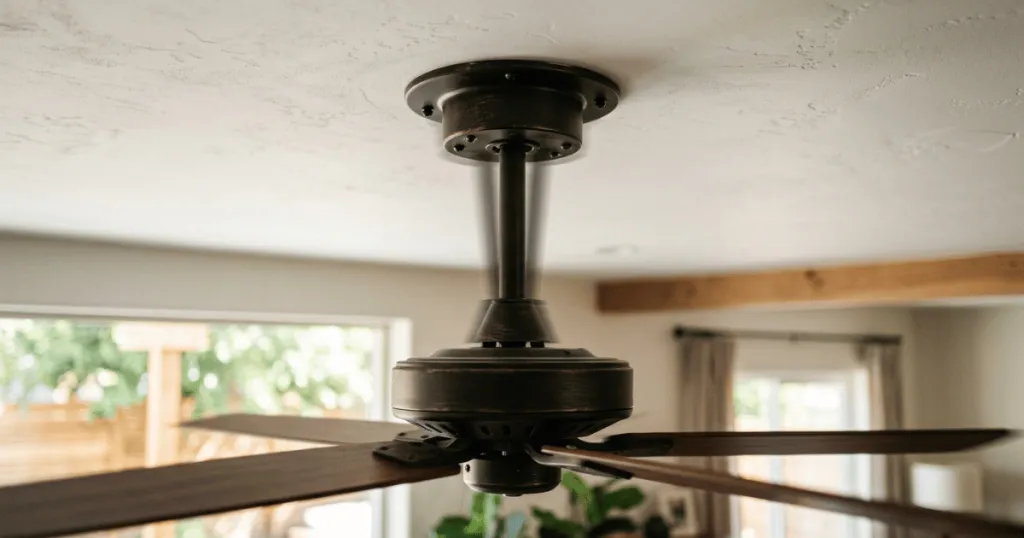
Furthermore, consider the impact of the mounting hardware. If the canopy is not seated flush against the ceiling or if the hanger ball is not properly locked into the mounting bracket, the entire assembly may shift during operation. This is often mistaken for blade imbalance. Before applying any weights, ensure that all screws securing the blade irons to the motor are tight. A loose screw at the base of a blade iron can cause the blade to pivot slightly, creating a wobble that no balancing kit can resolve because the source of the movement is mechanical play rather than weight distribution.
Real-World Context: When to Use a Balancing Kit
In a typical home environment, you will likely notice the wobble most prominently when the fan is set to its highest speed. This is because the centrifugal forces are magnified at higher RPMs. If your fan wobbles at low speed but stabilizes at high speed, the issue might be related to the motor or the mounting system rather than blade weight. If the wobble persists or worsens at high speed, it is a classic sign of a weight distribution problem.
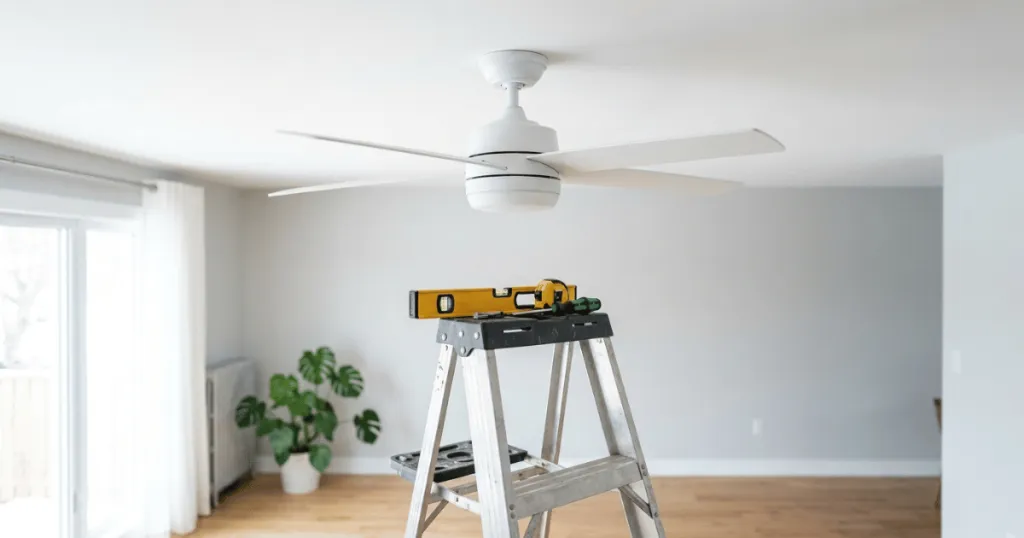
Consider a standard living room installation. If you have recently moved or cleaned the fan, it is common for a blade iron to get bumped. If you observe the fan from the side while it is off, you can often see if one blade is sitting higher than the others. If they all appear perfectly aligned but the fan still shakes, the internal weight of the blades is the most likely suspect. This is the exact scenario where a kit proves its worth.
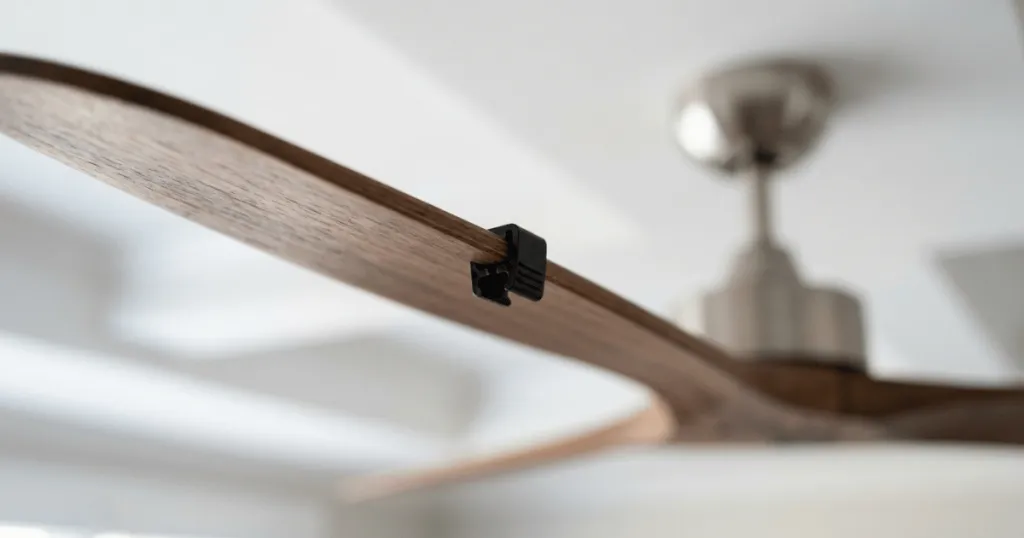
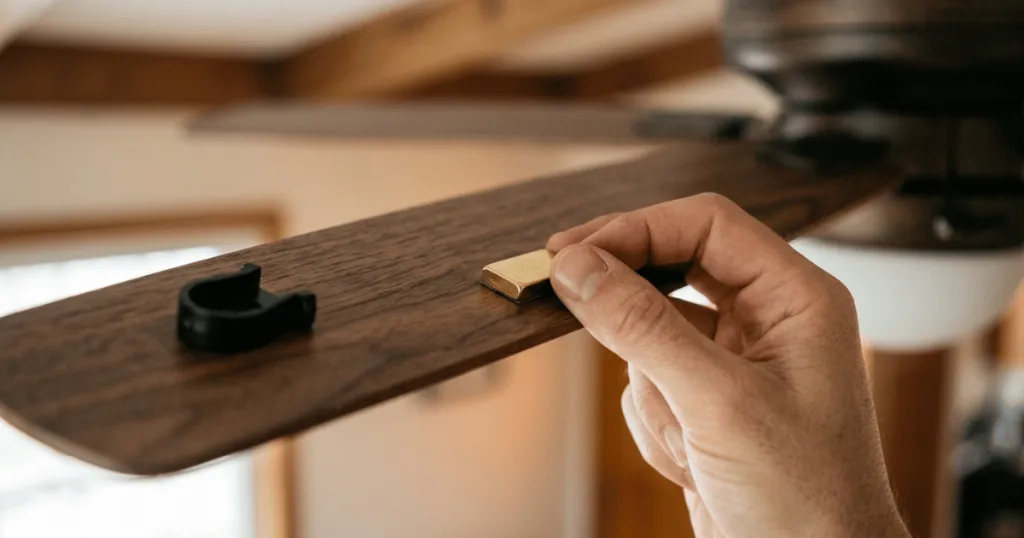
What this means in practice is that you should approach the process methodically. The kit includes a plastic clip and a set of adhesive weights. You attach the clip to the center of one blade and observe the fan’s performance. By rotating the clip to each blade, you identify which one is the lightest. Once identified, you move the clip toward the tip or base of that blade to find the exact spot where the wobble stops. Finally, you replace the clip with an adhesive weight of equivalent mass.
When performing this process, patience is key. It is common to find that the initial placement of the clip does not immediately eliminate the wobble. You may need to slide the clip incrementally toward the outer edge of the blade to increase the leverage of the counterweight. If the wobble persists, try moving the clip to the next blade.
The goal is to find the specific blade that is causing the drag or the weight deficiency. Once you have successfully identified the correct blade and the optimal position for the weight, the fan should operate smoothly. Remember to clean the surface of the blade thoroughly before applying the adhesive weight, as dust or oils can cause the weight to fall off over time, leading to a return of the imbalance.
Why Proper Balancing Matters for Your Home
Addressing a wobble promptly is a matter of protecting your investment. A fan that shakes continuously places unnecessary stress on the ceiling junction box and the mounting canopy. Over time, this vibration can loosen the screws that secure the fan to the ceiling, which is a significant safety concern. By using a balancing kit to restore smooth operation, you prevent this mechanical fatigue and ensure the fan remains securely attached to the structural framing of your home.
Beyond safety, there is the matter of noise and comfort. A wobbling fan often produces a rhythmic clicking or humming sound as the motor housing shifts against the mounting bracket. This can be disruptive in bedrooms or quiet living areas. Furthermore, an imbalanced fan is less efficient at moving air. When the blades are not tracking properly, they do not slice through the air with the intended aerodynamic efficiency, which can lead to reduced airflow and increased motor strain.
Ultimately, a stable fan provides a more consistent, quiet, and reliable cooling experience. It is a small maintenance task that significantly extends the lifespan of the appliance. Most homeowners find that once they have properly balanced their fan, the improvement in both noise levels and air circulation is immediate and noticeable, making the effort well worth the time spent.
Consider the long-term implications for the motor. A fan that operates with a constant wobble forces the motor bearings to work harder to maintain a consistent speed. This extra strain can lead to premature motor failure, which is a much more costly repair than simply balancing the blades. By maintaining the rotational equilibrium of the fan, you are effectively reducing the load on the motor and ensuring that the internal components are not subjected to unnecessary stress. This proactive approach to ceiling fan maintenance is a hallmark of responsible home ownership, ensuring that your cooling systems remain functional and efficient for years to come.
Common Misconceptions About Fan Wobble
A frequent mistake is assuming that all fan wobble is caused by the blades. Many homeowners purchase a balancing kit immediately upon seeing a wobble, only to find that the kit does not solve the problem. If the mounting bracket is loose or the downrod is not seated correctly in the hanger ball, no amount of weight on the blades will fix the issue. Always check the physical security of the installation before attempting to balance the blades.
Another misconception is that the balancing kit is a permanent fix for a damaged fan. If your fan has been wobbling for years and the motor housing shows signs of wear, or if the blades are cracked or severely warped, the balancing kit will only provide a temporary mask for a deeper problem. In these cases, the issue is structural degradation. Balancing is intended for fans that are otherwise in good condition but simply require a minor adjustment to achieve perfect equilibrium.
Finally, some users believe that adding weights will always solve the problem regardless of how severe the wobble is. If the fan is shaking violently, this is a sign of a major mechanical failure, such as a broken internal component or a severely bent motor shaft. A balancing kit is designed for fine-tuning, not for correcting major mechanical defects. If you cannot stop the wobble with a standard kit, it is time to inspect the motor and mounting hardware for more serious damage.
It is also worth noting that not all wobbles are created equal. Some fans may exhibit a slight, rhythmic movement that is inherent to the design or the specific speed setting. This is often harmless. However, if the movement is erratic or accompanied by audible grinding or scraping sounds, you should cease operation immediately. In such cases, the issue is likely internal to the motor housing or related to the electrical connections. A balancing kit is a tool for weight distribution, not an electrical or internal motor repair device. Recognizing the difference between a minor weight-related wobble and a serious mechanical fault is essential for maintaining the safety and longevity of your ceiling fan.
FAQ
Can I use a Ceiling Fan Balancing Kit on any type of fan?
Yes, most balancing kits are universal and work with standard AC and DC motor ceiling fans. However, ensure the weights are securely adhered to the blades according to the instructions.
How do I know if my fan needs a balancing kit or a repair?
If the wobble is minor and the fan is otherwise in good condition, a balancing kit is appropriate. If the fan makes grinding noises, has loose hardware, or the wobble is severe, you should inspect the mounting and motor first.
Does dust accumulation affect fan balance?
Yes, significant dust buildup on one blade can cause enough weight imbalance to create a wobble. Always clean your fan blades thoroughly before attempting to use a balancing kit.