Short Answer: Yes, you can replace ceiling fan blades on almost any standard model as long as you match the mounting hole patterns, weight distribution, and blade iron spacing of your existing motor housing.
Yes, you can replace ceiling fan blades on almost any standard residential model, provided you find components that match the mounting specifications and structural balance requirements of your existing motor housing. Many homeowners assume that a damaged, warped, or dated paddle means the entire cooling fixture must be thrown away.
In practice, swapping out individual wooden or plastic paddles is a straightforward project that can restore proper balance, reduce distracting wobble, and update the appearance of a room for a fraction of the cost of a full replacement. However, success depends heavily on understanding how motor housing compatibility, blade iron spacing, and weight distribution influence overall performance.
When tackling this type of project, homeowners must look past simple visual appeal and focus on the technical details that keep residential cooling systems running smoothly. Knowing the exact limitations of your hardware prevents wasted time and ensures safe daily operation.
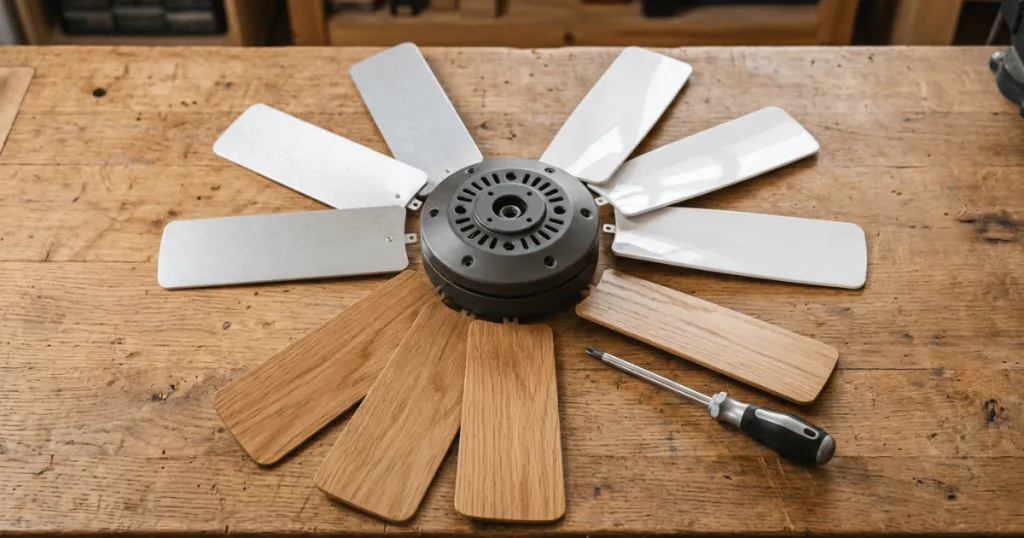
Main Reasons and Factors Behind Ceiling Fan Blade Replacement
Understanding why and when a blade swap is appropriate helps prevent common mistakes that lead to persistent vibration, motor strain, or premature hardware failure. Evaluating the physical condition of your current setup requires looking closely at both the paddles themselves and the metal mounting brackets that secure them.
Physical Damage and Material Degradation
Ceiling fan paddles endure constant stress and humidity changes over years of operation. Wooden cores can warp, split, or delaminate, particularly in humid spaces like covered outdoor patios or steamy bathrooms. When a paddle warps, its aerodynamic profile changes, causing uneven air drag that results in a visible wobble.
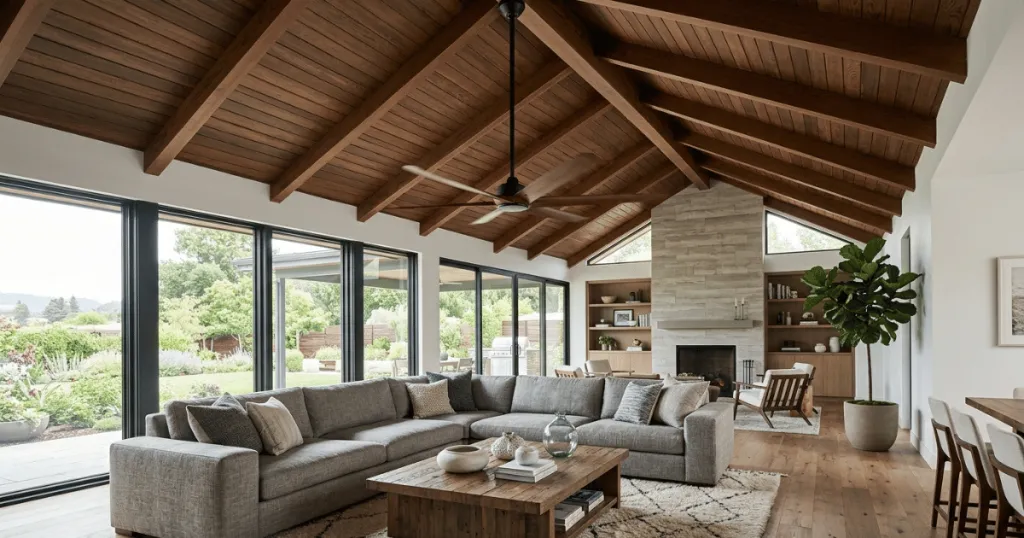
In addition to environmental moisture, thermal fluctuations across seasons play a major role in material degradation. For instance, living rooms with high vaulted ceilings often experience significant temperature stratification, where hot air collects near the top while cooler air stays low. When the fan runs in reverse during winter to push that trapped heat downward, the constant push against dense air tests the structural integrity of older wooden cores. If the plywood or solid wood begins to separate at the seams, no amount of tightening will fix the resulting aerodynamic drag.
Aesthetic Updates and Room Styling
Interior design preferences shift over time, turning once-popular finishes like polished brass accents or dark oak paddles into dated eyesights. Replacing the paddles allows you to modernize a classic motor housing with clean matte black, crisp white, or natural wood tones without rewiring electrical boxes or dealing with heavy motor installations.
Updating room styling through simple component swaps is especially popular when transitioning a home to a modern farmhouse or minimalist aesthetic. Instead of discarding a perfectly reliable motor housing that features a timeless brushed finish, homeowners simply swap out dated pine or oak paddles for sleek reclaimed wood or solid black alternatives. This approach saves hours of labor on wiring and ensures that heavy electrical junction boxes in the ceiling remain undisturbed.
Weight Matching and Balance Requirements
A ceiling fan motor relies on precise weight distribution across all mounting arms. Even a tiny variance in mass or thickness between individual paddles can throw the assembly out of balance. When you replace a single paddle, the remaining old ones may have absorbed moisture or dried out differently, which guarantees an uneven load.
When executing a replacement, weighing each individual paddle on a kitchen scale before installation is a reliable method used by meticulous DIYers. Even within a factory-sealed box, small manufacturing tolerances can create gram-level weight differences that become glaringly obvious at high speeds. If a single replacement paddle weighs noticeably more or less than its counterparts, the motor hub experiences eccentric loading, which eventually translates into audible humming and shaking in the room below.
Blade Iron Compatibility and Hole Patterns
The metal brackets, often called blade irons, that connect the paddles to the motor hub vary wildly between manufacturers. Hole spacing, screw placement, and the angle of the iron must align precisely with the pre-drilled holes on any replacement paddles you purchase.
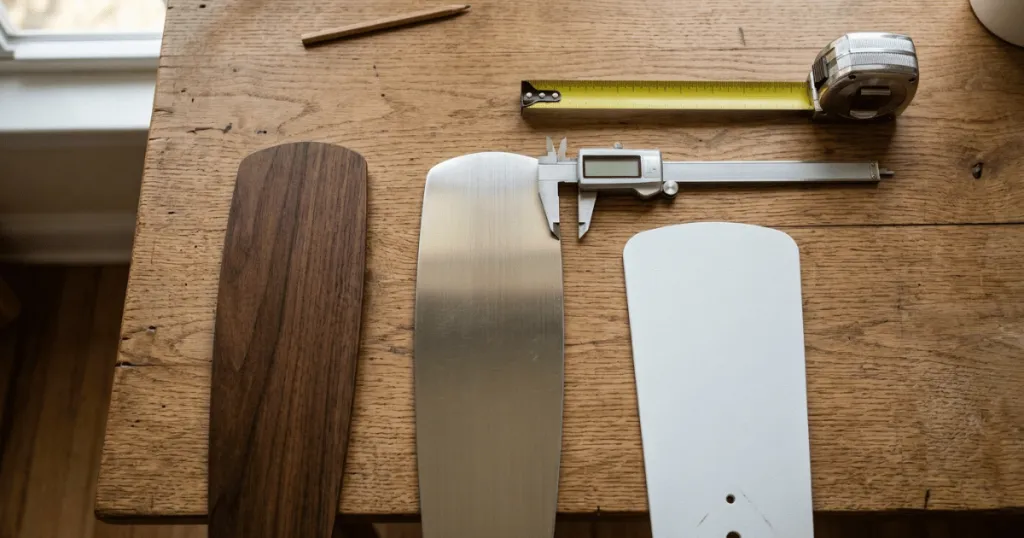
Measuring hole spacing requires removing an existing paddle and using a caliper or precision ruler to find the exact center-to-center distance between mounting screws. Some brands utilize a three-hole triangular pattern, while others rely on a two-hole linear configuration with varying spans such as 3.5 inches or 4.25 inches. Overlooking these minute measurements is the leading cause of failed installation attempts, forcing homeowners to drill unauthorized holes that compromise structural safety.
Real-World Context and Practical Installation Scenarios
Picture a living room where a heavy wooden paddle caught moisture near an open window and started drooping at the outer tip. The homeowner wants a quick fix, but simply unscrewing that single warped paddle and screwing on a random replacement from a hardware store rarely works out well in practice.
Universal replacement packs sold online often feature multiple pre-drilled hole configurations to fit various brands like Hunter, Casablanca, or Westinghouse. Even with these universal designs, you must measure the distance from the center motor hub to the outer screw holes to ensure proper alignment. If the screw pattern is off by even a fraction of an inch, the paddle will sit crooked, scraping against the light kit or spinning off-center.
Another common scenario involves replacing an entire set of five paddles to change a dated brass-and-oak look into a modern brushed nickel aesthetic. Buying a matched set of five eliminates the balance risks associated with mixing old and new materials. Every paddle in a sealed factory pack comes from the same production run, ensuring identical weight, thickness, and air displacement across the entire motor hub.
What this means in practice is that you should almost always replace all paddles simultaneously if you are changing styles or if the existing set has aged unevenly. Swapping just one broken paddle is only viable if you can source an exact duplicate from the original manufacturer using the specific model number found on the motor housing label.
Consider another frequent real-world situation involving low-profile hugger fans installed in bedrooms with standard eight-foot ceilings. In these compact spaces, any imbalance or aerodynamic distortion is immediately noticeable because the unit sits much closer to the occupants. If a homeowner attempts to install mismatched replacement paddles on a hugger model, the restricted clearance between the spinning tips and the ceiling or light fixtures turns minor wobbles into dangerous scraping hazards. Taking time to verify clearance dimensions before tightening the final screws prevents costly damage to both the ceiling and the fixture.
Why Blade Replacement Matters for Long-Term Performance
Properly functioning paddles do more than just push air around a room. They protect the internal motor bearings from continuous lateral stress caused by wobbling assemblies. When a ceiling fan spins out of balance, the constant vibration travels up through the downrod and into the electrical ceiling box.
Over months and years, that relentless shaking can loosen mounting screws, create annoying clicking noises, and eventually wear out the motor bearings entirely. Addressing a sagging or damaged paddle early prevents minor cosmetic wear from turning into an expensive motor replacement job.
Furthermore, maintaining correct blade pitch and alignment ensures optimal cubic feet per minute air delivery. If a replacement paddle sits at the wrong upward angle compared to the others, the room will experience choppy airflow and reduced cooling efficiency. Paying attention to these fine details keeps your cooling fixtures running quietly and efficiently through every season.
Another critical aspect of long-term performance is electrical safety. Excessive vibration caused by poorly matched paddles can slowly fatigue the internal wire nuts and wire connections inside the upper canopy. When wires shift continuously under mechanical stress, insulation can wear away, creating potential short circuits or intermittent power losses. Ensuring a perfectly balanced spinning assembly is therefore not just a matter of acoustic comfort, but an essential step in maintaining overall household electrical safety.
Common Misconceptions About Can You Replace Ceiling Fan Blades
Many DIY enthusiasts assume that all ceiling fan parts are universal and that any paddle will fit any motor housing. In reality, proprietary mounting designs mean that hardware from one brand rarely aligns with the screw spacing of another unless specifically advertised as a universal fit.
Another frequent myth is that balancing a wobbly fan is purely about sticking balancing weights onto the top of a paddle. While balancing kits help correct minor aerodynamic discrepancies, they cannot fix a warped wooden paddle, a bent metal blade iron, or a mismatched set of replacement components.
Some homeowners also believe that cutting down oversized paddles with a saw is a safe way to fit a fan into a tight space. Altering the length or shape of a paddle destroys its factory balance and creates severe aerodynamic turbulence, which overworks the motor and creates dangerous vibration levels.
Another persistent myth is that outdoor-rated plastic or ABS paddles can be attached to indoor-only wooden motor brackets without consequence. While the materials themselves are durable, mixing heavy outdoor components with lightweight indoor mounting brackets creates structural fatigue points where the metal meets the synthetic material. Understanding the limits of your hardware ensures that your DIY upgrade remains safe and secure for years to come.