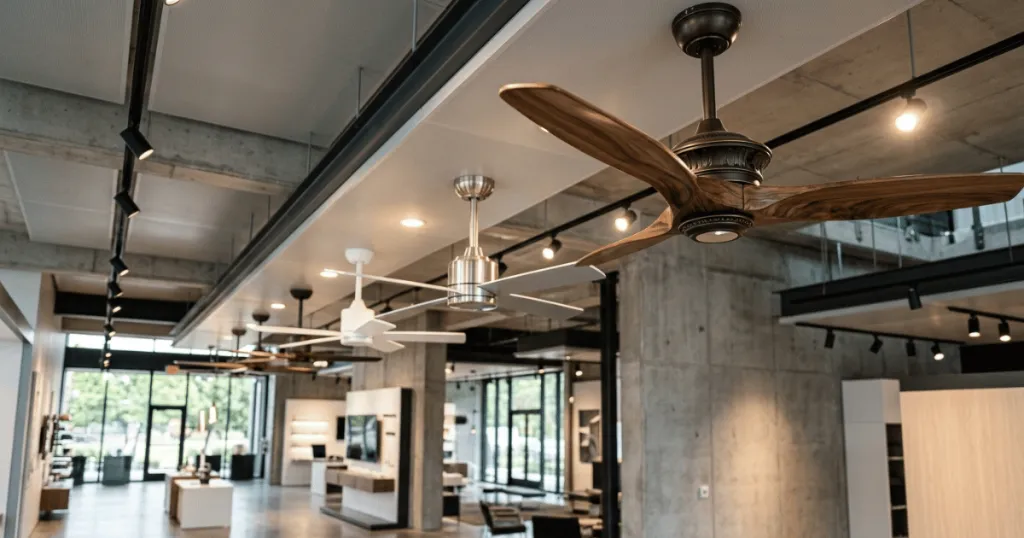
Key Takeaway: To choose an outdoor ceiling fan, you must first determine if your space requires a damp-rated or wet-rated model based on its exposure to rain and elements. Prioritize durable materials like stainless steel or ABS plastic, ensure the fan is mounted to a fan-rated junction box, and select a motor and blade pitch capable of providing adequate airflow for your specific square footage.
Selecting the right cooling solution for your porch, patio, or lanai requires more than just picking a style that matches your outdoor furniture. When you learn how to choose an outdoor ceiling fan, you must prioritize environmental durability and specific safety ratings to ensure the unit withstands moisture, humidity, and temperature fluctuations. A fan that works perfectly in a living room will likely fail or pose a safety risk if installed in an exposed outdoor environment.
Before you commit to a specific model, you need to assess your space to determine the necessary airflow requirements and the level of moisture protection your installation site demands. This guide helps you navigate the technical specifications and structural considerations required to make a reliable, long-lasting choice for your home. Before proceeding, check your ceiling structure and electrical supply to ensure they can support the weight and power needs of a dedicated outdoor unit.

Before You Start: Assessing Your Outdoor Environment
The most common mistake homeowners make is assuming all ceiling fans are interchangeable. Outdoor spaces are categorized by their exposure to the elements, which dictates the type of fan you must purchase. You should first identify whether your installation area is damp-rated or wet-rated.
Damp-rated fans are designed for covered areas that are not directly exposed to rain or snow, such as screened-in porches or covered patios. These models feature moisture-resistant finishes and internal components that handle humidity without corroding. If your fan will be under a roof but near the edge where wind-blown rain can reach it, a damp-rated fan is usually insufficient.
Wet-rated fans are mandatory for any area directly exposed to the elements, such as open pergolas, uncovered patios, or coastal environments. These units are built with sealed motor housings and water-resistant wiring to prevent short circuits and rust. Using a standard indoor fan in these conditions is a significant safety hazard and will void any manufacturer warranty.
You must also consider your local climate. If you live in a coastal area, salt air is highly corrosive. Look for fans specifically marketed for coastal use, which often feature high-grade stainless steel hardware and specialized powder coatings. These materials resist the rapid oxidation that ruins standard outdoor fans within a single season. Understanding the microclimate of your specific patio is vital because high humidity levels can accelerate the degradation of non-rated components even in protected spaces.
Tools and Prerequisites for Selection
Before you begin the selection process, you need to gather specific measurements of your outdoor space. Ceiling height is the most critical factor for safety and performance. If your ceiling is lower than eight feet, you must choose a flush-mount or hugger-style fan to maintain proper clearance. For ceilings nine feet or higher, a downrod mount is preferred to position the blades at the optimal height for air circulation.
Calculate your square footage to determine the required blade span. A general rule of thumb is that a 44-inch fan is suitable for spaces up to 100 square feet, while a 52-inch to 56-inch fan serves areas up to 200 square feet. For larger patios, consider installing two smaller fans rather than one oversized unit to ensure even airflow distribution. Proper spacing between multiple fans is essential to prevent air turbulence and ensure that the breeze reaches every corner of your seating area.
Check your existing electrical box. Outdoor fans are heavier than standard light fixtures and require a fan-rated junction box that is securely mounted to the structure. If your current box is not fan-rated, you will need to replace it before installation. Confirm that you have a wall switch or remote control system that is compatible with outdoor use, as standard indoor switches may not be sealed against moisture. Always verify the weight capacity of your ceiling joists, as outdoor fans often feature heavier, more robust motor housings compared to indoor counterparts.
Step-by-Step Instructions: How to Choose an Outdoor Ceiling Fan
Follow these steps to narrow down your options and ensure you select a fan that meets your needs.
- Verify the UL or ETL Rating: Always check the product packaging or technical specification sheet for a UL or ETL wet or damp rating. Never purchase a fan for outdoor use that lacks these specific certifications.
- Evaluate Motor Efficiency: Look for DC motor technology. These motors are generally more energy-efficient, quieter, and offer more speed control options than traditional AC motors. In outdoor settings, the ability to run at lower speeds during mild evenings is a significant comfort advantage.
- Select Blade Material: Avoid wood or pressed-board blades, as they will warp and rot in outdoor humidity. Opt for ABS plastic, stainless steel, or aluminum blades. These materials are lightweight, durable, and unaffected by moisture.
- Determine Airflow (CFM) Needs: Check the Cubic Feet per Minute (CFM) rating. A higher CFM indicates more powerful airflow. For outdoor spaces, you want a higher CFM than you might need indoors, as the open air dissipates the breeze more quickly.
- Assess Lighting Requirements: If you need light, ensure the integrated light kit is also rated for wet or damp locations. Many outdoor fans offer LED light kits that are sealed against moisture, which is essential for longevity.
- Consider Control Options: Decide between a wall control or a handheld remote. For outdoor areas, a wall-mounted control is often more practical because it cannot be misplaced and is less likely to be exposed to rain or pool water than a handheld remote.
Deep Dive: Optimizing Performance and Longevity
Beyond the basic ratings, consider how the fan interacts with your specific outdoor lifestyle. If you frequently host dinners on your patio, noise levels become a priority. Look for fans that emphasize quiet operation, as the hum of a motor can become intrusive in a quiet backyard setting. DC motor ceiling fans are particularly effective here because they provide smooth, silent operation across a wide range of speeds.
Another factor to consider is the ease of cleaning. Outdoor environments accumulate dust, pollen, and spiderwebs much faster than indoor rooms. Choose a blade design that is easy to wipe down with a damp cloth. Avoid intricate scrollwork or deep crevices on the motor housing that might trap debris, as these areas are difficult to reach and can become breeding grounds for grime that eventually affects the balance of the fan.
Think about the aesthetic integration. While functionality is paramount, the fan should complement the architecture of your home. Many manufacturers now offer outdoor fans with a variety of finishes, from matte black to brushed nickel, which can elevate the look of a covered deck. Ensure the finish is specifically rated for UV exposure to prevent fading over time.
Common Mistakes to Avoid
One frequent error is ignoring the blade pitch. Blade pitch is the angle of the blade, and it significantly impacts how much air the fan moves. A shallow pitch moves very little air, while a steeper pitch is more effective at creating a breeze. For outdoor comfort, look for a blade pitch of at least 12 to 14 degrees.
Another mistake is neglecting the finish quality. Even if a fan is wet-rated, a cheap finish will fade or peel under intense UV exposure. Look for fans with marine-grade finishes or high-quality powder coatings. These finishes retain their appearance much longer than standard paints, saving you from the frustration of a weathered, unsightly fixture.
Do not underestimate the importance of the downrod length. If you install a fan too close to the ceiling, it cannot pull enough air, resulting in poor performance. Conversely, if the fan is too low, it can become a safety hazard. Follow the manufacturer’s recommendation for the distance between the blade tips and the floor, which should ideally be at least seven feet. If your patio has a sloped ceiling, ensure you purchase a fan that is compatible with sloped ceiling adapters, as standard mounts will not allow the fan to hang level.
Troubleshooting and Maintenance
If your fan is wobbling, it is usually due to an uneven mounting or blades that are not perfectly balanced. Check that all blade screws are tight and that the fan is securely attached to the junction box. If the wobble persists, use a balancing kit to adjust the weight of the individual blades.
If the fan makes a humming noise, it is often a sign of an incompatible dimmer switch. Outdoor fans require specific controls that are designed to handle the motor load. If you are using a standard household dimmer, replace it with a fan-speed control designed for your specific motor type.
For ongoing maintenance, clean the blades and motor housing twice a year to remove dust, pollen, and salt buildup. Use a damp cloth and mild soap, avoiding harsh chemicals that could strip the protective finish. If you live in a region with freezing winters, consider covering the fan if it is in an exposed location to protect it from ice and snow accumulation.
If you encounter electrical issues, such as the fan failing to start or the light flickering, stop immediately. These symptoms often indicate a compromised seal or internal corrosion. If the unit is under warranty, contact the manufacturer. If not, consult a licensed electrician to inspect the wiring, as moisture damage can create hidden risks within the electrical system. Regularly inspecting the mounting hardware for signs of rust is a proactive step that can prevent larger issues before they compromise the safety of the installation.
Finally, keep a record of your fan model and the specific remote or wall control serial numbers. If a component fails after a few years, having this information ready makes it much easier to source compatible replacement parts, which is often more cost-effective than replacing the entire unit.
FAQ
Can I use an indoor ceiling fan on a covered porch?
No, you should not use an indoor fan on a porch. Indoor fans lack the moisture-resistant components and sealed motor housings required to prevent corrosion and electrical shorts, even in covered, dry-looking areas.
What is the difference between damp-rated and wet-rated fans?
Damp-rated fans are designed for covered areas protected from direct rain, such as screened porches. Wet-rated fans are built to withstand direct exposure to rain, snow, and water, making them necessary for open patios or pergolas.
Do I need a special remote for an outdoor fan?
Yes, if your fan uses a remote, it must be rated for outdoor use. Standard indoor remotes are not sealed against humidity and can fail quickly when exposed to the moisture levels found in outdoor environments.