When a ceiling fan paddle warps, cracks, or loses its decorative finish, finding compatible replacement blades can feel surprisingly complicated. Many homeowners assume standard parts are universally interchangeable across different brands, but even minor discrepancies in mounting hole spacing or pitch can throw off the entire mechanism. Sourcing the right parts requires looking past the brand name on the wall switch and examining the physical architecture of the motor housing and existing hardware.
Understanding the exact specifications needed for replacement blades prevents frustrating installation roadblocks and ensures long term balance. Whether you are dealing with weather-damaged outdoor paddles or simply refreshing an outdated finish in a bedroom, this guide breaks down the essential factors for matching, sourcing, and installing new components safely.
Why Standardizing Replacement Blades Is Difficult Across Brands
Ceiling fan manufacturers rarely adhere to a universal standard for paddle construction or motor iron configurations. Every brand engineers its own proprietary blade arm shapes, screw hole distances, and motor weight tolerances. Buying a generic set off the shelf without verifying these dimensions usually leads to misaligned screw holes or severe operational wobbles.
In practice, this means you cannot simply swap parts between different models from the same manufacturer unless the product lines explicitly share identical engineering. Even slight variations in wood composite density or laminate weight can disrupt the delicate equilibrium required for smooth motor rotation. Knowing your fan model number and taking physical measurements of your current hardware remains the only reliable path forward.
Furthermore, the retail marketplace often features universal or multi-fit components designed to accommodate a wide range of mounting patterns through slotted connection points. While these options offer convenience when original factory parts are discontinued, they introduce additional variables during installation. Homeowners must take extra care to center each paddle perfectly on its respective mounting bracket before tightening the screws. If a slotted blade shifts slightly off center during the fastening process, the resulting rotational asymmetry will quickly generate noticeable vibrations, forcing you to loosen the hardware and realign the entire set from scratch.
Key Factors to Evaluate Before Sourcing New Paddles
A successful swap depends on assessing several technical variables before ordering parts. Taking a methodical approach prevents wasted time and protects your fan motor from unnecessary mechanical stress.
Hole Spacing and Arm Configuration
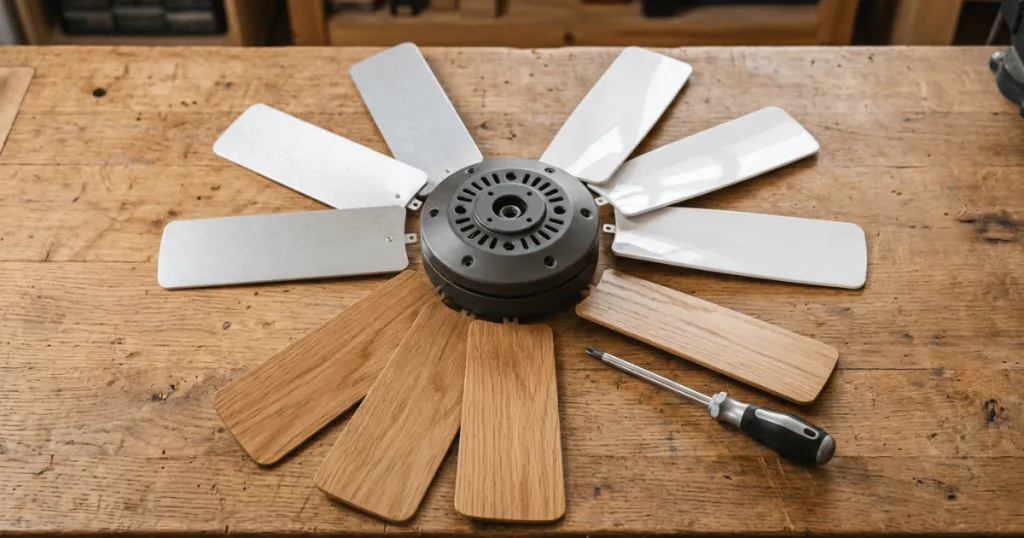
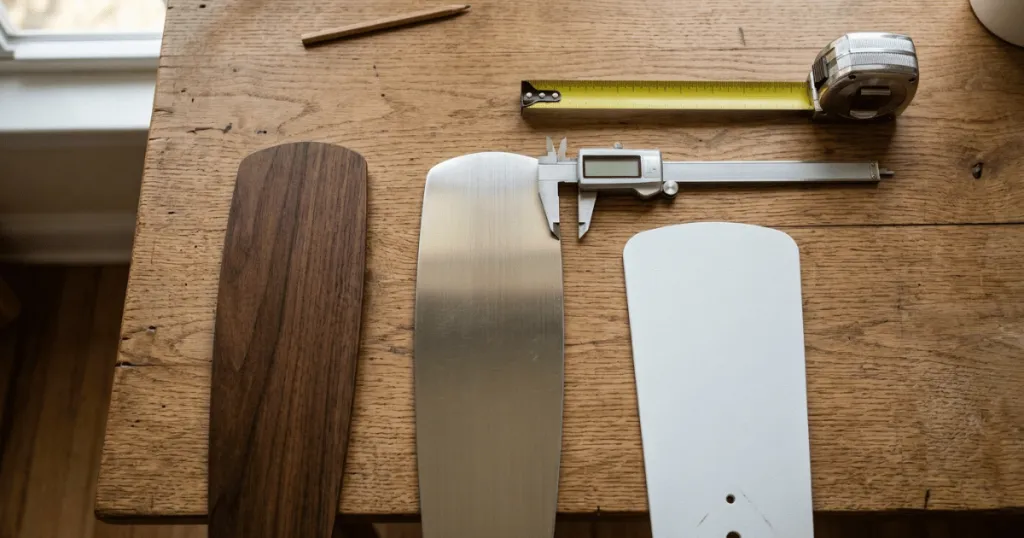
The most critical measurement is the distance between the mounting screw holes on the blade itself and the corresponding holes on the blade iron. Some units use a two-hole pattern, while others rely on three or even four screws per arm. Measure the center-to-center distance between these holes with precision calipers or a ruler to match potential replacements.
Beyond hole placement, check whether your fan uses concealed post mounts or traditional flat brackets. Attempting to force an incompatible bracket type onto a mismatched paddle will either strip the screw threads or leave the paddle loose enough to create dangerous vibrations.
When measuring complex hole patterns, record both the distance between adjacent screw holes and the overall span across the outer mounting points. Many modern fans incorporate proprietary alignment tabs or locating pins on the blade arms that slot directly into matching receptacles on the paddle surface. If your replacement paddles lack these pre-drilled locating holes or pins, the assembly will fail to sit flush, creating a permanent structural weak point that flexes under aerodynamic load.
Blade Count and Set Matching
Ceiling fans are carefully calibrated as complete sets. If one paddle breaks due to moisture exposure or physical impact, replacing just that single piece is rarely successful. Even if you find an identical style, wood and composite materials age, fade, and warp at different rates.
We generally recommend replacing all paddles as a complete matched set. This ensures uniform weight distribution, identical aerodynamic drag, and a consistent visual appearance across the entire span of the fixture.
Mixing old and new paddles within the same assembly often creates invisible imbalances. Even if two pieces share the same nominal dimensions, cumulative wear from humidity, UV exposure from nearby windows, and dust accumulation change their mass distribution over time. When you install a single fresh replacement alongside aged components, the new paddle frequently creates a heavy spot or aerodynamic discrepancy that standard balancing clips struggle to correct. Purchasing a complete matched kit eliminates this variable entirely.
Pitch and Aerodynamic Angle
Blade pitch refers to the angle at which the paddle slopes relative to the horizontal plane. Standard models typically feature a pitch between 11 and 14 degrees to push air downward efficiently.
If your replacement paddles feature a steeper or shallower angle than the originals, the motor will experience uneven load dynamics. A mismatched pitch can reduce total airflow volume, strain the motor windings, and generate an annoying humming noise during high speed operation.
Understanding the relationship between blade pitch and motor performance is essential for long-term reliability. A steeper pitch forces more air through the room, but it also demands higher torque from the motor. If you install aftermarket replacement blades with an aggressive angle on a standard duty motor, the electrical windings can overheat during extended operation on high speed settings. Conversely, installing a shallower pitch reduces air movement, rendering the ceiling fan largely ineffective for cooling living spaces during peak summer months.
Real-World Scenarios and Practical Decision Making
Everyday challenges often dictate how and when you need to swap out paddle hardware. Recognizing common room environments helps clarify what features matter most for your specific setup.
In high humidity spaces like covered outdoor patios or steepsided kitchens, standard medium density fiberboard paddles absorb moisture from the air. This moisture absorption causes the edges to swell, warp, and droop over time, leading to severe wobble. When replacing paddles in damp environments, prioritizing solid plastic, weather-resistant resin, or properly sealed exterior-grade solid wood prevents premature failure.
In bedrooms or living areas where noise sensitivity is high, aerodynamic consistency takes center stage. A poorly balanced set of replacement blades will amplify operational sounds through the ceiling joists. Taking extra time to weigh each new paddle on a digital kitchen scale before installation ensures that you catch manufacturing weight variances before they turn into late-night clicking noises.
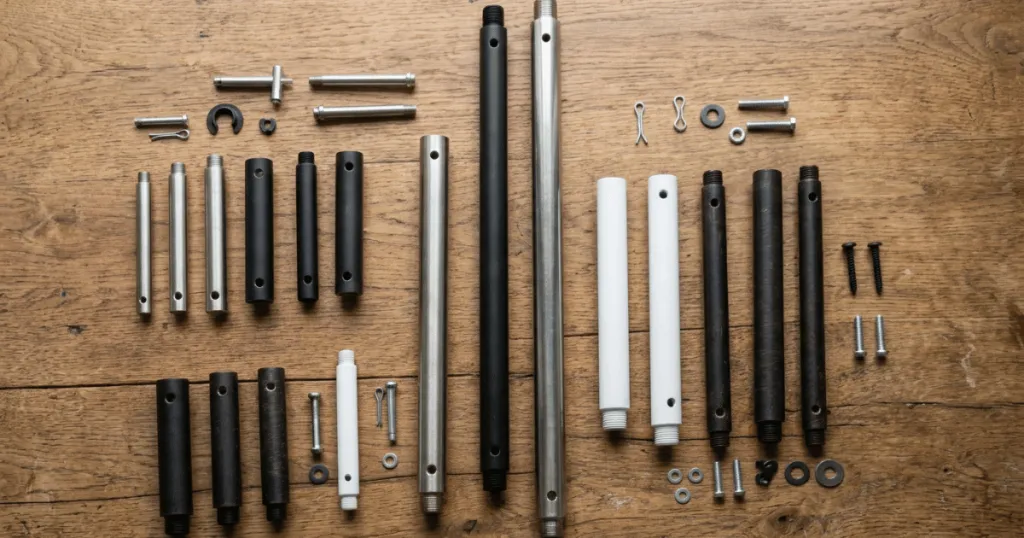
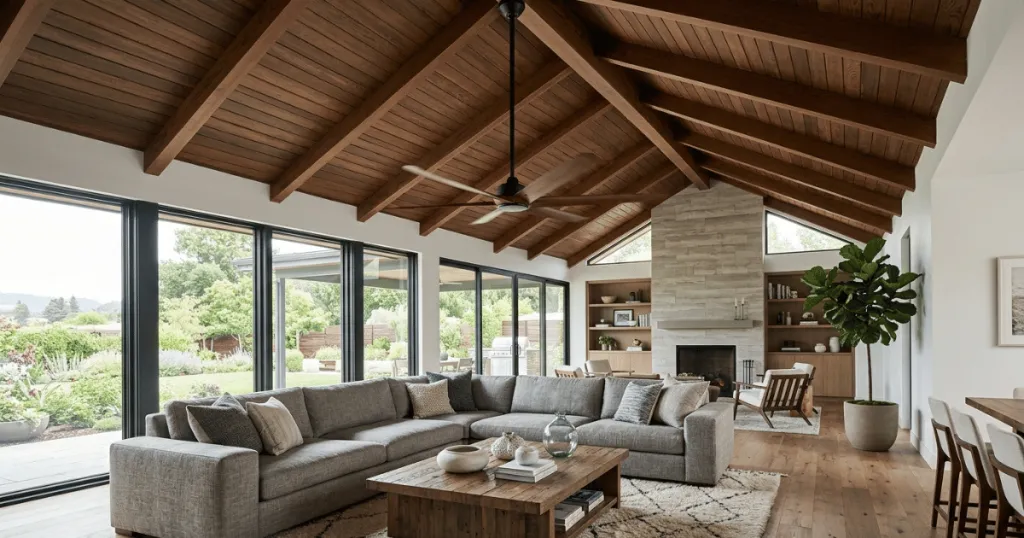
Consider also the physical layout of rooms with low ceilings, where flush-mount configurations place the spinning blades closer to occupants. In these settings, ensuring that replacement paddles feature rounded or beveled edges minimizes aerodynamic turbulence and reduces the audible swishing sound common in tight spaces. For vaulted or sloped ceilings downrod installations, the focus shifts toward maintaining uniform span lengths so that the rotating sweep clears surrounding architectural obstacles such as sloped walls, pendant lights, or exposed roof beams without clearance issues.
Why Proper Balancing Matters for Motor Health
A ceiling fan is essentially a suspended rotary machine relying on precise gravitational and aerodynamic equilibrium. When replacement blades disrupt this balance, the continuous side-to-side force translates directly into the motor bearings.
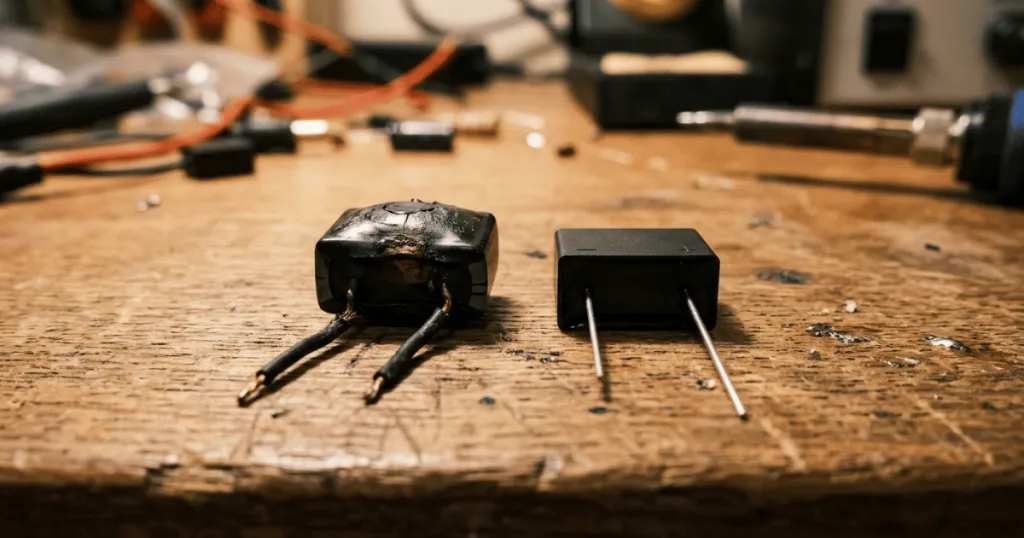
Over time, persistent wobbling wears out the upper and lower motor housing bearings, resulting in permanent mechanical damage that no amount of balancing kits can fix. Ensuring your replacement parts match the original weight class protects the internal electrical and mechanical components from premature burnout.
Furthermore, balanced assemblies operate much more quietly and circulate air with greater efficiency. Investing patience into finding the correct match pays off in both acoustic comfort and extended fixture lifespan.
When physical balancing becomes necessary after installing new blades, homeowners should utilize standard plastic balancing clips and adhesive weights systematically. Start by running the fan on its highest speed setting to isolate the worst oscillation point. Attach the testing clip along the trailing edge of one blade, moving it incrementally from the outer tip toward the motor housing while observing the wobble. Once you locate the precise spot where the wobble subsides, affix the permanent metallic weight directly above the clip on the top surface of the blade to maintain a clean visual appearance. Neglecting this final tuning step after a blade swap guarantees that minor manufacturing tolerances will eventually degrade the motor bearings.
Common Misconceptions About Ceiling Fan Paddles
A widespread myth suggests that any paddle matching the correct length will automatically fit your fan. Length is only one dimension of compatibility, and often the least important one compared to mounting hole geometry.
Another frequent misunderstanding is that trimming a paddle down to fit a smaller room is a safe DIY shortcut. Modifying the physical length of a single component throws off the rotational symmetry and can destabilize the motor assembly entirely. Always source components manufactured to the correct dimensions rather than attempting field modifications.
Finally, some assume that heavier solid wood paddles move more air than lightweight composite alternatives. Modern manufacturing allows lightweight synthetics to achieve superior aerodynamic efficiency while placing far less strain on the motor bearings during startup and braking cycles.
Another persistent myth is that all white blades are identical in color and finish. In reality, manufacturer shades range from stark brilliant white to soft alabaster, eggshell, and aged ivory. Installing a single replacement blade in a mismatched shade of white stands out prominently against the remaining original paddles, creating an unappealing aesthetic flaw that is difficult to ignore once noticed. Always verify color codes or order complete sets when visual uniformity matters for your room decor.
FAQ
Can I mix and match different styles of replacement blades on the same fan?
No. Mixing different styles or weights disrupts the rotational balance and can cause severe motor strain and wobbling.
How do I find the model number of my ceiling fan to order the right parts?
Check the top of the motor housing, the mounting plate against the ceiling, or the inside of the light kit canopy for a manufacturer label or stamped metal plate.
What tools do I need to install new blades?
A standard screwdriver is usually sufficient, along with a digital scale if you want to verify that all new paddles match in weight before mounting.