Hanging a ceiling fan on an angled surface creates an immediate mechanical puzzle. Standard mounting canopies are built for flat drywall or plaster, leaving angled surfaces unsupported and dangerous. This is where slope ceiling adapter kits become necessary for safe and balanced installation.
Choosing the right hardware determines whether your fan runs smoothly or wobbles dangerously. Understanding the mechanics behind these adapters helps prevent common installation mistakes.
Understanding Slope Ceiling Adapter Kits and Their Purpose
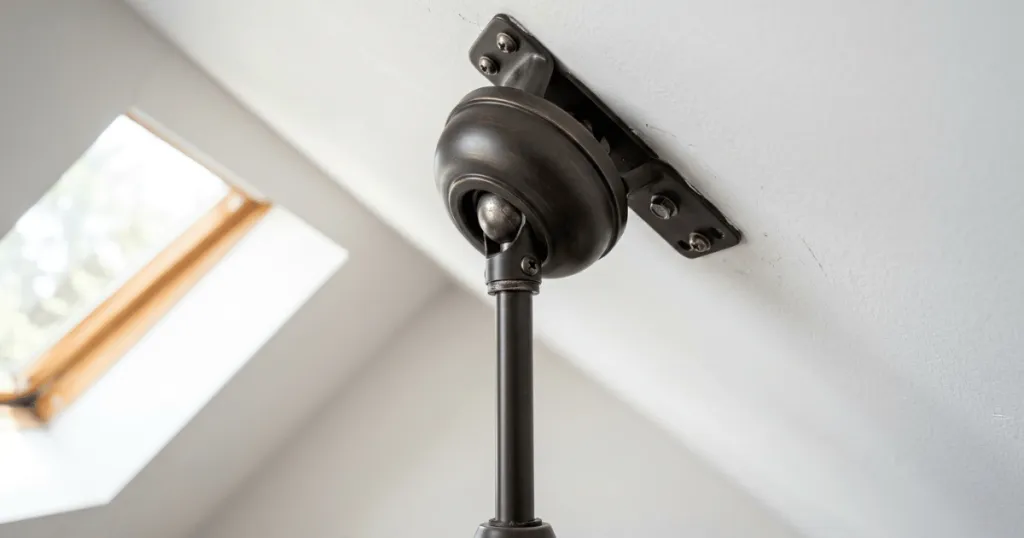
A vaulted or sloped ceiling introduces gravity challenges that standard downrod canopies cannot handle. Without proper hardware, the downrod rests unevenly against the mounting bracket, putting lateral strain on the electrical box. Slope ceiling adapter kits bridge this gap by providing a pivoting mechanism that keeps the downrod perfectly plumb regardless of the room angle.
Most standard residential ceilings feature a flat surface, but architectural rooflines often range from slight pitches to steep angles. When your room pitch exceeds standard manufacturer tolerances, typically around fifteen degrees, a specialized adapter becomes mandatory. Ignoring this requirement often leads to motor strain, loud buzzing noises, and premature hardware failure.
Manufacturer specifications dictate when an adapter is required to maintain structural integrity. Standard electrical boxes are rated for specific loads, but an angled pull introduces complex shear forces. Proper hardware redistributes that weight evenly across the structural framing members above.
When evaluating how these kits function in practice, it helps to look at the anatomy of the ceiling junction. An angled ceiling creates an asymmetrical load profile. A standard flat mounting bracket forces the downrod into a rigid vertical position while the ceiling itself is slanted. This mismatch forces metal components to grind against each other, creating friction that wears down protective finishes and can eventually shear fastening pins.
Slope ceiling adapter kits neutralize this problem by introducing a universal joint or a hinged swivel ball that aligns with the natural pull of gravity. Instead of fighting the roof pitch, the entire hanging assembly swings freely to find its true vertical center, keeping the motor housing level and preventing lateral stress on internal wiring harnesses.
Furthermore, understanding the relationship between the roof truss and the drop assembly prevents costly mistakes during the rough-in electrical phase. When electricians install junction boxes in vaulted rooms, they often mount them square to the rafter rather than level to the floor. An angled ceiling fan mounting setup requires this specialized hardware to correct that built-in angular offset. Without it, the entire fan hangs at an awkward, tilted angle that strains the canopy shroud and prevents the decorative cover from sitting flush against the slanted drywall surface.
Key Factors to Evaluate Before Choosing an Adapter
Selecting the correct hardware requires measuring your room dimensions and checking specific architectural details. Ignoring these preliminary checks often leads to mismatched parts and frustrating returns.
Ceiling Pitch and Angle Measurement
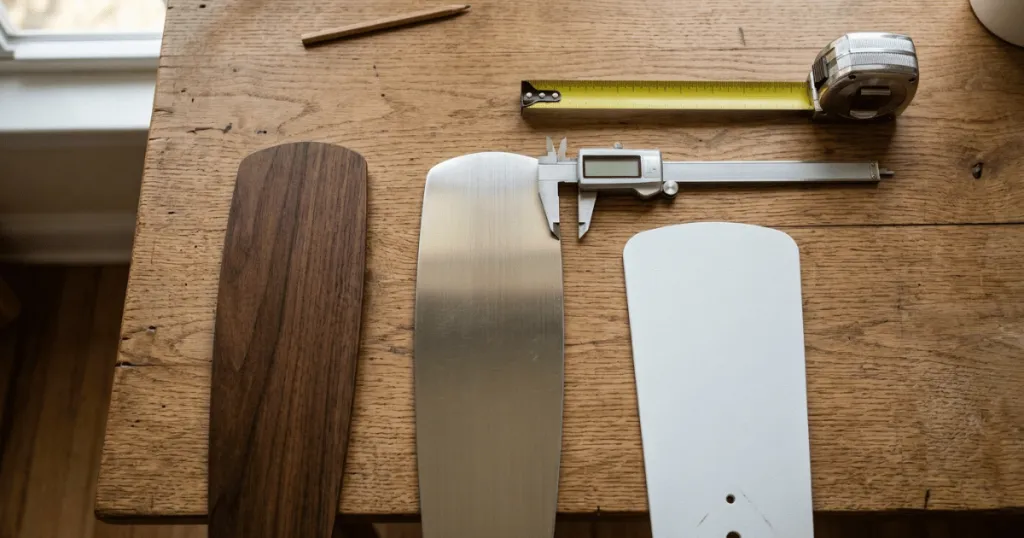
You must measure the exact angle of your ceiling before purchasing any hardware. Many homeowners guess the pitch, resulting in an adapter that cannot accommodate the full incline. Use a digital angle finder placed against the drywall to get an accurate reading.
Standard adapters usually handle angles up to forty-five degrees, while extreme custom vaults require specialized heavy-duty extensions. Matching your exact room pitch prevents the downrod from binding against the canopy rim during operation.
Measuring accurately requires more than simply holding a tool against the plaster. You must account for any texture, acoustic popcorn, or uneven wood planking that might distort your reading. Place a flat straightedge across the textured surface first, then rest your digital angle finder on top of that flat edge. This guarantees that your reading reflects the true geometric plane of the roof rafters rather than surface bumps. Furthermore, check the angle in multiple spots across the same room. Vaulted ceilings sometimes twist slightly during framing settlement, meaning the pitch near the peak might differ by a few degrees from the pitch near the exterior wall. Selecting an adapter that accommodates the steepest measured zone prevents binding issues later.
Downrod Compatibility and Clearance
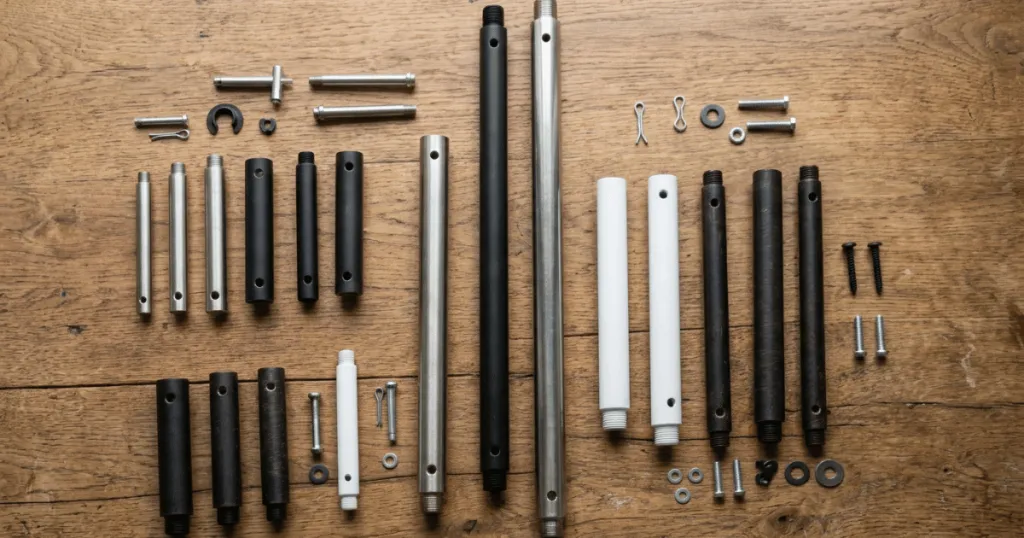
The diameter of your ceiling fan downrod must match the inner sleeve of the adapter kit. Universal kits often include multiple bushings, but proprietary manufacturer kits require exact matching to ensure a secure fit.
Blade clearance remains another critical factor in vaulted spaces. An adapter adds a few inches of overall drop length, which changes how low the blades hang relative to the floor and nearby walls.
Clearance calculations also demand attention to proximity hazards like tall windows, exposed wooden beams, and loft railings. Because an angled ceiling naturally forces the fan closer to one side of the room than the other, you must measure the horizontal distance from the blade tips to the nearest vertical obstruction. Even if the fan hangs high enough off the floor to meet basic safety codes, a slanted roofline can swing the spinning blades dangerously close to a sidewall or a sloped knee wall. Calculating this diagonal clearance before installation ensures that you select an appropriately sized downrod length in conjunction with your slope adapter, preventing catastrophic blade strikes during high speed operation.
In addition, factoring in a vaulted ceiling fan adapter means recalculating total vertical drop. If your room features a relatively low peak height, adding an extended downrod along with the pivoting adapter kit can drop the fan uncomfortably close to living zones. Always cross-reference the minimum height regulations for residential spaces, ensuring that the lowest point of the fan blades maintains at least seven feet of clearance from the finished floor surface.
Real-World Context and Installation Scenarios
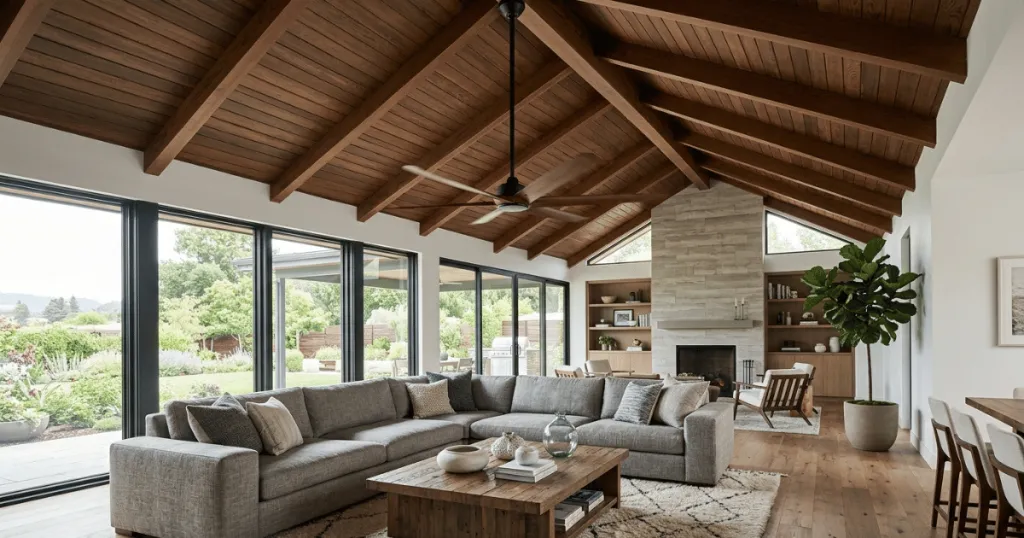
Consider a modern living room with a dramatic twenty-eight-degree vaulted ceiling. Without an adapter, the standard canopy would leave a massive gap on one side while pinching the wiring harness on the other. Installing a compatible slope kit allows the entire assembly to hang straight down, ensuring the motor turns balanced and quiet.
Another common scenario involves loft spaces or finished attics where roof rafters dictate the mounting point. Installers must anchor the electrical box directly into a ceiling joist or heavy-duty bracing brace. The adapter then fastens securely to this rigid foundation, transferring rotational torque safely into the home structure.
In practice, homeowners often underestimate the extra wiring length needed for angled installations. Because the adapter extends the drop distance slightly, standard lead wires from the fan motor may fall short of the ceiling junction box. Having extra wire nuts and approved electrical wire on hand prevents mid-project delays.
Another frequent scenario arises in open concept timber frame homes where decorative structural beams intersect with high angled drywall. In these environments, aesthetic alignment is just as critical as mechanical stability. If the slope adapter is misaligned, the canopy will look visibly crooked against the clean lines of the timber framing. Installers must carefully orient the pivoting axis of the adapter so that the canopy sits flush and parallel to the viewing angle of the primary living space. This attention to detail prevents visual distraction while ensuring that the hidden mounting hardware remains completely concealed inside the decorative shroud.
Why Proper Slope Adaptation Matters for Safety and Performance
Ceiling fans generate significant dynamic loads while spinning at high speeds. If a fan hangs crooked due to an unadapted slope, the unbalanced rotational force creates harmonic vibrations. Over time, these vibrations loosen mounting screws, electrical connections, and drywall anchors.
Investing in proper hardware protects your home investment and ensures household safety. A secure installation eliminates annoying wobble sounds and extends the operational lifespan of the motor bearings. Furthermore, keeping the fan level ensures that the blades push air downward efficiently rather than churning it sideways against the angled roof.
When a ceiling fan operates at an uncorrected angle, the motor bearings experience asymmetric side loading. Bearings are engineered to support vertical weight and smooth rotational forces, not constant lateral pressure caused by a gravity pull against a slanted mounting bracket. Over months of daily use, this lateral force degrades the lubricant inside the bearings, leading to squeaking, grinding noises, and eventual motor seizure. Using dedicated slope ceiling adapter kits removes this side load, allowing the motor to spin within its intended mechanical parameters and drastically reducing maintenance needs over the lifespan of the appliance.
Common Misconceptions About Angled Ceiling Installations
Many DIY enthusiasts assume that bending a standard mounting bracket with pliers solves an angled ceiling problem. This practice compromises the structural rating of the bracket and introduces severe safety hazards. Metal fatigue can cause a bent bracket to snap under the continuous weight and vibration of a spinning motor.
Another frequent myth is that any universal adapter fits every brand of ceiling fan. In reality, proprietary locking pins, safety cable attachment points, and wiring channels vary significantly between manufacturers. Always verify cross-brand compatibility before starting your installation project.
A third misconception is that low pitch ceilings under fifteen degrees never require specialized attention. While many manufacturers state that standard canopies can handle a minimal incline, older homes with settling foundations often have shifting framing that creates a tighter pinch point than the nominal degree rating suggests. Checking the fit manually before tightening every screw ensures that no part of the downrod binds against the canopy edge, regardless of whether the angle technically falls below the manufacturer threshold.
Conclusion and Next Steps
Addressing an angled room requires patience and the right mechanical components. Take accurate measurements of your pitch, verify downrod dimensions, and select slope ceiling adapter kits designed for your specific setup. Prioritizing structural safety guarantees long-term performance and peace of mind.
FAQ
Can I install a ceiling fan on a sloped ceiling without an adapter?
You can only do this if the ceiling pitch is within the manufacturer specified limit, which is usually under fifteen degrees. Anything steeper requires an adapter to prevent mechanical strain and unsafe wobbling.
Do universal slope adapters work with all ceiling fan brands?
While many universal kits fit standard downrod diameters, some proprietary fans require brand specific mounting hardware to accommodate unique wiring harnesses and safety locking pins.
How do I measure my ceiling slope angle accurately?
Place a digital angle finder or a smartphone level app directly against the sloped drywall surface to get a precise degree measurement before purchasing any hardware.