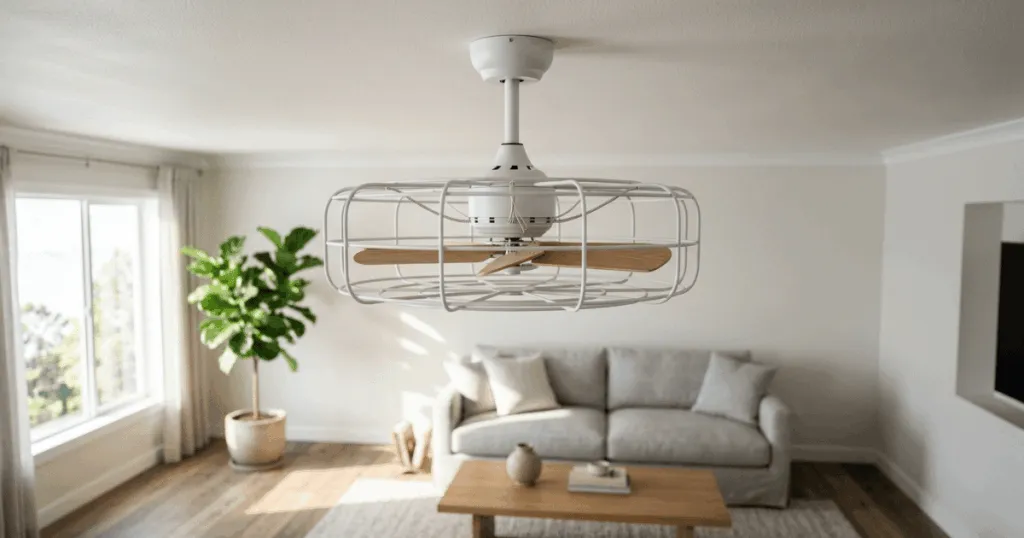
Bladeless ceiling fans are often misunderstood as being entirely devoid of blades, but in practice, they function through internal, concealed impellers that move air through a specialized housing. If you are considering one for your home, the most important question is whether they provide the same cooling power as traditional models. While they offer a distinct, modern aesthetic, their primary function is to circulate air in a more focused or diffused manner, depending on the specific engineering of the unit.
These fixtures are designed for homeowners who prioritize a minimalist look or have specific safety concerns regarding exposed rotating parts. Understanding how these fans move air compared to standard paddle-style fans is essential for ensuring you achieve the level of comfort you expect in your living spaces. By looking past the marketing terminology, you can determine if the unique mechanics of these units align with your room’s size and ventilation needs.
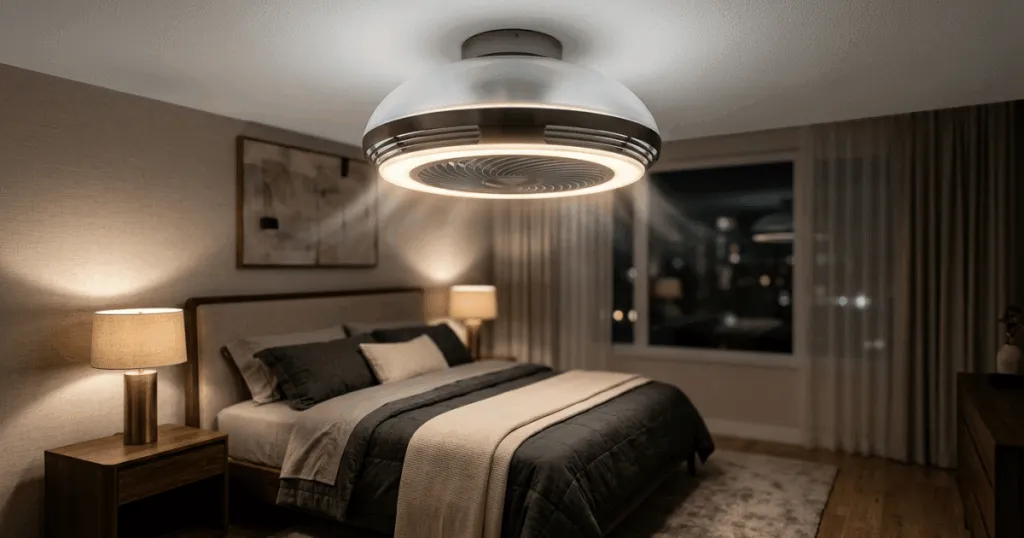
The Mechanics of Airflow in Concealed-Blade Fans
The term “bladeless” is a bit of a misnomer in the ceiling fan industry. Unlike standard fans that use external paddles to slice through the air, these units utilize an internal motor and impeller system. Think of it as a centrifugal fan hidden inside a decorative drum or housing. Air is drawn into the unit, pressurized, and then expelled through vents or a circular aperture.
This design creates a different airflow profile. Traditional fans produce a wide, sweeping column of air that moves downward and outward. In contrast, many bladeless or enclosed-blade designs produce a more concentrated or directional flow. What this means in practice is that the cooling sensation may feel different; you might not get the same “breeze” effect across a large room that you would with a 60-inch traditional fan.
Efficiency is another factor to consider. Because the air must be forced through a more restrictive path—the internal housing—the motor often works harder to move the same volume of air as an open-blade fan. If your goal is maximum air displacement for a large, high-ceilinged room, you may find that these units struggle to match the performance of traditional high-torque motors. The mechanical design relies on high-velocity air output rather than the high-volume, low-velocity movement typical of large-diameter blades.
Why Homeowners Choose Concealed-Blade Designs
The primary driver for choosing these fans is almost always aesthetics. They offer a clean, unobtrusive profile that blends into modern, minimalist, or industrial interior designs. For rooms with lower ceilings, a bulky traditional fan can feel overwhelming; a sleek, drum-style or enclosed fan can make the space feel more open. This modern ceiling fan design is particularly effective in spaces where the ceiling height is less than 8 feet, as it prevents the visual clutter of long downrods or sweeping blade spans.
Safety is a secondary, yet significant, consideration. In rooms with bunk beds, low-clearance areas, or spaces where children play, the absence of exposed, rotating blades provides peace of mind. You do not have to worry about accidental contact with the fan, which is a common concern with traditional low-profile mounts. This inherent safety feature makes them a preferred choice for nurseries or bedrooms where safety is the paramount concern.
Maintenance is also simplified. Traditional fan blades are notorious for accumulating dust, which requires regular cleaning to prevent allergens from being blown into the air. Enclosed-blade fans typically have fewer nooks and crannies for dust to settle, and the internal components are shielded from the room environment. This makes them a practical choice for homeowners who want to minimize cleaning chores. However, when fan maintenance is required, it often involves removing a grille or housing cover, which is a different process than simply wiping down a blade.
Real-World Context: Where They Work Best
To determine if these fans are right for your home, consider the specific room environment. These units excel in smaller, enclosed spaces like home offices, walk-in closets, or breakfast nooks where a large, sweeping fan would be overkill. In these tighter quarters, the focused airflow is often sufficient to keep the air moving without creating a drafty, uncomfortable environment.
In larger living areas, the limitations become more apparent. If you are trying to cool a 20×20 foot living room, a single bladeless unit may not provide the necessary air circulation to reach the corners of the room. You might find yourself needing to run the fan at its highest setting, which can lead to increased noise levels. In such cases, a traditional fan with a larger blade span is usually the more effective choice for comfort. The cooling efficiency of a fan is tied to its ability to move air across the entire room, not just directly beneath the fixture.
Ceiling height also plays a role. If you have high ceilings, you need a fan that can push air down effectively. Many bladeless models are designed for flush or near-flush mounting, which keeps them close to the ceiling. If the fan is too far from the living area, the air may lose its velocity before it reaches you, rendering the cooling effect negligible. Always check the manufacturer’s recommended mounting height before committing to a specific model. A flush mount is ideal for low ceilings, but in a vaulted room, the air may never reach the floor.
Why Proper Placement Matters for Comfort
The effectiveness of any ceiling fan is tied to its ability to create a wind-chill effect. When you place a fan, you are trying to maximize the air movement over the people in the room. With bladeless or enclosed designs, the air is often directed straight down. This is excellent if you are sitting directly under the fan, but it offers less benefit if you move to the side of the room. This localized air velocity is a critical trade-off for the sleek appearance.
A common mistake is assuming that all fans provide the same coverage area. When you choose a fan, look at the airflow rating, typically measured in Cubic Feet per Minute (CFM). Compare the CFM of the bladeless unit to a traditional fan of similar size. You will often see that the traditional fan moves more air with less energy. This does not mean the bladeless fan is “bad,” but it does mean it serves a different purpose. If your room ventilation needs are high, you must prioritize the CFM rating over the aesthetic appeal.
If you are sensitive to noise, pay close attention to the motor specifications. Because these fans often use smaller, faster-spinning impellers to move air through the housing, they can produce a distinct hum or whirring sound. While some manufacturers have made great strides in dampening this noise, it is rarely as quiet as a high-quality, low-speed traditional fan. The acoustic profile of these fans is generally higher-pitched, which some users find more noticeable than the low-frequency thrum of large blades.
Common Misconceptions About Bladeless Technology
One of the most persistent myths is that these fans are completely silent. While they lack the “chopping” sound of blades cutting through the air, the internal motor and the air friction within the housing create their own acoustic profile. If you are installing one in a bedroom, check user reviews specifically for noise levels at low speeds. The internal friction is an unavoidable byproduct of forcing air through a constrained space.
Another misconception is that they are more energy-efficient. While some modern DC motor ceiling fans are quite efficient, the physics of moving air through a constrained space generally requires more power than an open-blade design. If energy consumption is your primary concern, look for models with DC motors, which are generally more efficient than traditional AC motors, regardless of the blade style. A DC motor can offer better speed control, allowing you to fine-tune the airflow to match your comfort needs without excessive power draw.
Finally, do not assume that “bladeless” means “maintenance-free.” While they are easier to clean on the outside, the internal impellers can still collect dust over time. Depending on the design, accessing these internal parts for cleaning can be more difficult than simply wiping off a traditional paddle blade. Always ensure the unit is designed for easy access if you live in a particularly dusty environment. Indoor air circulation can pull dust into the housing, and over time, this can affect the balance and performance of the internal impeller.
Evaluating the Trade-offs for Your Home
When deciding between enclosed-blade ceiling fans and traditional models, you are essentially choosing between form and function. If your priority is a minimalist interior, the visual impact of a bladeless unit is hard to beat. They disappear into the ceiling, allowing other architectural features of the room to take center stage. However, you must be prepared for the trade-offs in air displacement and coverage.
Consider the climate of your region. In areas with extreme heat, the cooling efficiency of a fan is a critical component of your home’s comfort. If you rely on your fan to assist your HVAC efficiency, a traditional fan with a wider blade span will likely provide better results. If you live in a milder climate where the fan is used primarily for light air movement, a bladeless fan may be perfectly adequate.
Ultimately, the decision comes down to the specific room’s requirements. A home office might benefit from the focused, quiet, and unobtrusive nature of a bladeless fan, while a large, open-concept living room will almost always perform better with a traditional, high-CFM fan. By assessing your room size, ceiling height, and primary use case, you can make an informed choice that balances your aesthetic preferences with the practical reality of air movement.
FAQ
Do bladeless ceiling fans actually move as much air as traditional fans?
Generally, no. Because bladeless ceiling fans use internal impellers to force air through a housing, they often produce a more concentrated, directional airflow rather than the broad, sweeping circulation of traditional paddle fans. They are often best suited for smaller rooms or supplemental cooling rather than as the primary air-moving solution for large, open-concept spaces.
Are bladeless ceiling fans quieter than standard fans?
Not necessarily. While they avoid the air-chopping sound of large blades, the internal motor and the sound of air moving through the housing can create a distinct whirring noise. The perceived volume depends heavily on the quality of the motor and the housing design, so it is important to look for models specifically engineered for quiet operation.
Are these fans safer for rooms with low ceilings?
Yes, they are often considered safer for low-ceiling applications. Because the moving parts are fully enclosed within a housing, there is no risk of accidental contact with rotating blades. This makes them a popular choice for rooms with bunk beds or areas where the fan is mounted at a lower-than-average height.