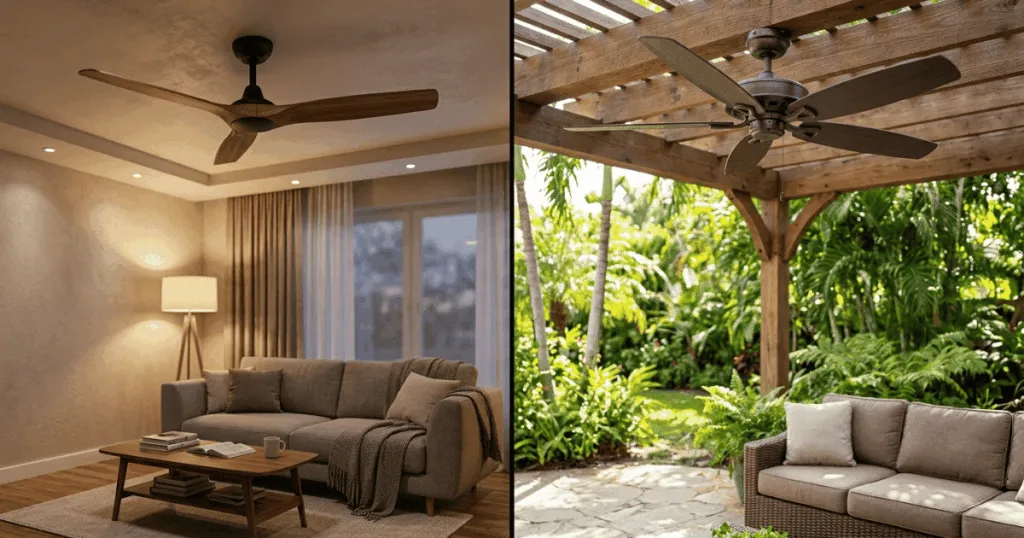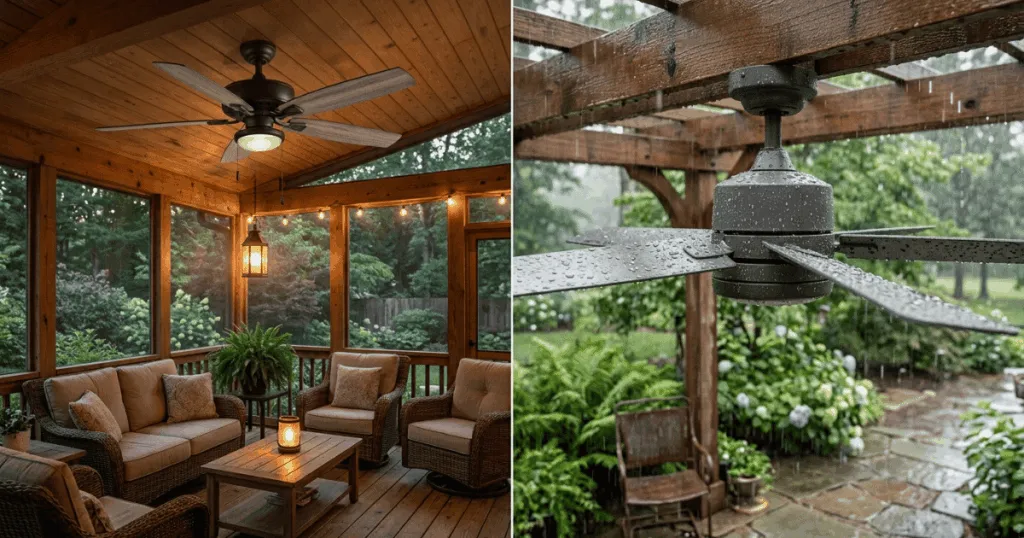
Quick Answer: No. Indoor ceiling fans lack the sealed motor housings, corrosion-resistant finishes, and moisture-proof electrical components necessary to survive outdoor conditions. Installing one outdoors creates significant risks, including electrical shorts, fire hazards, and structural failure due to component degradation.
When planning your porch or patio comfort, the question of “Can i put an indoor ceiling fan outdoor” is a common one. The short answer is no, you should never install a standard indoor-rated ceiling fan in an outdoor space. While they may look identical at a glance, the internal components and exterior materials of indoor fans are not built to withstand the elements. Choosing the wrong fan for your space is not just a matter of premature equipment failure; it is a significant safety hazard that can lead to electrical shorts, motor damage, or structural instability.
Understanding the distinction between damp-rated, wet-rated, and indoor-only models is essential for any homeowner. Installing an indoor fan in a humid or exposed environment compromises the integrity of the motor housing, the wiring, and the blade materials. By exploring the technical reasons behind these ratings, you can ensure your outdoor living area remains both comfortable and safe for years to come.
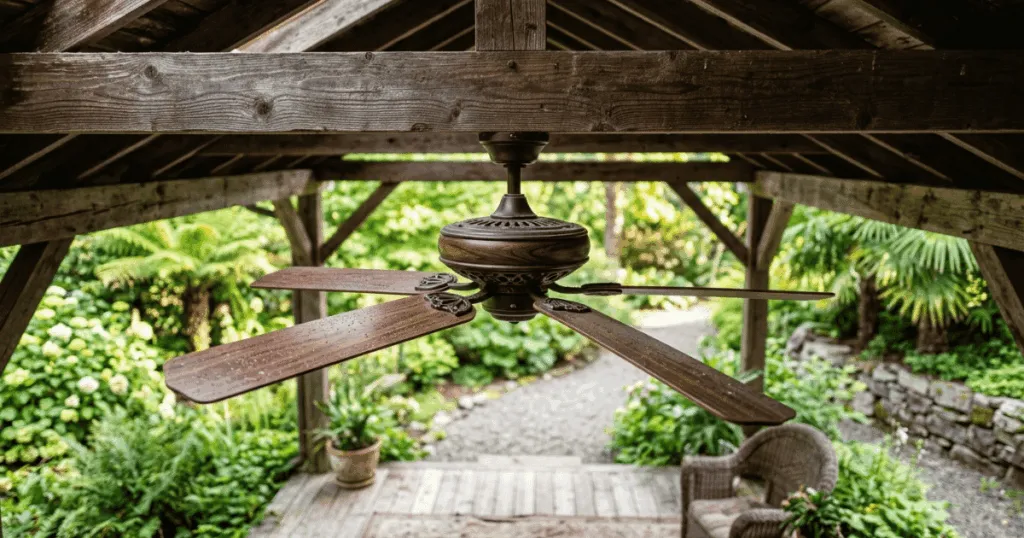
The Technical Reasons Behind Ceiling Fan Ratings
Ceiling fan manufacturers use specific ratings to define where a product can be safely installed. These ratings are not marketing gimmicks; they are based on rigorous testing protocols regarding moisture resistance, corrosion protection, and electrical insulation. An indoor-rated fan is designed for climate-controlled environments where humidity levels remain stable and moisture exposure is non-existent.
In an outdoor setting, even one that is covered, the air is subject to fluctuating humidity, temperature extremes, and airborne moisture. Indoor fans lack the sealed motor housings required to prevent moisture from reaching the electrical windings. Once moisture enters the motor, it causes internal corrosion, which can lead to a short circuit or a complete motor seizure. In many cases, the moisture also causes the electrical components to rust, creating a fire risk that is not present in dry indoor rooms.
Beyond the motor, the materials used for the fan blades and the canopy are critical. Indoor fans often utilize medium-density fiberboard (MDF) or thin wood veneers for their blades. These materials are highly porous and will absorb ambient humidity, causing them to warp, peel, or sag over time. Once the blade balance is compromised due to warping, the fan will begin to wobble, which puts excessive stress on the motor shaft and the ceiling mounting bracket.
The finish on an indoor fan is also insufficient for outdoor use. Indoor-rated paint or plating is not designed to resist UV rays or the oxidative effects of salt air or high humidity. Over a single season, you might notice the finish bubbling or flaking off, exposing the underlying metal to rust. This degradation is not just aesthetic; it accelerates the structural breakdown of the fan assembly, eventually leading to a point where the fan could detach from the mount.
Real-World Scenarios and Installation Risks
Many homeowners assume that if a porch is covered, an indoor fan is safe. This is a dangerous misconception. Even in a screened-in porch or a covered patio, the ambient air carries moisture. During the early morning hours, condensation can form on the cool metal surfaces of the fan. If the fan is not specifically engineered for damp or wet locations, this condensation will eventually seep into the electrical housing.
Consider the difference between a damp-rated fan and a wet-rated fan. A damp-rated fan is suitable for covered porches where the unit will not come into direct contact with rain or splashing water. These models feature treated internal components and more robust finishes. A wet-rated fan, however, is designed to be hosed down or exposed to direct rain. If you install an indoor fan in a damp location, you are essentially inviting the humidity to destroy the internal electronics.
In practice, the failure of an indoor fan in an outdoor space often begins with a subtle change in performance. You might hear a slight humming noise that wasn’t there before, or the fan might start to wobble as the blades lose their shape. If you ignore these signs, the motor may eventually overheat. Because indoor fans lack the thermal protection found in outdoor models, an overheated motor can lead to melted wiring insulation, which is a major fire hazard in a wooden porch ceiling.
Another factor is the mounting hardware. Outdoor-rated fans come with stainless steel hardware or specialized coatings that prevent oxidation. If you use the standard hardware that comes with an indoor fan, the screws and bolts will begin to rust within months. This rust can weaken the connection between the fan and the ceiling junction box, creating a risk that the entire assembly could fall. This is particularly concerning in outdoor areas where wind gusts can put extra pressure on the fan mount.
Why Proper Selection Matters for Homeowners
Choosing the correct fan for your environment is about longevity and peace of mind. When you invest in an outdoor-rated fan, you are paying for the engineering that keeps the motor dry and the materials that resist the elements. This investment ensures that you won’t have to replace the unit after a single summer season. It also ensures that your family and guests are safe while enjoying the outdoor space.
From a maintenance perspective, outdoor-rated fans are designed to be easier to clean and inspect. Their finishes are resistant to the types of grime and pollen that accumulate in outdoor environments. By selecting a model that matches your environmental needs, you reduce the time and effort required to keep the fan operating smoothly. You also avoid the frustration of dealing with a fan that has become noisy or unbalanced due to environmental exposure.
If you are struggling to find a style you like in the outdoor category, it is worth noting that modern outdoor fans have evolved significantly. You no longer have to settle for industrial-looking designs. Many manufacturers now offer outdoor-rated fans that mimic the aesthetic of high-end indoor fixtures, including integrated LED lighting and smart home compatibility. There is rarely a reason to compromise on safety when the market offers such a wide variety of durable, stylish options.
Common Misconceptions About Outdoor Fans
One of the most persistent myths is that a fan is safe as long as it is out of the rain. This ignores the reality of humidity. Humidity is a gas that permeates every corner of an outdoor space, and it is just as damaging to an indoor motor as direct rain. Another misconception is that you can simply spray an indoor fan with a clear coat to make it outdoor-ready. This is ineffective because it does not protect the internal motor windings or the electrical connections, which are the most vulnerable parts of the fan.
Some homeowners also believe that if they live in a dry climate, they can get away with using an indoor fan outside. While the lack of humidity might slow down the corrosion process, it does not account for temperature fluctuations. The expansion and contraction of materials in extreme heat or cold will still cause the blades to warp and the internal components to shift. Ultimately, the manufacturer’s rating is the only reliable guide you should follow when selecting a fan for your home.
The Role of UL Ratings in Fan Safety
Understanding Underwriters Laboratories (UL) ratings is a critical step in the decision-making process. When you look at the packaging or the manual of a ceiling fan, you will often see specific designations regarding location suitability. These ratings are the result of standardized testing protocols that simulate harsh environments. An indoor-only fan has not undergone the testing required to ensure that its electrical insulation can withstand moisture ingress. When you install an indoor fan outdoors, you are bypassing these safety standards, effectively operating the device outside of its intended design parameters.
This is particularly relevant when considering the electrical components. Outdoor-rated fans utilize specialized gaskets and seals to protect the motor housing. These seals prevent water and dust from reaching the internal wiring. Indoor fans, by contrast, are often vented to allow for heat dissipation in a controlled environment. If these vents are exposed to the outdoors, they become entry points for moisture, insects, and debris, all of which can lead to a catastrophic electrical short circuit.
Environmental Factors and Material Degradation
Beyond the electrical risks, the physical degradation of materials is a significant concern. Outdoor environments subject ceiling fans to a variety of stressors that indoor units never encounter. UV radiation, for example, can cause plastic components to become brittle and crack over time. If a fan housing or a blade holder cracks due to UV exposure, the structural integrity of the fan is compromised. This can lead to blades detaching while the fan is in motion, which poses a severe risk to anyone standing beneath it.
Furthermore, the salt air in coastal regions creates an even more aggressive environment. Salt is highly corrosive to metals, and indoor-rated finishes are simply not designed to withstand this. Even if you live several miles from the coast, airborne salt can still reach your patio. Outdoor-rated fans are often constructed with marine-grade materials or specialized powder coatings that are specifically engineered to resist this type of chemical attack. Using an indoor fan in these areas is a recipe for rapid failure.
The Importance of Proper Mounting and Structural Support
The installation process for an outdoor fan is inherently more demanding than for an indoor one. Because outdoor spaces are often subject to wind, the mounting bracket must be exceptionally secure. Outdoor-rated fans are designed to handle the additional torque and vibration that can occur during windy conditions. If you attempt to install an indoor fan outdoors, the mounting hardware may not be rated for the same level of stress. This creates a scenario where the fan could become loose over time, leading to excessive wobbling and, eventually, a total failure of the mounting system.
Additionally, the junction box used for an outdoor fan must be rated for the specific environment. If you are replacing an existing indoor fan with an outdoor model, it is crucial to inspect the junction box to ensure it is properly sealed and capable of supporting the weight of an outdoor-rated unit, which is often heavier due to the more robust materials used in its construction. Ignoring these structural requirements is a common oversight that leads to dangerous installation failures.
Maintenance and Long-Term Reliability
While outdoor-rated fans are built to last, they still require periodic maintenance to ensure they continue to operate safely. This includes checking the mounting hardware for signs of loosening, cleaning the blades to prevent dust buildup that can cause imbalance, and inspecting the motor housing for any signs of water intrusion. By choosing an outdoor-rated fan, you are starting with a product that is designed to be maintained in these ways. An indoor fan, conversely, is not designed to be serviced in an outdoor environment, making it nearly impossible to keep it in a safe, operational state over the long term.
Ultimately, the decision to use an indoor fan outdoors is a choice between short-term convenience and long-term safety. The risks associated with electrical fires, structural failure, and rapid equipment degradation are simply too high to justify the cost savings of using an indoor model. By prioritizing safety and choosing the correct fan for your specific environment, you can enjoy the comfort and aesthetic benefits of a ceiling fan in your outdoor space for many years.
FAQ
What is the difference between damp-rated and wet-rated fans?
Damp-rated fans are designed for covered areas like screened porches where they will not be exposed to direct rain but must endure high humidity. Wet-rated fans are fully sealed and can withstand direct exposure to rain, snow, and splashing water, making them suitable for open patios or pergolas.
Can I use an indoor fan on a screened-in porch?
No. Even in a screened-in porch, the air is exposed to ambient humidity and temperature shifts. Indoor fans are not built to handle these conditions, and you should always use at least a damp-rated ceiling fan for any outdoor-adjacent space.
What happens if I install an indoor fan outside?
The most common outcomes include rapid corrosion of internal electrical components, warping of the blades, and motor failure. In the worst-case scenario, moisture ingress can cause a short circuit or an electrical fire, and the degradation of mounting hardware can lead to the fan becoming structurally unstable.