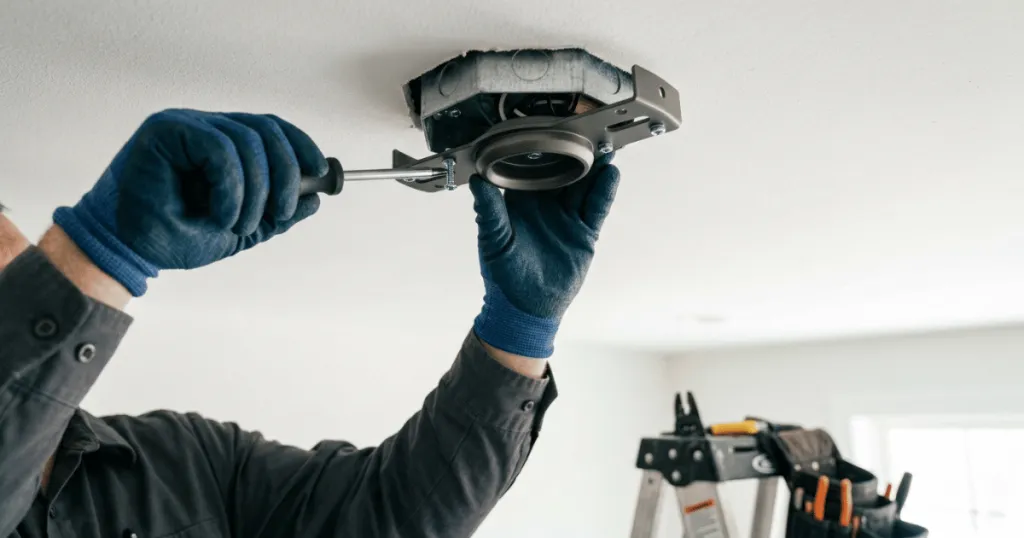
The Short Version: Yes, ceiling fans require a ground wire for safety. It provides a path for stray electricity to travel safely to the earth, preventing the metal housing of the fan from becoming energized and reducing the risk of electrical shock or fire.
When you are preparing to install a new ceiling fan, you might wonder about the necessity of specific electrical connections. A common question homeowners ask is, “Do ceiling fans need a ground wire?” The short answer is yes. In almost every residential installation, a ground wire is a mandatory safety component that must be connected to ensure the fan operates within safe electrical parameters.
Ignoring this step or assuming it is optional creates significant risks for your household. Grounding provides a dedicated path for stray electrical current to travel safely back to the earth rather than through the fan housing or, worse, through a person who touches the unit. Understanding how this system works helps you approach your ceiling fan installation with the necessary caution and respect for electrical standards.
For the average homeowner, the process of wiring a ceiling fan can seem daunting. However, grounding is perhaps the most critical step in the entire procedure. It is not merely a suggestion found in manuals but a foundational requirement of the National Electrical Code. By taking the time to understand the role of the ground wire, you ensure that your home remains a safe environment for your family while protecting the investment you have made in your home comfort appliances.
Why Grounding is Essential for Ceiling Fan Safety
The primary purpose of a ground wire is to prevent electrical shock. Ceiling fans are typically made of metal components, including the canopy, motor housing, and downrod. If an internal wire were to fray or come loose over time, it could make contact with these metal parts. Without a ground connection, the entire metal exterior of the fan could become energized.
If a person touches an energized fan, they become the path of least resistance for the electricity to reach the ground. This results in a dangerous shock. When a ground wire is properly installed, it connects the metal chassis of the fan to the house electrical system’s grounding path. If a fault occurs, the electricity flows through the ground wire, which often causes a circuit breaker to trip, effectively cutting off power to the fan and alerting you to a problem.
Beyond the immediate risk of shock, grounding serves as a critical defense against fire hazards. When an electrical fault occurs without a proper ground path, the current may arc or generate significant heat as it searches for a way to dissipate. This heat can ignite nearby dust, insulation, or wooden structural elements within the ceiling cavity. A properly grounded system ensures that the circuit breaker detects the surge and interrupts the flow of electricity before these dangerous temperatures are reached.
The Role of the Electrical Box
Your ceiling fan does not exist in a vacuum; it relies on the electrical junction box mounted in your ceiling. This box must also be grounded. The ground wire from your ceiling fan should be connected to the ground wire coming from your house wiring, which is typically tied to the metal junction box itself.
If you have an older home with plastic junction boxes or wiring that lacks a dedicated ground wire, you face a more complex situation. In these cases, simply installing the fan is not enough. You may need to consult with a licensed electrician to verify if your current system can support a safe ground connection. Never assume that a lack of a visible ground wire means you can skip the step.
When dealing with metal junction boxes, the box itself often acts as an extension of the grounding system. If your home has metal conduit or armored cable, the housing of the cable may provide the ground path. However, you must verify that this path is continuous all the way back to your main service panel. If the connection is broken at any point, the grounding system fails to provide the protection it is designed for. Always use a multimeter or a voltage tester to confirm that the box is actually grounded before assuming it is safe to attach the fan ground wire to it.
Real-World Context: When Installation Gets Tricky
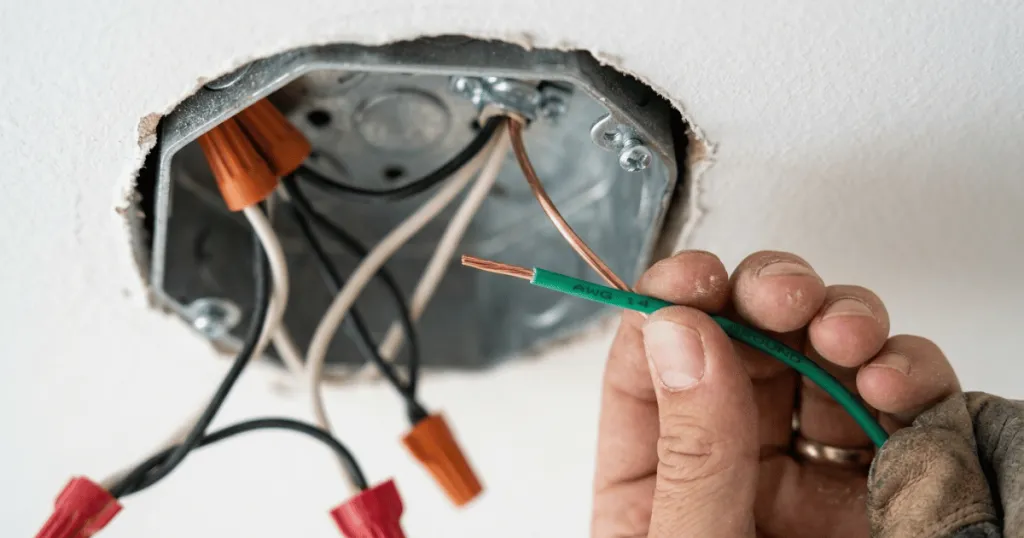
In many modern homes, the wiring is straightforward. You will see a black wire for power, a white wire for neutral, and a green or bare copper wire for the ground. However, real-world scenarios often present challenges that can confuse a DIY installer. For instance, some older homes use armored cable or conduit systems where the metal housing of the cable acts as the ground.
If you are working in a room with older wiring, you might find that the junction box is not properly grounded. This is a common issue in houses built before the widespread adoption of modern grounding standards. In this scenario, you cannot simply attach the fan’s ground wire to the box and expect it to work. You must ensure the entire circuit path is grounded back to the main electrical panel.
Consider the scenario where you are installing a fan in a room with knob-and-tube wiring. This legacy system does not include a ground wire. In this specific case, the lack of a ground is a systemic issue that cannot be solved by the fan installation alone. You must prioritize upgrading the circuit to include a ground wire, or you risk leaving the fan housing ungrounded. This is not just a recommendation for the fan; it is a necessary upgrade for the entire room to meet contemporary safety standards.
Another common complication involves the use of fan-rated boxes. If you are replacing an old light fixture with a ceiling fan, the existing box may not be rated for the weight or the vibration of a fan. While this is a mechanical issue, it often overlaps with electrical concerns. A box that is not properly secured may also have a loose or compromised ground connection. Always ensure that the junction box is rated for ceiling fan use and that the grounding screw is firmly attached to the box and the ground wire.
Identifying Your Wiring Situation
Before you begin, inspect the wiring inside your ceiling box. If you see a bare copper wire or a green wire, you have a ground. If you only see black and white wires, you are likely dealing with an ungrounded circuit. Attempting to install a modern ceiling fan on an ungrounded circuit is a safety hazard that should be addressed before the fan is mounted.
Some fans come with specific instructions regarding the ground wire. Always follow the manufacturer’s documentation provided with your specific model. While the general principle of grounding remains the same, the way the wire attaches to the mounting bracket or the motor housing can vary between manufacturers. Using the provided hardware ensures that the connection is secure and reliable.
If you find that your wiring is confusing, take a moment to map out the circuit. Use a non-contact voltage tester to identify which wires are live. Remember that a wire that is not live can still be a ground wire. If you are unsure about the identity of a wire, do not guess. Consult a professional who can trace the wiring back to the source. Safety is always the priority over speed when it comes to electrical work.
Why This Matters for Long-Term Reliability
Beyond immediate safety, proper grounding contributes to the long-term health of your ceiling fan. Electrical systems are subject to surges and minor fluctuations. A grounded system helps dissipate these small variances, protecting the sensitive electronic components found in modern fans, such as remote control receivers and LED light kits.
Many modern fans utilize DC motors, which are highly efficient but rely on complex internal circuitry. These components are more sensitive to electrical faults than traditional AC motors. If you skip the grounding step, you are not only risking shock but also potentially shortening the lifespan of your fan’s electronics. A well-grounded fan is a more stable, durable appliance.
Consider the impact of static electricity and minor power spikes. In a home without a proper ground, these small electrical events can accumulate in the metal housing of the fan. Over time, this can lead to the degradation of internal insulation or the premature failure of the fan’s control board. By providing a clear path for these currents to exit, you are essentially extending the operational life of your appliance. This is particularly important in areas prone to lightning or frequent power grid fluctuations, where the ground wire acts as a vital safety valve for the entire electrical system.
Common Misconceptions About Grounding
A frequent misconception is that if a fan is mounted to a wooden ceiling, it does not need to be grounded. This is false. The material of the ceiling has no impact on the electrical requirements of the fan. The risk of internal short-circuiting remains the same regardless of what the fan is attached to.
Another common error is assuming that the mounting screws provide enough of a ground connection. While the mounting bracket is metal, it is not a substitute for a dedicated electrical ground wire. Relying on the physical contact of screws can lead to a high-resistance connection that may fail to trip a breaker during a fault, leaving the fan energized and dangerous.
Furthermore, some homeowners believe that because a fan is controlled by a wall switch, it is somehow isolated from the circuit. This is incorrect. The switch only interrupts the hot wire. The ground wire remains connected to the fan housing regardless of whether the fan is turned on or off. If a fault occurs while the fan is off, the housing could still become energized if the ground wire is not properly installed. Never rely on the switch to provide safety isolation.
Troubleshooting Grounding Issues
If you suspect that your ceiling fan is not grounded, the first step is to perform a visual inspection. Turn off the power at the main breaker panel before opening the canopy. Once the canopy is lowered, look for a green or bare wire coming from the fan motor and verify that it is connected to a corresponding wire in the ceiling box. If you see a green wire dangling or not connected to anything, you have identified the problem.
If you find that the ground wire is connected but the fan still exhibits issues like buzzing or flickering lights, the problem might be a loose connection. A loose ground wire can cause intermittent electrical noise, which often manifests as a humming sound from the motor or flickering in the light kit. Ensure that all wire nuts are tight and that the ground wire is securely fastened to the mounting bracket or the junction box screw.
In cases where you have a plastic junction box that lacks a grounding point, you may need to install a grounding pigtail. This involves attaching a wire to the metal mounting bracket and connecting it to the house ground wire. If there is no house ground wire available, you must stop the installation and consult an electrician to bring the circuit up to code. Do not attempt to create a ground by attaching a wire to a water pipe or other metal structure, as this can create dangerous ground loops and violate electrical codes.
Conclusion: Prioritizing Safety in Your Installation
When you ask, “Do ceiling fans need a ground wire,” the answer remains a firm requirement for safety and performance. Grounding is not an optional feature or a suggestion; it is a fundamental aspect of residential electrical code. By ensuring your fan is properly grounded, you protect your home from potential electrical hazards and ensure that your fan operates as intended for years to come.
If you find that your home’s wiring does not accommodate a ground wire, do not attempt to bypass this requirement. Instead, treat it as a signal to upgrade your electrical infrastructure. Your comfort and safety are worth the extra effort required to ensure every connection is secure and compliant with modern standards. By following these guidelines, you can enjoy the benefits of a well-installed ceiling fan with the peace of mind that comes from knowing your home is safe.
FAQ
What should I do if my ceiling box does not have a ground wire?
If your ceiling box lacks a ground wire, you should not install the ceiling fan. Consult a licensed electrician to determine if you can retroactively ground the circuit or if the wiring needs to be updated to meet current safety standards.
Can I use the mounting screws as a ground connection?
No, you cannot rely on mounting screws for grounding. A dedicated ground wire is required to ensure a low-resistance path for electricity in the event of a fault. Relying on screws is unsafe and does not meet electrical code requirements.
Is the ground wire always green?
In most residential applications, the ground wire is green or bare copper. However, you should always verify the wiring with a voltage tester and follow the specific color-coding instructions provided in your ceiling fan’s installation manual.