Quick Answer: The switch on a ceiling fan is a reversing switch that changes the direction of the blade rotation. This allows the fan to push air downward for a cooling breeze in the summer or pull air upward to circulate warm air during the winter.
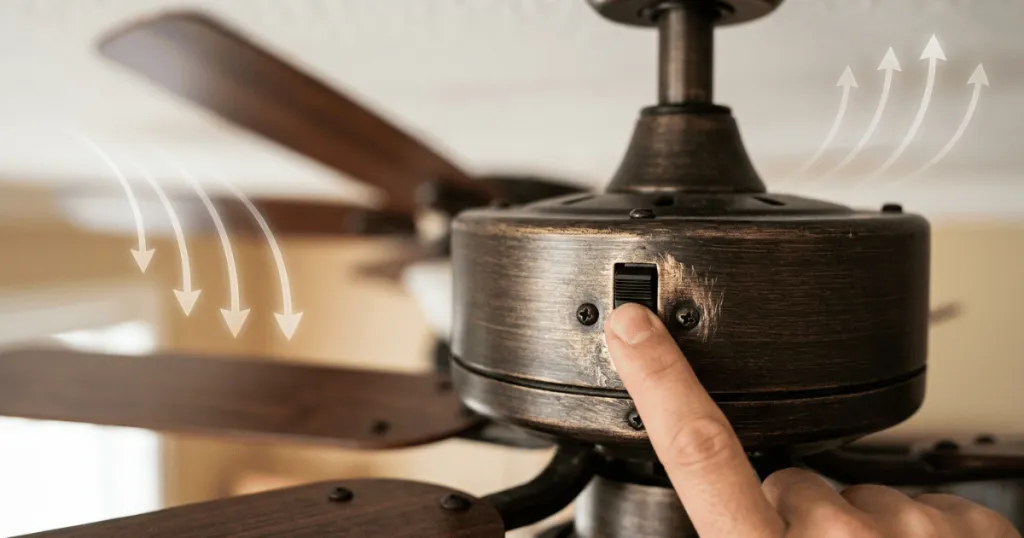
If you have ever wondered what does the switch on a ceiling fan do, you are likely looking at the small toggle located on the side of the motor housing. This unassuming component is the primary control for determining the direction in which your fan blades spin. While it may seem like a minor detail, the position of this switch dictates whether your fan pushes air downward to create a cooling breeze or pulls air upward to circulate warm air trapped near the ceiling.
Understanding this mechanism is essential for maximizing the efficiency of your home climate control throughout the year. By adjusting the rotation based on the season, you can significantly alter how a room feels without necessarily changing your thermostat settings. This simple manual adjustment is a foundational aspect of ceiling fan maintenance and operation that every homeowner should master to ensure year-round comfort in their living spaces.
Understanding the Directional Toggle
The switch on your ceiling fan is technically known as a reversing switch. Its function is to change the polarity of the motor, which effectively reverses the direction of the blade rotation. Most fans are designed to spin in two directions: counter-clockwise and clockwise. When you flip this switch, you are not changing the speed of the motor, but rather the path the air takes as it moves through the room.
In the counter-clockwise position, the angled blades of the fan push air directly downward. This creates a wind-chill effect on your skin, which helps you feel cooler during hot summer months. It is important to note that the fan itself does not lower the temperature of the air in the room. Instead, it moves the air faster, which accelerates the evaporation of moisture from your skin, providing that refreshing sensation we associate with a breeze.
Conversely, the clockwise position is designed for winter operation. When the fan spins clockwise at a low speed, it draws cool air from the floor level up toward the ceiling. This process displaces the warm air that naturally rises and collects near the ceiling, pushing it out toward the walls and back down to the living area. This is often referred to as destratification, and it helps to redistribute heat more evenly throughout the space.
Beyond the basic mechanics, the physical design of the blade pitch plays a major role in how effective this switch is. Blade pitch refers to the angle at which the blade is set relative to the horizontal plane. A steeper pitch moves more air, which means that even at low speeds, the fan can be quite effective at moving air volumes.
When you toggle the reversing switch, the motor must overcome the inertia of the blades to change direction. It is always best practice to wait for the fan to come to a complete stop before flipping the switch, as forcing the motor to reverse while it is still spinning can cause premature wear on the internal components or even damage the capacitor.
Real-World Context for Seasonal Adjustments
In practice, the timing of when to flip your switch depends entirely on your local climate and the current season. During the summer, you want the fan to spin counter-clockwise. You can verify this by standing directly under the fan and looking up. If the blades are moving to the left, or counter-clockwise, you should feel a distinct breeze immediately. If you do not feel air movement, the switch is likely set to the winter mode.
Winter operation requires a different approach. Because you do not want a cooling breeze when the weather is cold, you should set the fan to its lowest speed while in the clockwise rotation. The goal is to move the air gently enough to mix the layers of temperature without creating a draft that would make you feel colder. If you feel a noticeable breeze while the fan is in winter mode, the speed is likely set too high for the room size.
Consider the height of your ceiling when making these adjustments. In rooms with vaulted or high ceilings, the air stratification effect is much more pronounced. You may find that you need to run the fan on a medium speed during the winter to effectively push the warm air down from the peak of the ceiling, whereas in a standard eight-foot room, the lowest setting is usually sufficient. Homeowners should also be aware that in very large rooms, a single fan may not be enough to destratify the entire space, regardless of the switch position. In these cases, the fan acts as a localized comfort tool rather than a whole-room climate solution.
Furthermore, if you are living in a climate with mild winters, you might find that you rarely need to use the winter setting. However, even in moderate climates, using the fan to circulate air can prevent stagnant pockets of air from forming in corners or near windows where heat loss is highest. By keeping the air moving, you reduce the likelihood of moisture buildup on cold surfaces, which is a secondary benefit of proper fan management.
Why Proper Switch Management Matters
Managing your ceiling fan direction is a simple way to influence your indoor environment. When the fan is set correctly for the season, it can complement your HVAC system. In the summer, a well-positioned fan allows you to raise your thermostat setting by a few degrees without sacrificing comfort, as the perceived cooling effect makes the room feel more pleasant. This can lead to a more balanced reliance on air conditioning.
During the winter, the benefit is focused on heat distribution. Because heat rises, the area near the ceiling is often several degrees warmer than the area near the floor. By gently circulating this warm air, you prevent the furnace from working as hard to maintain the temperature at the thermostat level. While this does not replace a heating system, it helps prevent cold spots and makes the room feel more uniform.
Noise sensitivity is another factor to consider. Some fans may produce a slightly different mechanical sound depending on the direction of rotation. If you notice a clicking or grinding noise after flipping the switch, ensure that the toggle is pushed completely into the detent position. A switch that is stuck between settings can sometimes cause the motor to struggle or create vibration, which is a common but easily fixed issue.
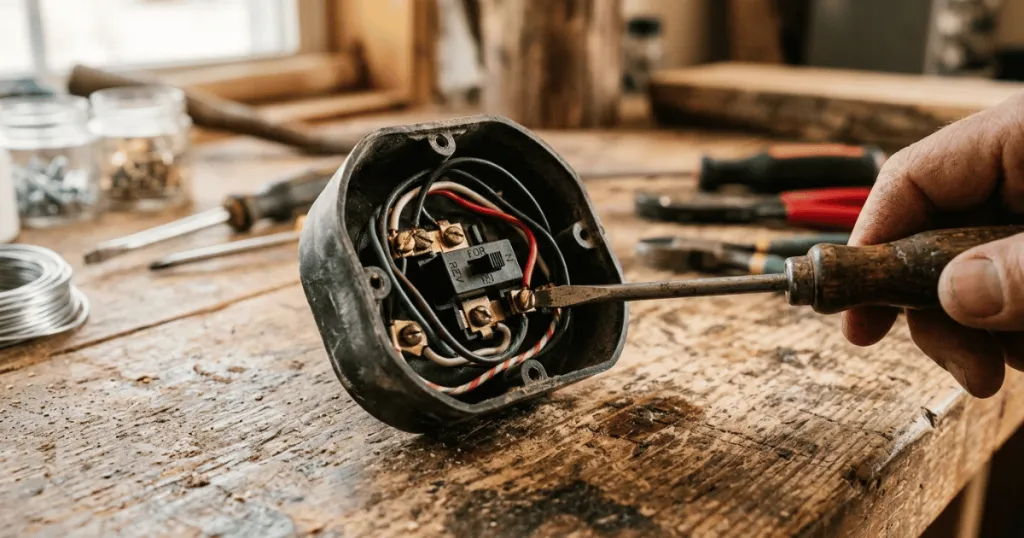
It is also worth noting that the age of the fan can influence how the switch performs. Over many years, the internal contacts of the reversing switch can accumulate dust or experience oxidation. If you find that your fan does not change direction when you toggle the switch, it may be a sign that the switch itself has failed. This is a common maintenance item that can often be replaced by a handy homeowner, provided they are comfortable with basic electrical safety and have the correct replacement part for their specific fan model. Always turn off the power at the breaker before attempting any internal repairs to the fan motor housing.
Common Misconceptions About Fan Direction
A frequent misunderstanding is the belief that the fan direction switch changes the actual temperature of the air. It is important to clarify that ceiling fans are not cooling or heating appliances in the traditional sense. They are air circulators. The switch simply dictates the direction of the air current, which changes how your body perceives the temperature in the room.
Another common mistake is assuming that all fans should spin in the same direction regardless of the model. While the standard for most modern fans is counter-clockwise for summer, some older or specialized models may have different blade pitches that require a specific rotation. If you are unsure, the best test is the physical sensation of the air. If you feel a breeze, it is in cooling mode; if you do not, it is in circulation mode.
Finally, some users assume that leaving the fan on high speed during the winter will heat the room faster. In reality, high speed in winter mode will create a draft that negates the benefits of the warm air redistribution. The winter setting should always be used on a low or medium-low speed to ensure the air is moved gently. Always prioritize a slow, steady circulation over high-velocity air movement when trying to maintain warmth in a room.
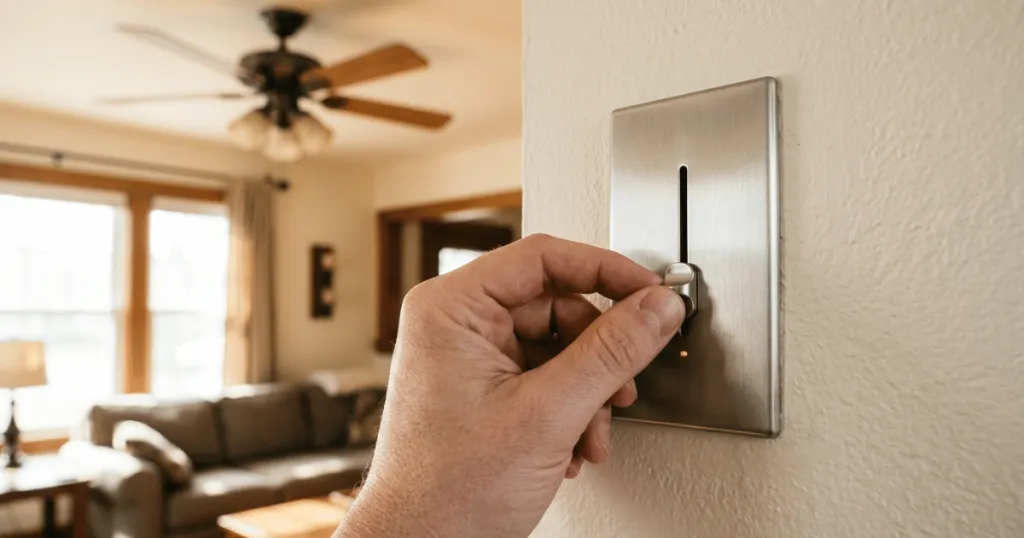
One final point of confusion involves the relationship between the fan switch and wall-mounted speed controls. Some homeowners mistakenly believe that a wall control can override the physical switch on the motor. This is generally not the case. The wall control manages the speed and power, while the physical toggle on the motor housing acts as a mechanical gatekeeper for the direction.
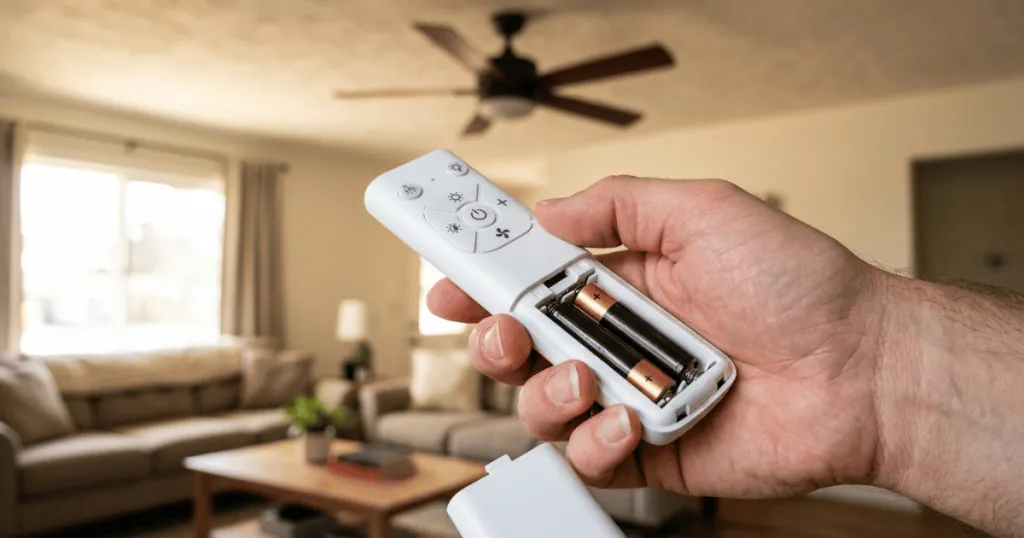
If you have a remote-controlled fan, the manufacturer has likely integrated the reversing function into the remote itself, which replaces the need for a physical toggle on the motor housing. Always consult your user manual if you are confused about how your specific model handles direction changes, as modern “smart” fans often handle this through software or digital signals rather than a manual switch.
FAQ
What should I do if my ceiling fan does not have a switch?
Some modern ceiling fans use remote controls or wall-mounted digital interfaces to change the direction of the motor. If you do not see a physical toggle on the motor housing, check your remote control for a button labeled ‘reverse’ or a seasonal icon.
Does the direction of the fan affect the motor’s lifespan?
No, the direction of the rotation does not inherently damage the motor. However, ensuring the switch is fully engaged in either the clockwise or counter-clockwise position is important to prevent electrical strain or mechanical vibration.
Can I leave my ceiling fan on all the time?
While it is safe to leave a fan running, it is only effective if the room is occupied. Ceiling fans cool people through the wind-chill effect, not by cooling the air itself, so leaving a fan on in an empty room provides no comfort benefit and wastes electricity.