Short Answer: For optimal safety and performance, ceiling fan blades should hang between 8 and 9 feet above the floor. You must never install a fan where the blades are less than 7 feet from the floor, as this poses a significant safety risk.
Determining how low should a ceiling fan hang is a fundamental step in home comfort that balances safety with aerodynamic performance. For most residential spaces, the gold standard is to keep the blades between 8 and 9 feet above the floor. This height ensures that the fan is close enough to move air effectively throughout the room while remaining high enough to prevent accidental contact with occupants or tall objects.
If you hang a fan too high, you risk losing the cooling benefits of the airflow, as the blades may struggle to circulate air in the occupied zone of the room. Conversely, mounting a fan too low creates an immediate safety hazard and can make a room feel cramped or visually cluttered. Finding the sweet spot requires understanding your specific ceiling height, the type of downrod needed, and how the fan’s blade pitch contributes to air movement.

Factors Influencing Optimal Fan Height
The primary driver for your installation height is the physical clearance required for safety. Industry standards generally mandate that fan blades should never be closer than 7 feet to the floor. This is a non-negotiable safety threshold, particularly in households with tall family members or areas where people frequently raise their arms, such as near a bunk bed or a home gym setup.
The Role of Ceiling Height
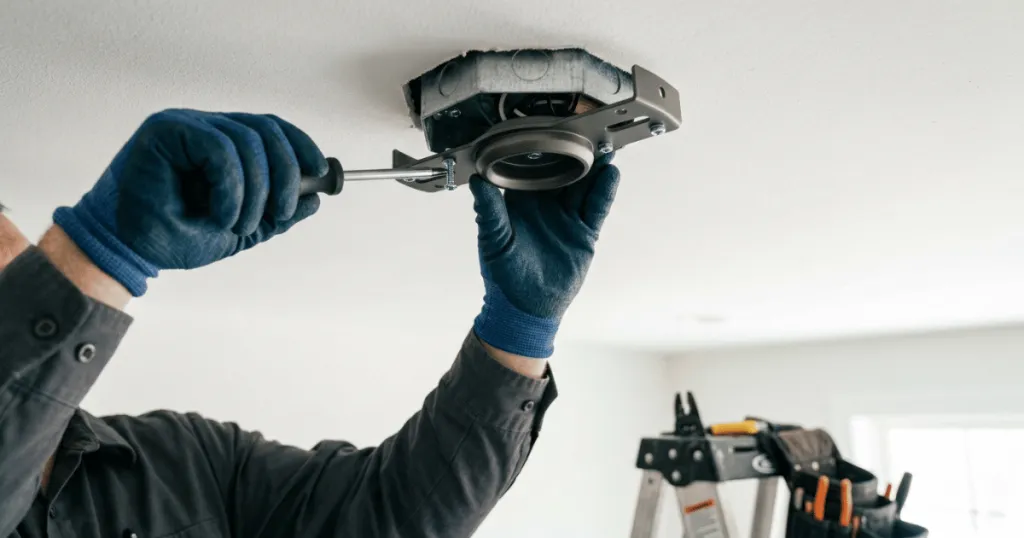
For standard 8-foot ceilings, a flush mount ceiling fan is often the most practical choice. These models attach directly to the ceiling canopy, eliminating the need for a downrod and keeping the blades at the maximum possible height. If your ceiling is 9 feet or higher, you should use a ceiling fan downrod length that drops the fan into the room’s active air space. A good rule of thumb is to add a 6-inch or 12-inch downrod for every foot of ceiling height above 8 feet to maintain that ideal 8-to-9-foot blade clearance.
Airflow Dynamics and Blade Pitch
Airflow efficiency is directly tied to the distance between the blades and the ceiling. If a fan is mounted too close to the ceiling, the blades may experience “air starvation,” where the fan struggles to draw in enough air to push downward effectively. This is why fans in rooms with high or vaulted ceilings perform best when dropped down on an extended downrod.
The extra space allows the motor to circulate air more freely, resulting in better cooling coverage across the room. Furthermore, the blade pitch—the angle at which the blades are set—interacts with this height. A steeper pitch moves more air but requires more clearance to prevent the air from becoming turbulent or noisy as it hits the ceiling surface.
Real-World Context for Different Room Types
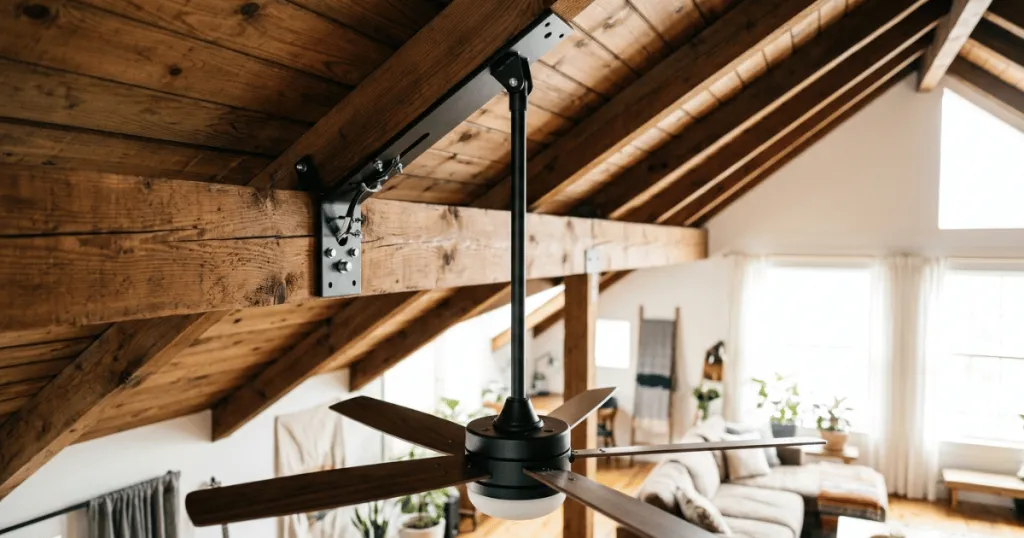
In a living room or family room, where people are often seated, you have slightly more flexibility, but the 7-foot minimum remains the absolute floor. If you have a vaulted ceiling, you will need a sloped-ceiling adapter and a longer downrod to ensure the fan hangs level. A common mistake is using a downrod that is too short for a high slope, which can cause the blades to strike the ceiling or result in an unbalanced, wobbling fan. Always ensure the mounting hardware is rated for the specific angle of your ceiling to prevent long-term mechanical stress.
Bedrooms present a unique challenge because of the presence of beds. If you are installing a fan over a bed, you must account for the height of the mattress and the reach of an occupant standing on the bed. In these cases, it is safer to prioritize a higher mounting position or choose a low-profile fan to ensure that even with a mattress height of 25 inches, you maintain the required clearance. Always measure from the floor to the ceiling, then subtract the height of your furniture to verify your safety margins.
Why Proper Fan Height Matters
Beyond the obvious safety concerns, the height of your fan dictates the perceived comfort of the room. When a fan is positioned correctly, it creates a consistent breeze that aids in evaporative cooling. If the fan is too high, the air movement may stay trapped near the ceiling, failing to reach the people below. This results in the fan running constantly without actually improving the room’s temperature or comfort level. Achieving the correct fan blade height is essential for maximizing the energy efficiency of your cooling strategy.
Correct placement also impacts the visual balance of a room. A fan hanging too low on a high ceiling can look like a dangling obstacle, while a fan mounted too high on a low ceiling can appear awkward and ineffective. Achieving the right height creates a sense of proportion, making the fan look like an intentional design element rather than an afterthought.
It also minimizes the potential for the fan to become a focal point of visual noise in a space where you want a clean, open aesthetic. When considering ceiling fan clearance, think about the sightlines from doorways and windows to ensure the fan complements the room’s architecture.
Common Misconceptions About Fan Installation
Many homeowners believe that the closer a fan is to the floor, the more air it will move. While a fan closer to the floor might feel more intense, it often creates a narrow, localized column of air rather than circulating the entire room. This can lead to uncomfortable drafts and uneven cooling. The goal is to move the air in the room, not just blow it directly onto one spot. Proper air circulation requires the fan to be high enough to push a broad cone of air that encompasses the occupied zone.
Another frequent error is assuming that all downrods are universal. While many manufacturers use standard diameters, the connection points and canopy designs often vary. Always check the manufacturer’s documentation for your specific model before purchasing an extension. Using an incompatible downrod can lead to vibration, noise, and potential safety risks, as the mounting hardware is designed to handle specific torque and weight distributions. If you notice excessive swaying, it is often a sign that the downrod is not properly secured or is the wrong type for the fan’s motor housing.
Finally, some believe that vaulted ceiling fan installation requires special, expensive fans. In reality, most standard fans can be adapted for sloped ceilings with a simple, affordable adapter kit. The key is not the fan itself, but the mounting hardware and the length of the downrod. By focusing on the clearance requirements and the mechanics of the mount, you can achieve a professional-grade installation in almost any architectural setting.
Technical Considerations for High-Performance Airflow
When evaluating how low should a ceiling fan hang, consider the relationship between the fan motor and the ceiling surface. If the fan is too close to the ceiling, the motor may struggle to pull air from the top, leading to motor strain and increased noise. This is particularly relevant in high-ceiling environments where air stratification is a common issue.
By dropping the fan into the room, you break up the stagnant air layers that accumulate near the ceiling, which is a key component of effective climate control. In larger rooms, the goal is to create a gentle, consistent air movement throughout the entire space, which is only possible when the fan is positioned at the correct height relative to the ceiling and the floor.
Furthermore, consider the impact of light kits on your total clearance. If you are adding a light fixture to your fan, remember that the bottom of the light kit is the lowest point of the assembly. When measuring for safety, always use the bottom of the light kit as your reference point, not the blades. This simple adjustment often prevents the most common installation errors where a fan is installed at a safe blade height, but the light fixture ends up being an obstruction for taller individuals.
Safety and Maintenance Checks
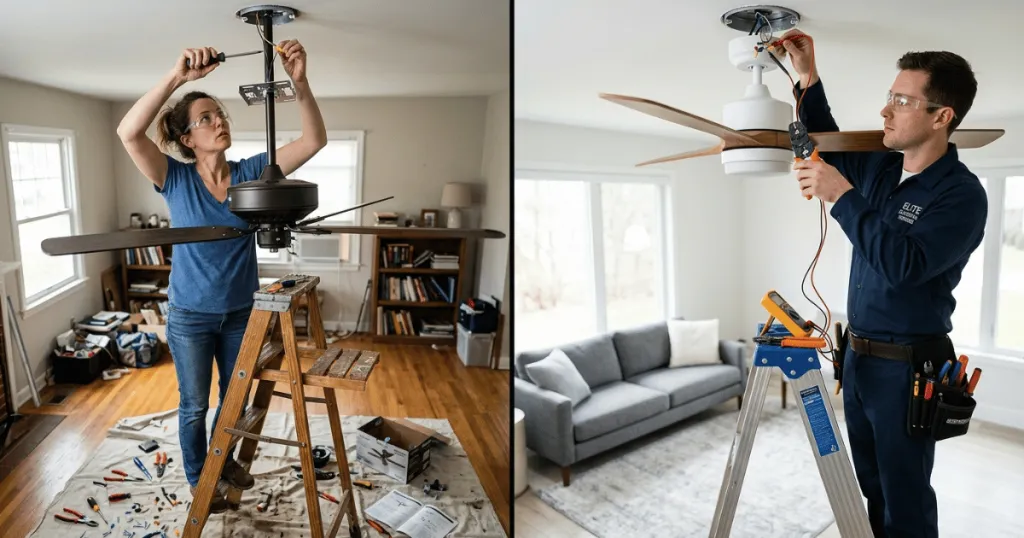
Regular maintenance is just as important as the initial installation height. Over time, the mounting hardware can loosen due to the torque generated by the motor. Periodically checking the connection between the downrod and the ceiling canopy is a standard safety practice. If you find that your fan has shifted or is hanging lower than it was originally installed, investigate the mounting bracket immediately. Ensuring that your fan remains at the intended height is critical for both safety and performance. If you are ever unsure about the stability of your fan, consult the manufacturer’s manual for specific torque requirements and mounting instructions.
FAQ
Can I use a longer downrod to improve airflow in a high-ceiling room?
Yes, using a longer downrod is the recommended way to improve airflow in rooms with high ceilings. It brings the blades down into the occupied zone, ensuring the fan moves air effectively rather than just circulating it near the ceiling.
What should I do if my ceiling is too low for a standard fan?
If your ceiling is 8 feet or lower, you should use a flush-mount or hugger-style fan. These models are designed to attach directly to the ceiling, maximizing the available clearance while still providing necessary air circulation.
Does the height of the fan affect how much noise it makes?
Yes, if a fan is mounted too close to the ceiling, it can cause air turbulence, which often results in a humming or buffeting noise. Providing adequate space between the ceiling and the blades allows for smoother airflow and quieter operation.