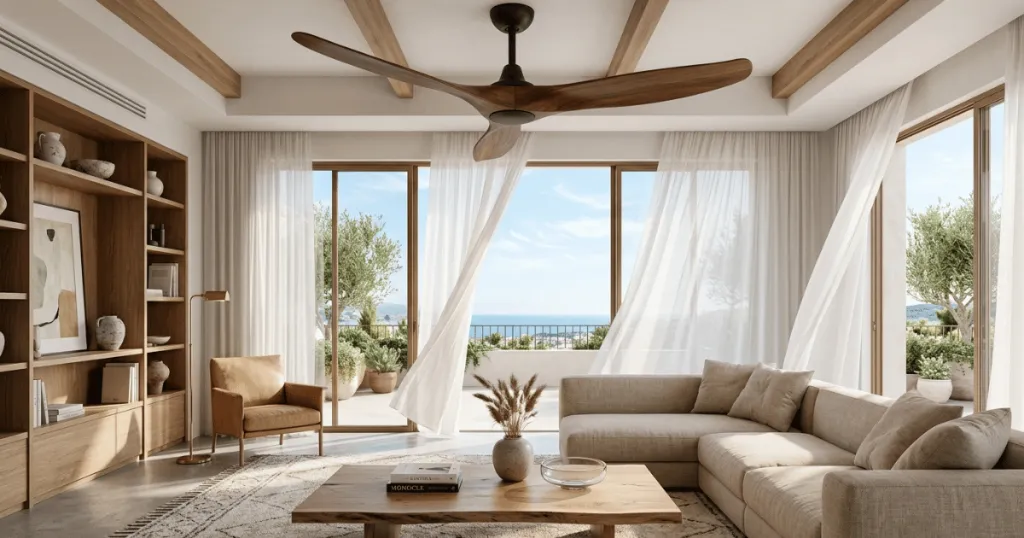
The Short Version: To choose the right ceiling fan color, evaluate your room’s existing metal hardware, ceiling color, and desired visual weight. Match the fan to the ceiling for a subtle, integrated look, or select a contrasting finish to create a focal point. Always test finish samples in the room’s specific lighting conditions and prioritize neutral, matte, or satin finishes for long-term versatility.
Selecting the right finish for your overhead cooling fixture is often the final piece of a room design puzzle. Knowing how to choose a ceiling fan color requires balancing your existing color palette with the desired visual weight you want the fan to carry. Whether you want the fan to disappear into the ceiling or serve as a striking focal point, the finish you select will dictate the mood of the space.
Before you commit to a specific shade or material, you must evaluate the room’s lighting, ceiling height, and the surrounding hardware. A fan that looks perfect in a showroom can feel overwhelming in a small bedroom or disappear entirely in a large, high-ceilinged living area. This guide provides the practical framework you need to make a selection that remains stylish and functional for years to come.
The preparation phase is the most critical step in your project. Many homeowners make the mistake of selecting a fan based on a single photograph or a quick glance at a display model. Instead, you should start by mapping out the permanent fixtures in your room. Take a moment to walk through your space and identify the metal finishes on your door handles, window latches, and existing light fixtures. By establishing these constants first, you ensure that your new fan does not clash with the established character of the room. This preparation prevents the common frustration of installing a fixture that feels like an afterthought rather than a deliberate design choice.

Before You Start: Assessing Your Room Environment
The first step in your decision process involves auditing the current design elements in your room. Ceiling fans are permanent fixtures, so you should avoid choosing a color based on a temporary trend. Instead, look at the permanent finishes already present in the space, such as door handles, window frames, and light fixtures. If your room features brushed nickel cabinet hardware, a matching brushed nickel fan creates a sense of continuity that feels intentional and calm.
Consider the ceiling height as a major factor in your color choice. In rooms with standard eight-foot ceilings, a fan that matches the ceiling color is often the most effective choice. This strategy minimizes the visual presence of the fan, preventing the room from feeling cramped or cluttered. Conversely, in rooms with vaulted or high ceilings, you have more flexibility. A darker or more contrasting finish can anchor the space, drawing the eye upward and highlighting the architectural features of the ceiling.
Lighting conditions also play a significant role in how a finish appears once installed. A matte black fan might look sleek in a brightly lit, sun-drenched sunroom, but it could appear heavy or imposing in a dimly lit, cozy den. Always check the finish samples in the actual room where the fan will be installed. If possible, observe how the color changes from morning light to evening artificial lighting. This simple check prevents the disappointment of installing a fixture that looks vastly different than you anticipated.
When assessing your environment, pay close attention to the wall color and the intensity of natural light. A room with north-facing windows receives cooler, softer light, which can make certain metallic finishes appear dull or gray. In contrast, south-facing rooms with abundant sunlight can make polished finishes appear overly reflective or even blinding at certain times of the day. If your room has a high volume of natural light, prioritize matte or satin finishes to reduce glare. If the room is dark or lacks windows, consider a lighter finish to prevent the fan from becoming a dark, heavy spot that absorbs the limited light available.
Tools and Context for Your Selection
To make an informed decision, you should gather a few items to help visualize the final look. Start by creating a mood board or a simple collection of physical samples from the room. Include a piece of trim, a fabric swatch from your curtains or upholstery, and a photo of your existing light fixtures. If you are shopping online, use the manufacturer’s finish guide to compare their specific shades against your room’s palette.
Be aware that terminology varies between brands. One company’s oil-rubbed bronze may look significantly darker or more copper-toned than another’s. If you are trying to match existing hardware, prioritize ordering a finish sample or checking the manufacturer’s technical specifications for color descriptions. Do not rely solely on digital images, as monitor calibration can misrepresent the true hue and sheen of the metal or paint.
Beyond physical samples, consider the architectural style of your home. A modern farmhouse aesthetic often benefits from matte black or white finishes, which provide a clean, graphic look. Traditional or craftsman homes might lean toward oil-rubbed bronze or antique brass, which offer a warmer, more historic feel. By aligning the fan finish with the broader architectural language of your house, you ensure the fixture feels like a natural extension of the home rather than a mismatched addition. Remember that the goal is to create a cohesive design that respects the existing materials in your space.
Step-by-Step Instructions: How to Choose a Ceiling Fan Color
Follow these steps to narrow down your options and select a finish that enhances your home’s interior design.
1. Identify the Primary Metal Finish
Start by looking at the metal finishes already present in the room. If you have brass door knobs, stainless steel appliances, or black iron curtain rods, these are your starting points. You do not need to match every single item, but the fan should coordinate with the dominant metal tone. If you have a mix of metals, choose a neutral finish like matte black, white, or brushed nickel, which tend to bridge the gap between different metallic styles.
2. Evaluate the Ceiling Color
The ceiling is the backdrop for your fan. If your ceiling is painted a standard bright white, a white fan will blend in seamlessly. If your ceiling features wood paneling, a fan with wood-tone blades or a bronze finish often complements the natural material better than a stark white or metallic option. Always consider whether you want the fan to be a background element or a design statement before finalizing your choice.
3. Consider the Desired Visual Weight
Visual weight refers to how much attention an object demands. A high-contrast fan, such as a black fan against a white ceiling, creates a strong focal point. This is excellent for large rooms where you want to define the space. A low-contrast fan, such as a silver fan against a light gray ceiling, recedes into the background. Use high contrast to draw attention to the ceiling and low contrast to keep the focus on the furniture and decor below.
4. Account for Blade Finishes
Many fans offer reversible blades with different finishes on each side. This is a practical advantage, as it allows you to change the look of the fan without replacing the entire unit. When selecting, look for a blade finish that coordinates with your flooring or furniture wood tones. If your room has dark hardwood floors, a fan with walnut or espresso-toned blades can tie the floor and ceiling together, creating a balanced look.
5. Test the Finish in Situ
Before finalizing your purchase, hold a sample or a clear photo of the finish against the ceiling and near your existing hardware. Check the finish at different times of the day. If the finish looks too dark or too shiny in your specific lighting, it will likely continue to bother you after installation. Trust your initial reaction to the color in the actual space.
Common Mistakes to Avoid
A frequent error is choosing a fan color that perfectly matches a specific piece of furniture that might be replaced in a few years. Because ceiling fans are long-term investments, choose a finish that fits the overall architectural style of the house rather than the current furniture arrangement. If you move or redecorate, a neutral, high-quality finish like brushed nickel or matte black will adapt to new styles more easily than a trendy or highly specific color.
Another mistake is ignoring the sheen of the finish. High-gloss finishes can create distracting reflections, especially if the fan is located near windows or under bright recessed lighting. Matte and satin finishes are generally more forgiving and tend to look more sophisticated in residential settings. They hide dust better than high-gloss surfaces and do not compete with other shiny elements in the room.
Finally, avoid the trap of thinking all whites are the same. A bright, cool-toned white fan can look jarring against a warm, creamy white ceiling. If you are choosing white, try to verify the undertones. If you cannot match the white perfectly, it is often safer to choose a contrasting color or a metallic finish, which avoids the awkward appearance of two slightly different shades of white clashing on the ceiling.
Another common oversight involves the color of the downrod and the canopy. Many homeowners focus entirely on the motor housing and blade colors, forgetting that the downrod is a visible component. If you have a high ceiling and require a long downrod, that metal pipe will be a prominent vertical line in your room. Ensure the downrod finish matches the motor housing exactly. If you are buying a custom length downrod, confirm that the finish is compatible with your chosen fan model. Mismatched metals between the canopy, downrod, and motor housing can create a disjointed look that draws unnecessary attention to the hardware rather than the design.
Troubleshooting Your Color Choice
If you have already installed a fan and find the color is not working, you do not necessarily need to replace the entire unit. If the blades are the primary issue, many manufacturers sell replacement blade sets in different finishes. This is a cost-effective way to refresh the look of the fan without the labor of a full reinstallation.
If the motor housing itself is the problem, you may be able to use a specialized metal spray paint designed for appliances to change the color. This requires disassembling the fan and is a significant project, so it should be considered a last resort. Always ensure you are using high-temperature, durable paint if you choose this route, and be aware that this may void the manufacturer’s warranty.
If the fan feels too prominent, consider adjusting the lighting in the room. Sometimes, adding ambient lighting elsewhere in the space can soften the contrast between the fan and the ceiling, making the color feel more integrated. If the fan is simply the wrong style for the room, sometimes the best solution is to move it to a different room where the color palette is more forgiving and select a new unit for the primary space.
When in doubt, consult the manufacturer’s installation manual or website for high-resolution images of the finish in various room settings. Many brands provide lifestyle photos that show how the color interacts with different wall colors and lighting setups. This can provide the reassurance you need before making a final decision on how to choose a ceiling fan color that you will be happy with for years.
If you find that the fan color is technically correct but still feels off, evaluate the surrounding decor. Sometimes, a fan that feels out of place simply needs a few supporting elements in the room to tie it together. For example, if you chose a bronze fan but have no other bronze in the room, adding a bronze picture frame or a bronze lamp base can create a sense of intentionality. This technique of repeating a finish in at least three places in a room is a classic interior design strategy that helps harmonize disparate elements and makes the fan feel like a purposeful part of your home decor.
FAQ
- Should the ceiling fan color match the ceiling or the furniture?
There is no single rule, but matching the ceiling is best for making the fan disappear, while matching furniture or hardware helps integrate the fan as a design element. Choose based on whether you want the fan to be a focal point or a background fixture. - Are matte or glossy finishes better for ceiling fans?
Matte and satin finishes are generally preferred because they hide dust better and do not create distracting reflections under bright lights. High-gloss finishes can appear dated and often highlight imperfections on the fan housing. - How do I choose a ceiling fan color if I have mixed metal finishes in my room?
If your room has a mix of metals, choose a neutral finish like matte black, white, or brushed nickel. These colors act as a bridge between different metallic tones and prevent the room from feeling disjointed. - Can I paint my ceiling fan if I choose the wrong color?
While it is possible to paint the housing and blades, it is a labor-intensive process that can void your warranty. It is almost always better to choose the correct finish initially or replace the blades if they are the only part you dislike.