Quick Answer: To choose the right ceiling fan, measure your room square footage to determine the proper blade span, check your ceiling height to select a flush-mount or downrod setup, verify electrical box support, and review CFM airflow ratings for optimal performance.
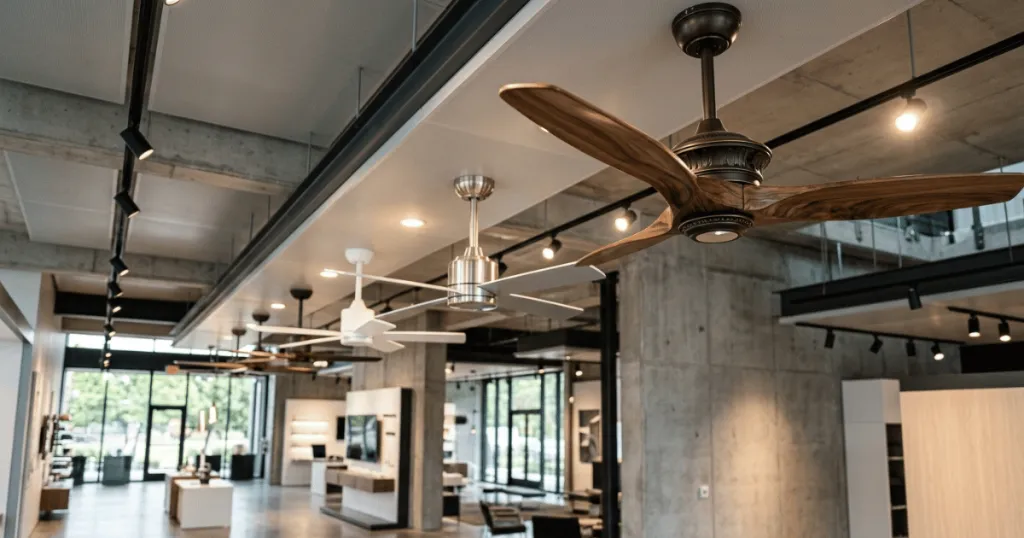
Getting this wrong usually starts with an impulse purchase at a home center based solely on a photograph of a fixture spinning gracefully in a showroom. Homeowners often install the unit, only to realize the breeze never quite reaches the seating area, or the motor emits a persistent low-frequency hum that disturbs anyone trying to sleep. Knowing how to choose the right ceiling fan requires looking past decorative finishes and focusing on measurable physical factors like room dimensions, ceiling clearance, and motor engineering.
By following a methodical selection process, you can ensure optimal air circulation and year-round energy efficiency without guesswork. This action-first guide walks you through every necessary check, calculation, and decision point so you can find a fixture that matches your exact spatial and comfort requirements.

Before You Start: Assessing Your Space and Structural Limits
Before browsing any catalog or visiting a showroom, you need to evaluate the physical realities of the room where the fixture will live. Ceiling fans require specific clearances to operate safely and effectively. Ignoring these structural limits is the single most common reason homeowners end up with an unsafe installation or poor airflow.
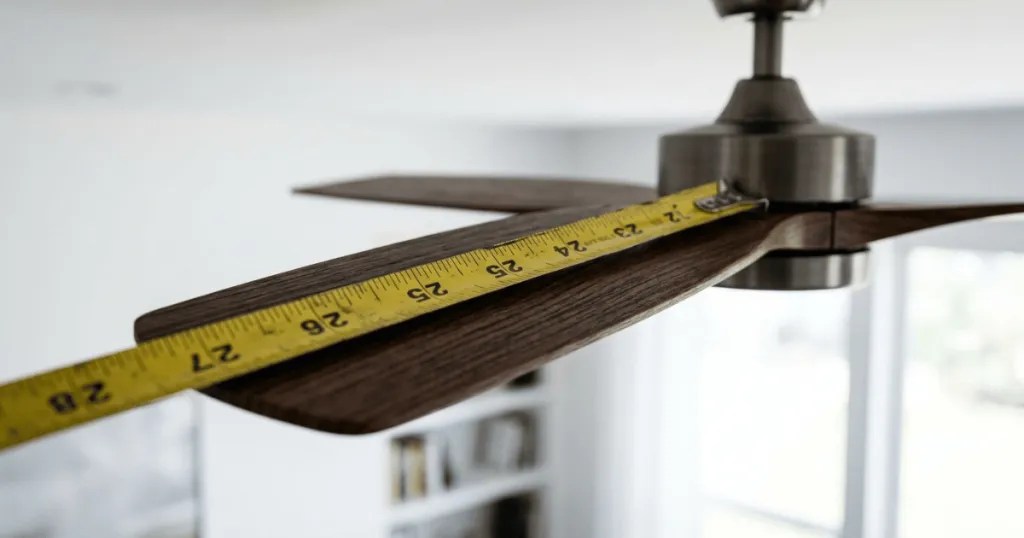
Start by measuring the room’s length and width to calculate total square footage. A small bedroom or home office under one hundred square feet requires a very different ceiling fan blade span than an open-concept living room spanning four hundred square feet. Next, measure your ceiling height from the floor to the drywall. Standard ceilings sit around eight feet, while vaulted or low-profile ceilings demand entirely different mounting hardware.
Check the electrical box currently installed in the ceiling. A standard lighting junction box cannot support the dynamic weight and rotational torque of a moving ceiling fan. You must verify that the box is rated for fan support, which usually means it is securely bolted to the ceiling joists with a heavy-duty metal brace. If you are replacing an existing fan, you can often reuse the heavy-duty box, but older homes frequently require an attic inspection or electrical upgrade before installation.
Tools, Context, and Prerequisites
Having the right context and preliminary data before you start shopping prevents costly mistakes. Ceiling fans are specialized climate control appliances, and understanding a few technical specifications will help you filter out inadequate models immediately.
Pay close attention to motor types, specifically evaluating traditional AC motors versus newer DC motor ceiling fan options. AC motors are traditional, reliable, and generally more affordable, but they offer limited speed settings and consume slightly more electricity. DC motors are engineered to be exceptionally energy efficient, run almost silently, and provide six or more speeds along with a reverse function, though they come at a higher initial price point.
Gather your measuring tape, a notepad, and your room dimensions. You will also want to check local climate conditions. If you live in a humid region, airflow velocity matters more than if you live in a dry climate where evaporative cooling plays a smaller role. Writing down these parameters keeps you focused on utility rather than impulse aesthetics.
Step-by-Step Instructions for Selecting Your Ceiling Fan
Follow these distinct steps to narrow down your options and select the ideal fixture for your specific application.
Step 1: Calculate the Proper Blade Span for Your Room Size
The diameter of the fan blades dictates how much air the unit can move across a space. Choosing a blade span that is too small leaves corners stagnant, while an oversized fan in a tiny room creates an overwhelming wind tunnel effect and dominates the visual space.
Use your room square footage to guide your choice. For spaces up to seventy-five square feet, such as a walk-in closet or small bathroom, a thirty-six-inch blade span is usually sufficient. Rooms between seventy-six and one hundred forty-four square feet, like a standard guest bedroom, call for a forty-two to forty-eight-inch span. Large spaces up to two hundred twenty-five square feet require a fifty-two to fifty-six-inch span, and great rooms exceeding that threshold need fans spanning sixty inches or larger, or even dual-motor configurations.
When measuring your room, always account for immovable furniture placements or architectural alcoves that might block lateral airflow. If you have an L-shaped living space or an open floor plan that flows directly into a kitchen, a single massive fan in the geographic center might leave the peripheral seating zones completely uncooled. In such cases, installing two smaller fans spaced strategically apart delivers much better thermal comfort than one oversized center unit. Carefully mapping furniture layouts ahead of time prevents dead zones where air fails to circulate, ensuring that every seat in the room benefits from the cooling draft.
Step 2: Determine the Correct Mounting Type Based on Ceiling Height
Safety and performance dictate that the bottom of the fan blades must hang at least seven feet above the finished floor. For standard eight-foot ceilings, flush-mount or low-profile hugger ceiling fan models are necessary to maintain this safety clearance since they sit directly against the ceiling bracket.
If your ceiling height is nine feet or higher, you should incorporate a downrod. A downrod drops the fan blades to the optimal eight-foot height, ensuring the blades pull air from the center of the room rather than trapping stagnant air against the ceiling. For vaulted or sloped ceilings, you must purchase an angled mounting adapter along with a longer downrod to keep the fan hanging level and prevent the blades from striking the sloped drywall.
Selecting the right downrod length also prevents annoying stratification of air in rooms with soaring vertical spaces. Without a downrod in a tall room, the fan simply mixes the air immediately surrounding the light fixture without providing any noticeable cooling breeze down at couch level. Always calculate your drop distance by subtracting seven feet from your total floor-to-ceiling measurement, then purchase the corresponding downrod size. Skipping this crucial calculation in rooms with high ceilings results in an expensive fixture that fails to deliver any tangible cooling comfort to the living area below.
Step 3: Evaluate Airflow Performance Through CFM Ratings
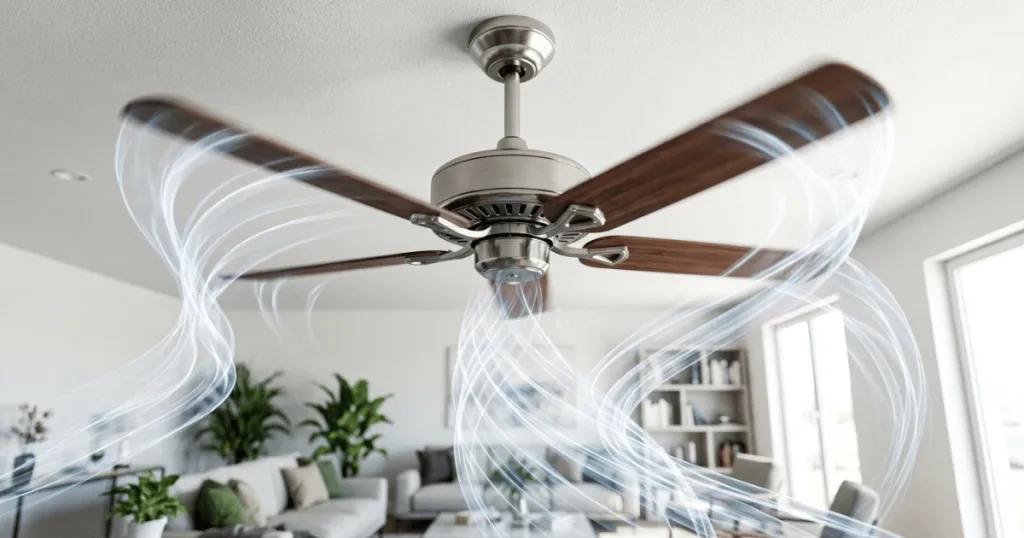
Do not judge a fan solely by its rotational speed or blade count. Modern manufacturers list airflow efficiency using a standard CFM airflow rating, which measures how much air the fan moves per minute at high speed.
Look for models that offer high CFM output relative to their energy consumption, resulting in high CFM-per-watt efficiency ratings. A quality fifty-two-inch fan should typically produce at least four thousand to five thousand CFM on high speed. Higher CFM values translate to stronger breeze generation, which allows you to raise your thermostat setting a few degrees in the summer without sacrificing personal comfort.
Evaluating this metric is especially important when shopping for multi-use rooms like kitchens or great rooms where cooking heat and large gatherings put extra demands on climate control. A low CFM fan will spin silently while failing to remove stuffiness, whereas a high CFM model creates the necessary air velocity for true evaporative cooling on human skin.
Step 4: Select the Light Kit and Control Preferences
Determine whether your room requires overhead illumination or if you rely entirely on lamps and wall sconces. Many modern fans feature integrated LED light modules that offer adjustable color temperatures and dimming capabilities.
Consider how you prefer to control the unit. Wall controls eliminate lost remotes and keep operation convenient right by the room entry point, while handheld remotes offer bedside or couch-side convenience. Smart home integration allows voice control or automated scheduling, which helps ensure the fan turns off when you leave the space, saving energy over time.
How to Choose the Right Ceiling Fan: Summary of Core Decision Criteria
When you are ready to make your final selection, weigh your core priorities against the physical constraints of the room. A quiet motor matters most in bedrooms, while high CFM performance is vital for humid kitchens or sunrooms. Prioritize structural safety and proper sizing above decorative details, as a well-proportioned, properly mounted fan delivers reliable comfort for decades.
Common Mistakes to Avoid
Many homeowners make avoidable errors during the selection process that compromise performance or safety. One frequent mistake is buying a fan based purely on blade count, assuming that five or six blades move more air than four. In reality, fewer blades often reduce aerodynamic drag, allowing the motor to spin faster and move more air efficiently.
Another major error is ignoring the weight of the fixture when matching it to the ceiling junction box. Heavy fixtures with integrated glass light kits demand robust structural support. Skipping this check can lead to sagging, excessive vibration, or dangerous mechanical failure.
Homeowners also frequently misjudge downrod length in rooms with high ceilings. Hanging a fan too high leaves the moving air trapped near the ceiling line, failing to provide any cooling sensation at floor level. Always measure the vertical drop to ensure the blades sit comfortably within the living zone.
Troubleshooting Performance Issues After Installation
Even with careful planning, minor issues can arise once a fan is operational. Wobbling is the most common grievance, and it usually stems from unbalanced blades or a loose mounting bracket. Check that all blade screws are tightened equally and use a blade balancing kit if minor wobbling persists.
If the fan produces a humming noise, the issue is typically electrical. AC fans paired with incompatible dimmer switches often hum persistently. Switching to a compatible fan speed control or upgrading to a DC motor usually eliminates this noise entirely.
If airflow feels weak, verify that the reversing switch on the motor housing is set correctly for the season. The blades should spin counterclockwise in the summer to push air straight down, and clockwise at low speed in the winter to gently pull cool air upward and force warm air down along the walls.
FAQ
Do more blades on a ceiling fan mean better airflow?
No. Blade count mostly affects aesthetics and motor load. Many high-performance fans use three or four blades because reduced drag allows the motor to spin faster and move more air efficiently.
Can I install a standard ceiling fan on a sloped ceiling?
Only if you use an angled mounting adapter. Standard mounting brackets do not allow enough clearance for the blades to rotate freely on a sloped surface without striking the drywall.
What is the difference between AC and DC ceiling fan motors?
AC motors are traditional, reliable, and budget-friendly with standard speed options. DC motors are significantly more energy-efficient, run quieter, and offer multiple speed settings along with a built-in reverse function.