When shopping for a cooling upgrade, understanding ceiling fan price ranges helps you balance upfront costs with long-term performance. You can find basic models for under one hundred dollars, while luxury designs span well past five hundred dollars. Knowing what separates these tiers prevents you from overpaying for features you do not need or underbuying on structural reliability.
Choosing the right model involves looking past the brand name to evaluate motor engineering, blade materials, and control integration. Each tier brings distinct trade-offs in noise levels, air movement, and aesthetic finish that directly impact daily comfort in living rooms, bedrooms, and outdoor patios. By evaluating how ceiling fan cost correlates with structural integrity, homeowners can make informed purchasing decisions that prevent premature motor burnout or annoying blade wobbles.
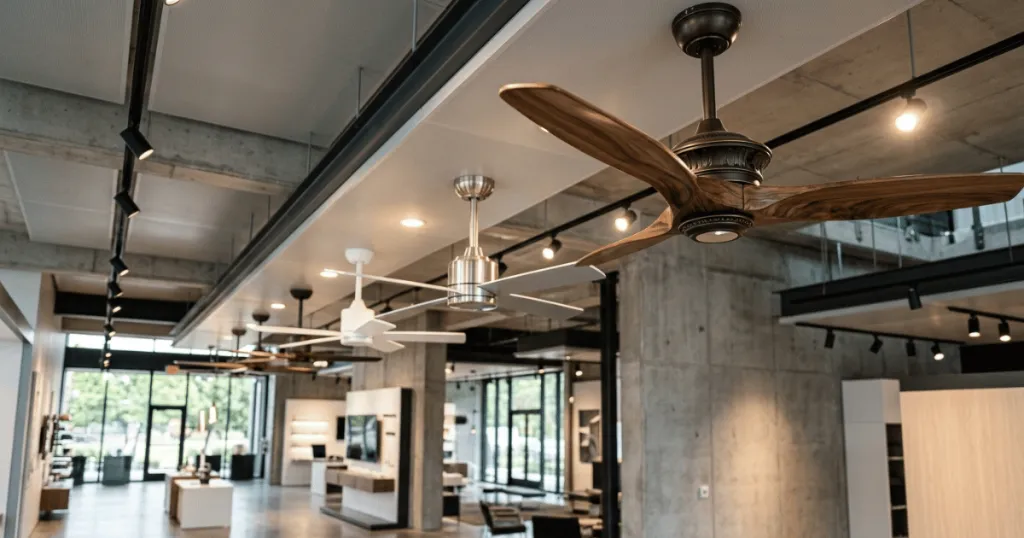
The Budget Tier: Entry-Level Models
The entry-level market covers options priced under one hundred dollars. These affordable ceiling fans generally feature standard alternating current motors and stamped steel or medium-density fiberboard blades. They handle basic air circulation well in smaller spaces like guest rooms or home offices where high-speed continuous operation is rarely required.
Build quality at this level relies on lighter materials to keep manufacturing and shipping costs minimal. You will often encounter traditional pull chains for speed control instead of wall remotes or smart home integration. While functional, these models may exhibit slight motor hum at higher speeds and require more frequent balancing clips during installation to correct natural manufacturing tolerances.
In practice, a budget fan works best for low-traffic rooms where you rarely adjust the settings. If you need a simple white five-blade unit to move air in a spare bedroom, an entry-level model delivers solid value without unnecessary complications. However, homeowners must consider the trade-offs of lower initial investments, such as reduced power efficiency and shorter warranty periods. An entry-level AC motor draws more wattage for the same amount of airflow compared to advanced alternatives, which can impact electricity bills if left running continuously throughout the summer months.
When installing a budget-tier fixture, you should inspect the mounting hardware carefully out of the box. Because stamped metal can bend slightly during transit, taking extra care to align the blade irons prevents uneven rotation before the unit is even lifted to the ceiling. If you notice a faint hum, it is usually an electrical frequency sound inherent to basic AC windings, which means these units are best avoided in quiet nurseries or primary sleeping quarters where silence is essential.
The Mid-Range Tier: Everyday Reliability and Style
Mid-range models span from one hundred to three hundred dollars, representing the most popular category for primary living areas. This tier introduces stronger direct current motors, which run quieter and consume less electricity than standard alternating current motors while providing finer control over rotational speed.
Materials improve significantly in this bracket. You will find solid wood blades, hand-painted finishes, and damp or wet ratings for covered porches and outdoor living spaces. Most models in this tier include handheld remote controls or wall cradles, and many support optional smart home modules for seamless automation within residential cooling routines.
Our recommendation is to focus your search here if you are outfitting a master bedroom or family room. Mid-range units strike the right balance between quiet operation, attractive design, and reliable air delivery that stands up to daily use. When evaluating choices in this tier, pay close attention to the housing finish and blade pitch. A well-engineered blade pitch between twelve and fourteen degrees ensures efficient air movement without straining the motor housing, translating to years of trouble-free operation in high-use environments.
Furthermore, mid-range fixtures often feature reversible motor functions that prove invaluable during transition seasons. By reversing the spin direction, you can gently circulate trapped warm air downward without generating a chilling draft, reducing overall heating demands in rooms with high ceilings. Evaluating the inclusion of a reliable remote receiver is also wise here, as replacing an integrated receiver later can be frustrating if it fails outside the manufacturer warranty period.
The Premium Tier: Design, Customization, and Smart Control
Premium ceiling fans cost between three hundred and six hundred dollars. This tier caters to homeowners prioritizing architectural integration, high-end materials, and advanced airflow engineering. You will encounter custom blade sweeps, forged aluminum bodies, and integrated energy-efficient light emitting diode fixtures with tunable color temperatures that enhance interior design schemes.
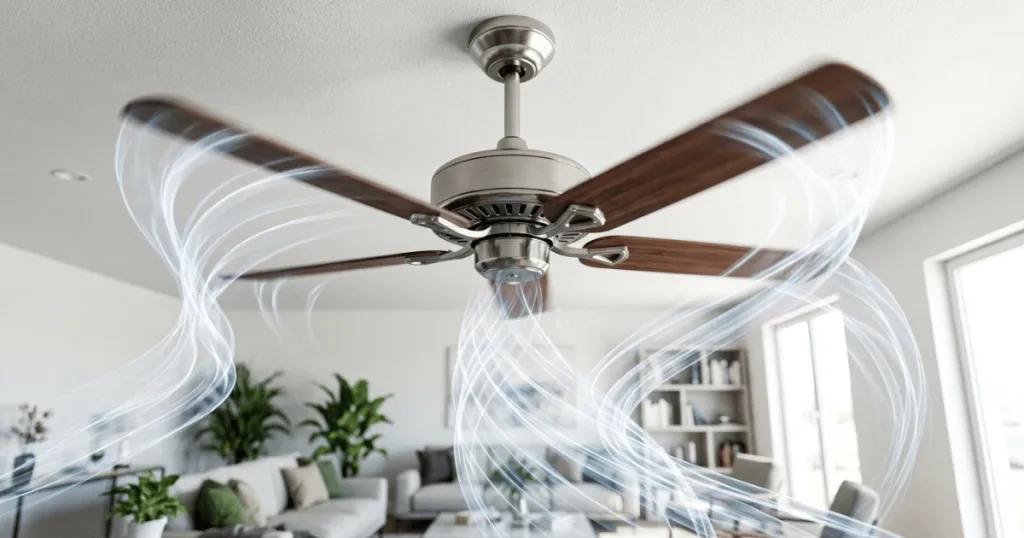
Performance distinguishes high-end models from standard options. They move massive volumes of air measured in cubic feet per minute while maintaining near-silent operation even on maximum speed settings. Direct current technology is standard here, offering precise multi-speed control and reverse functions via remote or app integration, improving year-round climate control when pushing warm air down during winter months.
From a practical standpoint, these fans act as statement pieces. They suit vaulted ceilings, large great rooms, and open-concept floor plans where visual impact and whisper-quiet motor performance matter most. Selecting a quiet ceiling fan in this price tier guarantees that sleeping areas remain undisturbed by mechanical hums, making them worth the investment for light sleepers.
In addition to performance, premium fans prioritize ease of installation through streamlined mounting brackets and pre-balanced blade sets. Manufacturers often calibrate the blades at the factory as a matched set, which eliminates the tedious process of attaching balancing weights on a tall ladder. When integrating these fixtures with home automation networks, ensure your Wi-Fi signal reaches the installation point, because thick concrete or brick ceilings can sometimes block control signals to app-enabled smart ceiling fans.
The Luxury Tier: Custom Craftsmanship and Architectural Statements
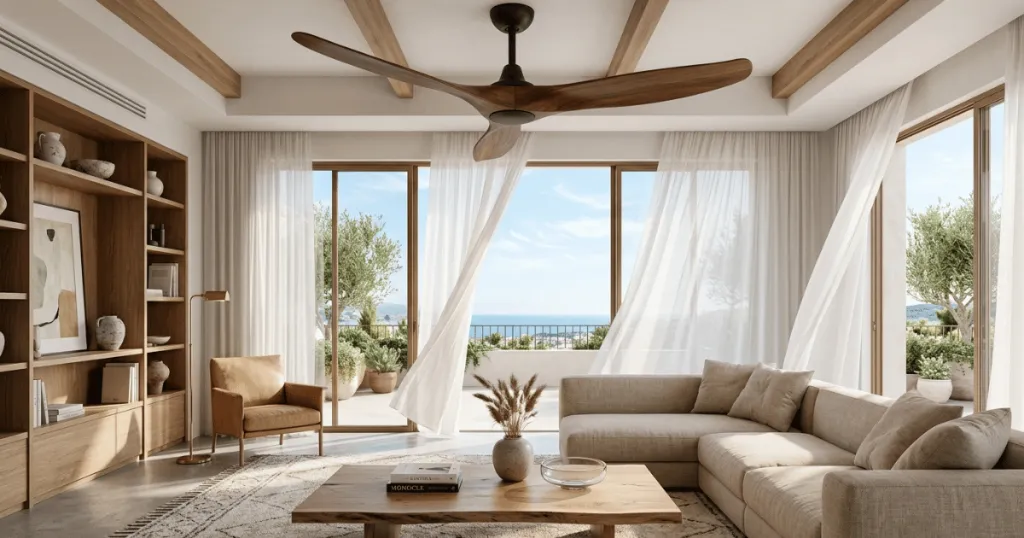
Luxury ceiling fans start around six hundred dollars and can exceed fifteen hundred dollars for custom artistic statement pieces. These fixtures often feature artisan-crafted wooden blades, hand-forged metallic housings, and proprietary blade pitches designed for maximum aerodynamic efficiency.
Engineering at this level focuses on bespoke aesthetics and heavy-duty commercial-grade components. They are engineered to run continuously in large commercial spaces or sprawling residential estates without losing structural integrity or developing motor wobble.
Purchasing in this category is rarely about basic cooling. It is about architectural alignment, smart home ecosystem integration, and owning a centerpiece that anchors the entire room design. Homeowners should verify ceiling structural support before hanging heavy luxury fixtures, as custom forged components often require reinforced electrical boxes and specialized installation labor.
Beyond looks, luxury models often provide specialized blade configurations, such as dual-motor setups or oversized organic sweeps that move air efficiently at very low RPMs. This deliberate engineering creates a gentle, natural breeze effect rather than a harsh, tunnel-like blast of wind. If you choose this tier, confirm the availability of replacement parts because custom finishes and proprietary remote components can take weeks to source if maintenance is ever required down the road.
Key Factors That Drive Fan Pricing
Motor type plays the largest role in determining cost. Alternating current motors are inexpensive to manufacture, while direct current motors cost more due to their energy efficiency, smaller footprint, and silent operation.
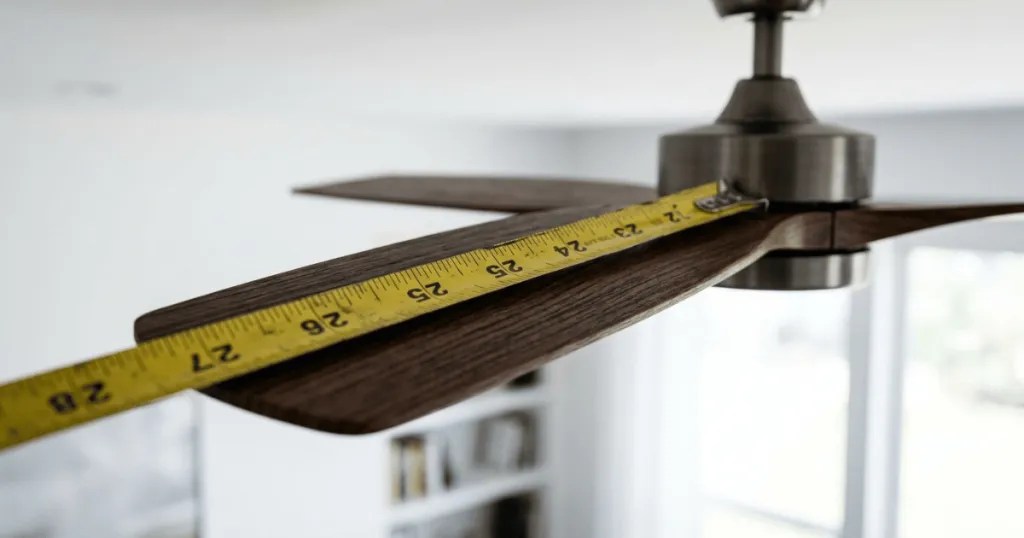
Blade material and engineering also shift the price point significantly. Stamped metal and basic pressed wood composites keep manufacturing costs low, whereas carved solid walnut, bamboo, and specialized weather-resistant polymers increase production expenses.
Control systems add another layer of expense. A basic pull chain keeps costs down, but adding radio frequency remote controls, wall-mounted touchpads, and Wi-Fi modules for smartphone integration raises the final retail price.
Real-World Scenarios and Practical Application
Consider a standard three-bedroom home renovation. Placing premium fixtures in every room quickly inflates the budget without delivering a proportional return in comfort. A practical approach places mid-range units in the bedrooms and living room, while utilizing a budget-friendly model in the laundry room or pantry.
Ceiling height changes installation costs and model requirements. Vaulted ceilings require longer downrods and heavier-duty mounting brackets, which can push a standard purchase into the next price tier due to accessory requirements.
Outdoor installations demand specific safety ratings. Selecting a damp-rated or wet-rated model for a covered patio prevents moisture damage and premature motor failure, ensuring your investment survives seasonal humidity changes.
Why Understanding Pricing Protects Your Investment
Knowing what to expect across different ceiling fan price ranges prevents common buyer mistakes. Many homeowners assume that spending more automatically guarantees better air movement, but airflow depends heavily on blade pitch, room size, and motor synergy rather than price alone.
Evaluating your actual usage patterns helps avoid unnecessary spending. A guest room used twice a month does not justify a luxury smart fan, just as a primary living room with high ceilings will quickly overwhelm a cheap budget motor.
Focusing on build quality and motor type rather than surface aesthetics ensures your fan lasts for decades. Prioritizing quiet operation and stable balancing in frequently occupied rooms yields the best long-term comfort for your household.
Common Misconceptions About Fan Costs
A frequent error is assuming that higher prices always mean superior cooling power. Some expensive designer fans prioritize artistic silhouette over aerodynamic efficiency, moving less air than a mid-range utility model.
Another misunderstanding involves light fixtures. Many buyers purchase an inexpensive fan and realize later that replacing integrated, proprietary light emitting diode panels costs nearly as much as the original fixture if they fail.
People also often overlook installation expenses. A high-end luxury fan with automated controls may require specialized wiring or electrician support, adding unexpected labor costs to your total project budget.
Conclusion and Next Steps
Navigating ceiling fan price ranges comes down to matching your room requirements with the right mechanical tier. Evaluate how often the room is occupied, whether you need quiet operation for sleeping, and if smart home controls matter to your daily routine. By focusing on motor quality and build materials rather than surface features, you can select a reliable fixture that delivers dependable comfort for years to come.