Quick Take: Choose a DC motor for primary living areas and bedrooms where quiet operation, energy efficiency, and precise speed control are priorities. Choose an AC motor for guest rooms, garages, or areas used infrequently where a lower upfront cost and simple, mechanical reliability are more important than advanced features.
When you are shopping for a new ceiling fan, the motor type is the most significant technical factor influencing performance and daily operation. Choosing between an Ac vs dc ceiling fan often comes down to balancing your budget against your desire for energy efficiency and quiet operation. If you prioritize long-term energy savings and precise control, a DC motor is generally the superior choice for modern homes. However, if you are looking for a straightforward, cost-effective solution for a guest room or a space that sees infrequent use, an AC motor remains a reliable and proven option.
Understanding the fundamental difference in how these motors convert electricity into motion helps clarify why one might fit your specific room better than the other. AC motors use alternating current directly from your home power supply, while DC motors use an internal transformer to convert that electricity, allowing for more sophisticated control and efficiency. This technical distinction impacts everything from how the fan feels when you turn it on to how much it adds to your monthly utility bill.

AC vs DC Ceiling Fan: Comparison of Motor Technologies
To help you visualize the trade-offs, the following table breaks down the primary differences between these two motor types based on standard residential performance metrics.
| Feature | AC Motor Fans | DC Motor Fans |
|---|---|---|
| Energy Efficiency | Standard | High |
| Operating Noise | Low to Moderate | Very Low |
| Speed Control | 3 Speeds | 6+ Speeds |
| Initial Cost | Lower | Higher |
| Weight | Heavier | Lighter |
| Reversibility | Manual Switch | Remote/Wall Control |
Understanding AC Motor Ceiling Fans
AC motor fans have been the industry standard for decades. They rely on the alternating current provided by your home electrical grid to create the magnetic field that turns the motor. Because of this simplicity, they are often more affordable to manufacture and purchase. If your primary goal is to install a fan in a room where you do not need advanced features or extreme energy efficiency, an AC model is a perfectly functional choice.
One of the main characteristics of AC fans is their weight. These motors are physically larger and heavier than their modern counterparts. While this does not affect performance, it does mean you must ensure your ceiling junction box is properly rated for the weight of the fixture. Installation is generally straightforward, and because they lack complex internal electronics, they are often easier for a DIY enthusiast to troubleshoot if a basic speed switch fails.
However, AC fans are limited in their control options. You typically get three speeds, and changing the direction of the airflow usually requires flipping a physical switch located on the motor housing itself. If you have high ceilings, this can be a significant inconvenience. They also tend to produce a low hum at certain speeds, which might be noticeable in a quiet bedroom or home office. When evaluating AC fans, consider the long-term maintenance of the wall controls. Many AC fans rely on traditional capacitor-based speed controllers, which can eventually degrade and cause a buzzing sound. If you are sensitive to electrical hums, the mechanical nature of the AC motor might present a recurring annoyance in quiet environments.
Understanding DC Motor Ceiling Fans
DC motor ceiling fans represent the current evolution of home cooling technology. By converting alternating current into direct current, these motors operate with significantly higher efficiency. They use permanent magnets to drive the motor, which allows for a much smaller, lighter, and more powerful design. This efficiency translates directly into lower electricity consumption, which is a major benefit if you plan to run your fans for long periods throughout the summer.
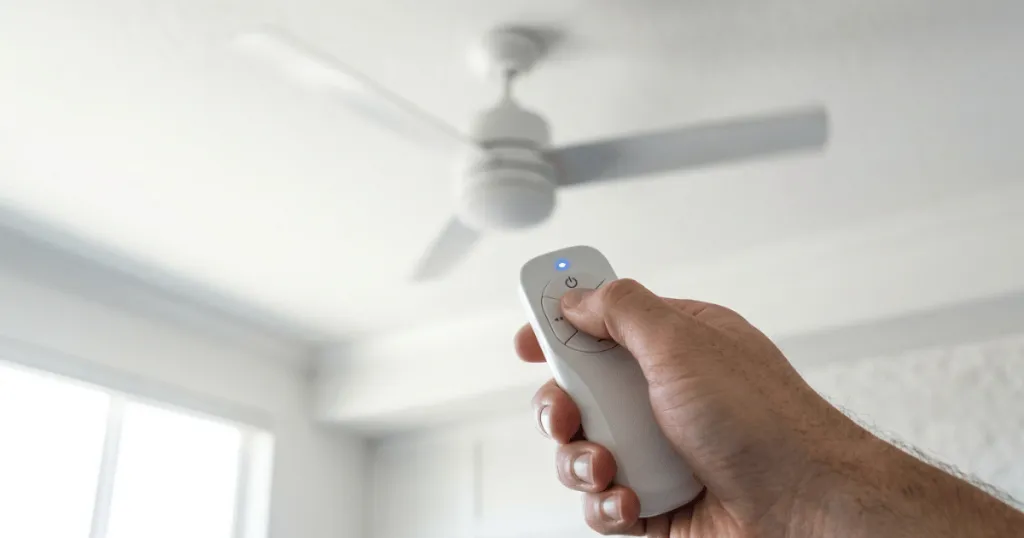
The control experience is where DC fans truly stand out. Because the motor is controlled by an electronic circuit board, you get much finer granularity over the fan speed. Most DC models offer six or more speeds, allowing you to dial in the exact amount of airflow you need. Furthermore, the reverse function is almost always handled via the remote control or wall switch, eliminating the need to climb a ladder to change the airflow direction for winter use.
Another advantage is the near-silent operation. DC motors do not produce the same electromagnetic hum as AC motors, making them an excellent choice for nurseries, bedrooms, or media rooms. While the initial investment is higher, the combination of energy savings, silent operation, and advanced control features makes them a compelling upgrade for most homeowners. Beyond the silence, DC motors offer a faster start-up time and more responsive speed changes.
When you press a button on the remote, the motor reacts almost instantly to the command. This responsiveness is a direct result of the electronic control board managing the current, providing a more refined user experience compared to the mechanical lag often felt with traditional AC pull-chain fans.
Key Differences and Practical Trade-offs
The decision between these two types often hinges on how you intend to use the fan. AC motors are robust and simple, but they lack the finesse of DC models. If you have a room where the fan is rarely used, such as a formal dining room or a guest bedroom, the lower upfront cost of an AC fan is often the most logical financial decision. You are paying for a simple machine that does one job well.
Conversely, if the fan is in a primary living area or a bedroom where you spend significant time, the DC motor offers a better quality of life. The ability to run the fan at a very low, silent speed is a major benefit for sleeping. Additionally, the energy savings over the lifespan of the fan can help offset the higher purchase price, especially in regions with high electricity costs or long cooling seasons. It is important to note that DC fans are more sensitive to voltage fluctuations. If your home has inconsistent power delivery, ensure your electrical system is stable to prevent potential damage to the sensitive internal circuit board of a DC fan.
Another factor to consider is the control interface. DC fans require a remote or a specific wall control to function because of the internal electronics. If you prefer a simple pull-chain operation, you will find that almost exclusively on AC models. For those who want to integrate their ceiling fan into a smart home system or simply want the convenience of a remote, the DC platform is the standard choice. Some modern DC fans also include Bluetooth or Wi-Fi connectivity, allowing you to control the fan from your smartphone, a feature that is rarely found in the AC category.
Best Use Cases for Each Motor Type
Choosing the right fan depends on the room environment. For high-traffic areas like living rooms, family rooms, or master bedrooms, we recommend choosing a DC motor fan. The quiet operation and the ability to fine-tune the airflow speed provide a superior comfort experience. You will appreciate the remote-controlled reversibility when the seasons change, and the energy efficiency will be noticeable if you keep the fan running for hours at a time.
For rooms that are used sporadically, such as a guest bedroom, a home office that is only used occasionally, or a garage space, an AC motor fan is a practical fit. The lower cost allows you to allocate your budget elsewhere while still getting a reliable piece of equipment. If you are installing multiple fans in a home and want to keep total project costs down, mixing and matching based on room usage is a common professional strategy.
When planning your installation, consider the ceiling height. If you are installing a fan on a vaulted ceiling, the remote-controlled features of a DC fan become a functional necessity rather than a luxury, as reaching a manual reverse switch on a high-mounted fan is often impossible without specialized equipment.
Installation Considerations and Troubleshooting
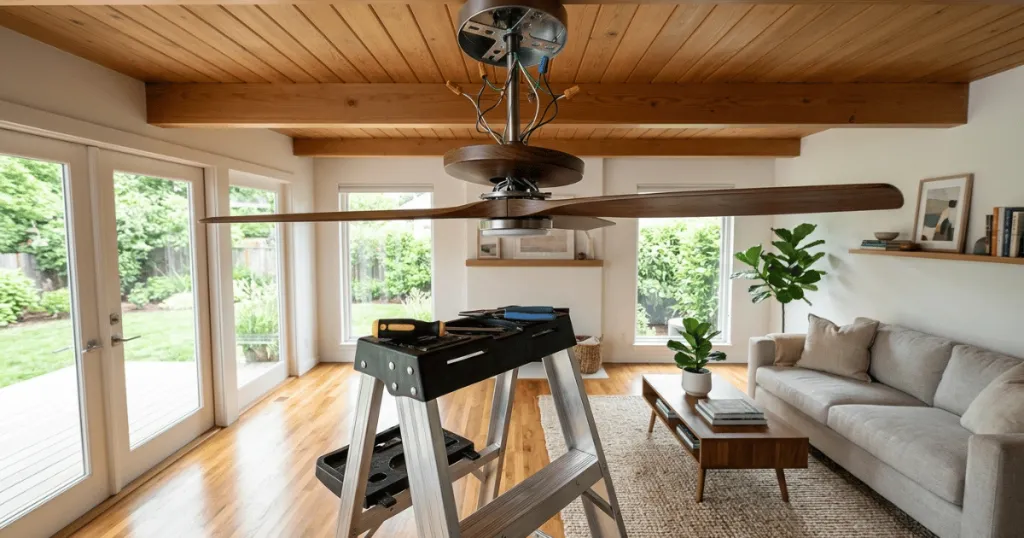
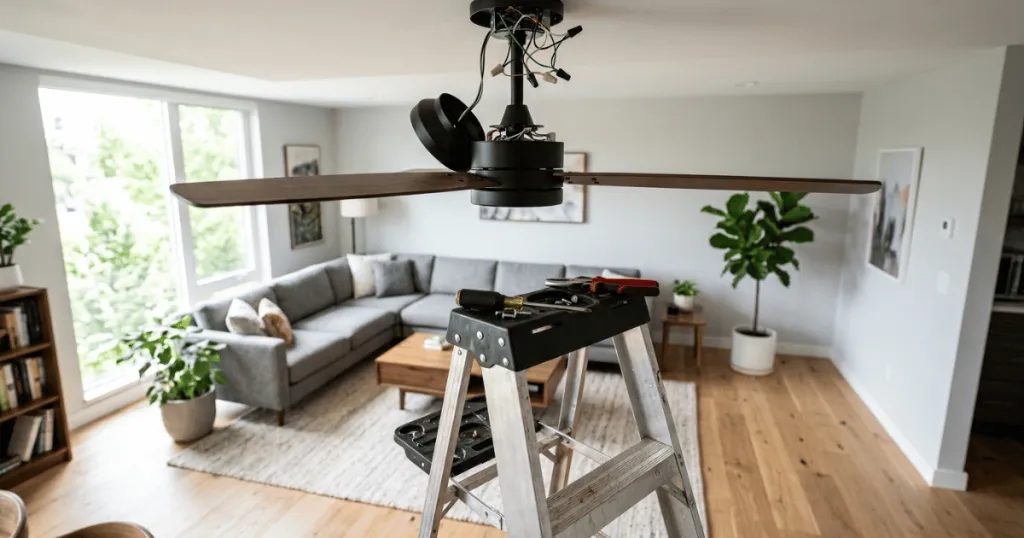
When comparing AC and DC models, the installation process warrants a closer look. AC fans are generally heavier, which places more demand on your ceiling junction box. Always verify that your box is rated for the specific weight of the fan you choose. DC fans, being lighter, are often easier to lift and mount during the installation process, which can be a significant benefit if you are working alone on a ladder. However, the wiring for a DC fan includes a receiver unit that must be tucked into the canopy. This requires careful cable management to ensure everything fits snugly without pinching wires.
Troubleshooting is another area where the two types diverge. An AC fan is a mechanical device. If it stops working, the issue is usually a simple capacitor, a switch, or a loose wire. These are easy to diagnose and repair with basic tools. A DC fan is an electronic device. If the fan fails to start or the remote stops communicating, the issue is often the receiver or the circuit board. These components are usually proprietary to the manufacturer, meaning you cannot simply buy a generic replacement at a hardware store. If a DC component fails, you may need to contact the manufacturer for specific parts, which can be a drawback for homeowners who prefer to perform their own repairs.
Which One Should You Choose?
Deciding between an Ac vs dc ceiling fan comes down to your priorities regarding comfort, control, and budget. If you are looking for the best performance and are willing to pay more upfront for long-term efficiency, choose a DC model. It is the modern standard for a reason, offering better speed control, silent operation, and ease of use that makes daily life more comfortable. In our editorial view, the DC motor is the better choice for any room where you spend more than an hour or two each day.
If your budget is tight or you are outfitting a space where the fan will see minimal use, an AC model is perfectly acceptable. Do not feel pressured to overspend on a DC motor if the fan will only be turned on during the hottest days of the year. The most important factor is ensuring the fan is properly sized for the room and installed securely, regardless of the motor type inside.
Ultimately, avoid the mistake of focusing solely on the motor type at the expense of other critical factors like blade span, mounting height, and aesthetic fit. A well-installed AC fan that is the correct size for your room will always outperform a poorly sized DC fan. Focus on your room dimensions first, then use the motor type as the final tie-breaker to match the fan to your specific lifestyle needs. By evaluating your room usage patterns and your tolerance for maintenance, you can select the motor technology that provides the best balance of comfort and value for your home.
FAQ
Are DC motor ceiling fans harder to install than AC models?
Generally, no. While DC fans have an extra component in the form of a transformer or receiver, the physical installation process is very similar. The main difference is that DC fans often require pairing the remote control to the receiver, which is a simple step during the final setup.
Do DC ceiling fans really save enough energy to justify the higher price?
Yes, for most homeowners. DC motors typically use 60 to 70 percent less energy than AC motors. If you live in a warm climate and run your fans frequently, the energy savings will often pay for the price difference within a few years of regular use.
Can I replace an AC motor with a DC motor in my existing fan?
No, you cannot swap the motor inside an existing fan housing. The motor, housing, and internal electronics are designed as a single, integrated unit. If you want the benefits of a DC motor, you must replace the entire ceiling fan fixture.