When you notice your ceiling fan wobbles on sloped ceiling installations, it can be both distracting and concerning for the long-term health of the fixture. While a slight movement is common in many fans, an actual wobble usually indicates that the mounting system is not properly aligned with the pitch of your roof or that the internal components are under undue stress. Understanding the relationship between your ceiling angle and the fan hardware is the first step toward achieving a smooth, quiet operation.
Most homeowners assume that a standard mounting bracket is universal, but sloped or vaulted ceilings require specific hardware to compensate for the angle. If your fan was installed using a standard flat-mount canopy, the motor housing may be binding against the ceiling, or the downrod may not be hanging perfectly vertical. Addressing this issue requires a look at your mounting hardware, the balance of the blades, and the structural integrity of the electrical box supporting the weight of the fan.
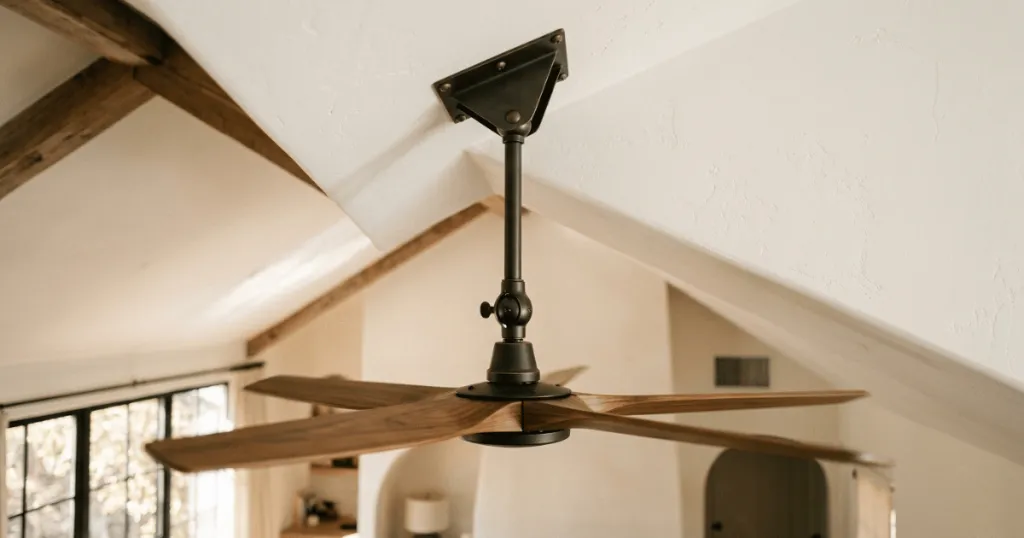
Understanding Why Your Ceiling Fan Wobbles on Sloped Ceiling Setups
The most frequent cause of a wobble on an angled surface is the use of an incompatible mounting bracket. Standard fans are designed for flat ceilings where the canopy sits flush against the drywall. When you place this same setup on a slope, the downrod often hits the edge of the canopy, preventing it from hanging straight. This misalignment forces the motor to spin at a slight tilt, which translates into an oscillating motion that we perceive as a wobble.
The Role of the Sloped Ceiling Adapter
Many modern ceiling fans include a universal canopy that can accommodate slopes up to a certain degree, typically around 15 to 30 degrees. If your ceiling pitch exceeds this limit, you must install a dedicated sloped ceiling adapter. This piece of hardware acts as a pivot point, allowing the downrod to hang vertically even while the base is anchored to an angled surface. Without this adapter, the mechanical strain on the ball-and-socket joint is significant, leading to premature wear and persistent instability.
Structural Integrity and Mounting Boxes
Beyond the adapter, the electrical box itself must be rated for the weight and movement of a ceiling fan. A standard light fixture box is not designed to handle the torque generated by a spinning fan. On a sloped ceiling, the forces applied to the box are not just downward but also lateral. If the box has even a small amount of play, the entire fan assembly will shift with every rotation. Ensuring that your fan is anchored to a heavy-duty, fan-rated box is essential for eliminating this source of movement.
Real-World Context for Sloped Installations
In practice, the difference between a stable fan and one that wobbles often comes down to the quality of the installation at the ceiling junction. Many DIYers attempt to force a standard bracket to work by bending the metal or using shims, which is a common mistake. These makeshift solutions rarely hold up under the constant vibration of the motor. If you are dealing with a vaulted ceiling, you should prioritize the use of a manufacturer-approved sloped ceiling kit that matches your specific fan model.
Consider the length of your downrod as well. A longer downrod increases the leverage at the mounting point. If your ceiling is particularly high and you are using a 36-inch or 48-inch downrod, any minor misalignment at the canopy is magnified at the blade level. In these scenarios, the tolerance for error is much smaller. You must ensure that the ball-and-socket joint is seated correctly within the bracket and that the set screw is tightened to the manufacturer’s torque specifications to prevent the rod from rotating or slipping.
Deep Dive: Troubleshooting Mechanical Instability
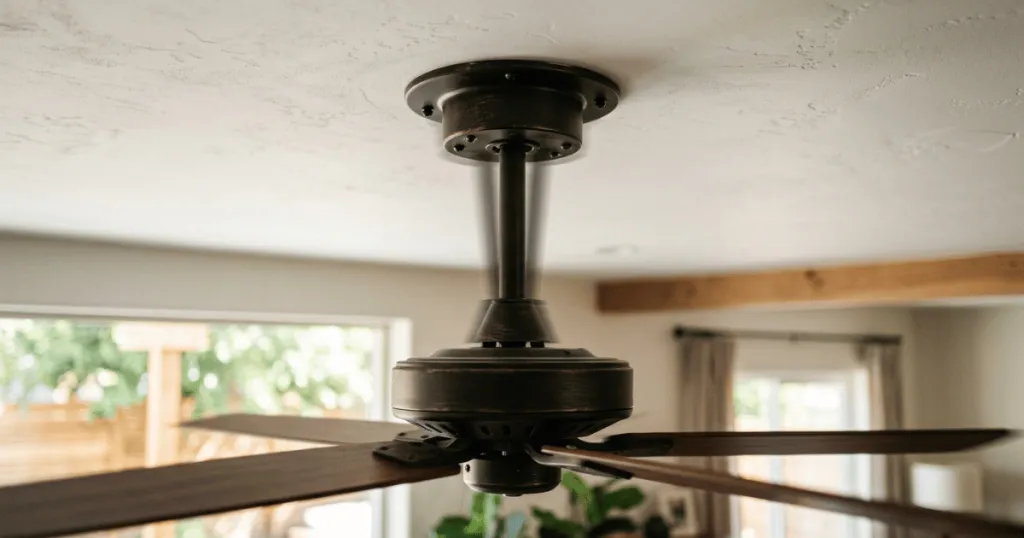
When a ceiling fan wobbles on sloped ceiling surfaces, the troubleshooting process must be systematic. Start by observing the fan while it is turned off. Check if the downrod is perfectly vertical. If it leans toward the lower side of the slope, the canopy is likely binding against the rod. This is a common issue in older homes where the junction box might be recessed or mounted at an awkward angle. You may need to adjust the canopy position or install a spacer to ensure the downrod has full clearance to hang straight.
Another critical area is the connection between the downrod and the motor housing. Many fans use a clevis pin and cotter pin to secure the rod to the motor. If these are loose, the motor will have play, which creates a rhythmic ticking or a visible wobble. Ensure these pins are fully seated and that the set screws are tight. In some cases, the motor housing itself might be slightly off-center relative to the blade arms. Inspect the blade iron attachment points to ensure they are uniform and that no arms are bent from shipping or previous handling.
The Impact of Ceiling Pitch on Hardware Selection
The pitch of your ceiling is the primary variable in your installation success. A 10-degree slope is significantly different from a 30-degree slope. Many homeowners mistakenly believe that a standard canopy can be forced to accommodate a steeper angle. This often results in the canopy hitting the ceiling drywall, which prevents the ball-and-socket joint from seating properly. When the ball cannot rotate freely, the fan cannot find its natural center of gravity. This lack of freedom is a primary cause of persistent wobbling.
When selecting a fan for a sloped ceiling, look for models that explicitly state their maximum slope capacity. If you are retrofitting an existing fan, you must verify if the manufacturer offers an extension kit or a specialized adapter for your specific model. Using a third-party adapter can sometimes lead to compatibility issues with the canopy screw holes or the wiring harness. Always prioritize OEM parts to ensure the electrical connections remain secure and the aesthetic finish matches the rest of the unit.
Why Proper Alignment Matters
A ceiling fan that wobbles is more than just an annoyance. Over time, the constant vibration can loosen the screws holding the blades to the motor housing, which creates a cycle of increasing instability. If left unaddressed, this can lead to the fan blades striking the ceiling or the canopy, causing damage to the finish or even the drywall. Furthermore, the internal bearings of the motor are designed to support a load spinning on a perfectly vertical axis. A persistent wobble places uneven pressure on these bearings, which can significantly shorten the lifespan of the motor.
From a safety perspective, a wobbling fan indicates that the connection between the fan and the building structure is compromised. While it is rare for a fan to fall, the vibration can cause electrical connections to loosen inside the junction box, which is a fire hazard. Prioritizing a stable installation is about protecting your investment and ensuring the long-term safety of the room. If you have checked your hardware and the fan still wobbles, it is worth inspecting the blades for warping or weight inconsistencies, as these can also contribute to the issue regardless of the ceiling angle.
Common Misconceptions About Fan Stability
One of the most common misconceptions is that all wobbling is caused by the blades being out of balance. While blade balance is a factor, it is rarely the primary culprit in a sloped ceiling installation. People often spend hours using balancing kits-attaching small weights to the blades-without realizing that the source of the problem is actually the mounting hardware at the top of the downrod. If your mounting bracket is not level or the canopy is binding, no amount of blade balancing will fix the issue.
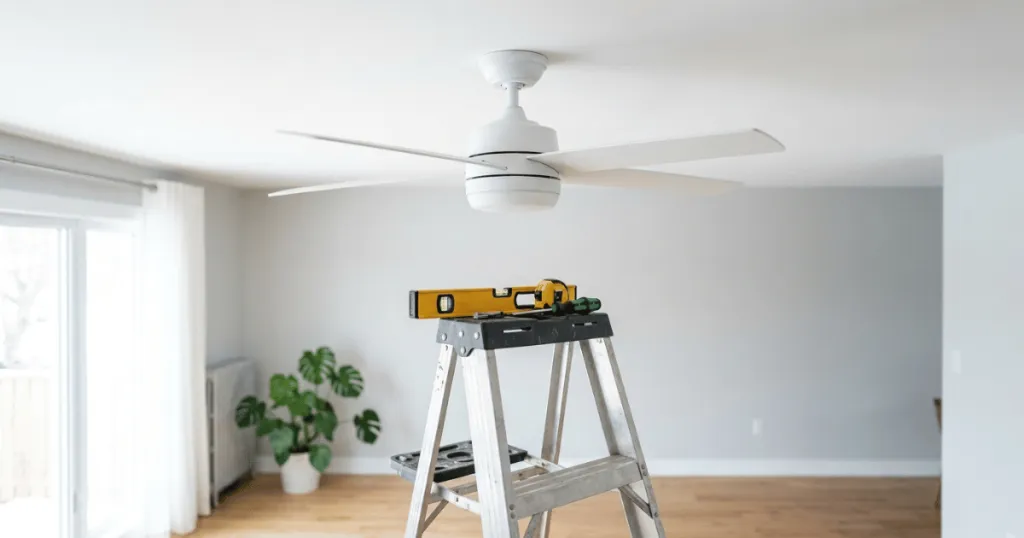
Another frequent mistake is assuming that a fan marked as “sloped ceiling compatible” does not need additional hardware. Always check the manual for the specific degree of slope your ceiling has. If your roof pitch is 35 degrees and the fan is only rated for 30 degrees, you will still experience a wobble. Never assume that the included hardware is sufficient without verifying your ceiling’s pitch against the manufacturer’s technical specifications. Taking a few minutes to measure the angle with a simple protractor or a digital level can save you hours of troubleshooting later.
Preventative Maintenance and Long-Term Care
Once you have successfully stabilized your fan, periodic maintenance is the best way to ensure it stays that way. Dust accumulation on the top of the blades can add significant weight over time, which may exacerbate any minor imbalances. Clean your blades at least twice a year to prevent this buildup. Additionally, check the tightness of the blade screws and the canopy screws during your seasonal cleaning. Temperature fluctuations in a room can cause metal components to expand and contract, which may lead to loose connections over several years.
If you notice the wobble returning, do not immediately reach for a balancing kit. Instead, perform a visual inspection of the mounting bracket and the downrod connection. Often, a simple tightening of the set screw or a slight adjustment of the canopy is all that is needed to restore smooth operation. By understanding the mechanics of your fan and how it interacts with your sloped ceiling, you can maintain a comfortable environment without the frustration of constant adjustments or the need for frequent repairs.
FAQ
How do I measure the slope of my ceiling to see if I need an adapter?
You can measure the slope by using a digital level or a smartphone app on a flat board held against the ceiling. Once you have the degree of the pitch, compare it to the ceiling fan’s manual, which will state the maximum angle the included canopy can handle. If your ceiling exceeds this, you must purchase a sloped ceiling adapter to prevent the fan from wobbling on a sloped ceiling.
Can I use a standard mounting bracket on a 20-degree sloped ceiling?
It depends entirely on the manufacturer’s design. Some modern fans are built with a universal ball-and-socket joint that accommodates up to 30 degrees, while others require a specific adapter for any angle over 10 degrees. Always consult the installation manual for your specific model rather than assuming standard hardware will work.
Is it dangerous to run a ceiling fan that wobbles?
A persistent wobble can lead to loose electrical connections, damaged motor bearings, and accelerated wear on the mounting hardware. While it may not cause the fan to fall immediately, it creates a safety risk over time and will likely damage the fan motor, making it necessary to address the root cause of the wobble as soon as possible.