Quick Answer: Fans feel cool because they accelerate the evaporation of moisture from your skin, a process known as the wind chill effect. They do not lower the actual ambient temperature of the room; instead, they move air to help your body regulate its own temperature more efficiently.
Many homeowners assume that ceiling fans lower the temperature of a room, but the reality is quite different. The reason why fans feel cool is not due to a reduction in ambient heat, but rather a phenomenon known as the wind chill effect. A ceiling fan does not act like an air conditioner; it does not remove heat from the air or change the thermostat reading. Instead, it moves air across your skin, which changes how your body perceives temperature.
Understanding this distinction is vital for effective home climate control. By recognizing that fans are tools for personal comfort rather than room cooling, you can better manage your energy usage and comfort levels throughout the year. This guide explores the mechanics behind this cooling sensation and how you can use it to your advantage in everyday living.
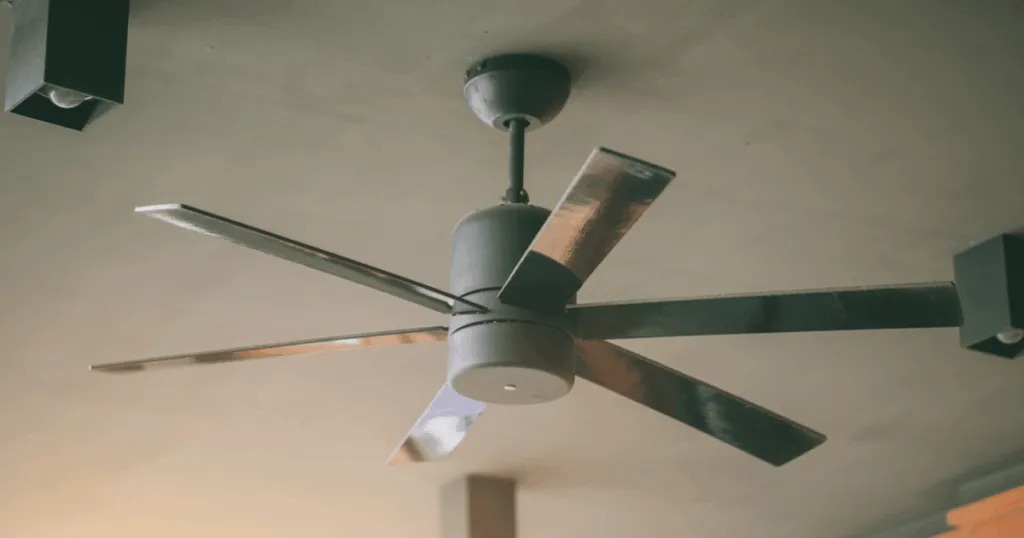
The Mechanics of Evaporative Cooling
The primary reason why fans feel cool is the acceleration of evaporation. Your body naturally regulates its temperature by releasing moisture through your pores. Under normal conditions, this thin layer of perspiration evaporates into the surrounding air, carrying heat away from your skin. When the air in a room is stagnant, a layer of humid, warm air builds up around your body, slowing down this natural cooling process.
When you turn on a ceiling fan, you disrupt that stagnant layer of air. The moving air replaces the warm, humid layer near your skin with drier, cooler air. This constant movement accelerates the rate at which your sweat evaporates. Because evaporation is an endothermic process—meaning it absorbs heat energy—the faster the moisture disappears, the more heat is pulled from your skin, leaving you feeling significantly cooler.
The Role of Air Velocity
Air velocity is the measurement of how fast the air is moving across your body. Higher velocity increases the rate of evaporation, which is why a fan on a high setting feels much more refreshing than one on a low setting. However, there is a point of diminishing returns. Once the air speed is high enough to evaporate moisture as quickly as your body can produce it, increasing the speed further will not make you feel any cooler.
In practice, this means you do not always need the highest setting to achieve comfort. If you are sitting directly under the fan, a medium setting often provides sufficient airflow to maintain that cooling sensation. Excessive speed can sometimes be counterproductive, causing papers to blow around or creating an uncomfortable, drafty feeling that disrupts the room’s atmosphere.
Real-World Context: Room Size and Airflow
To experience the cooling effect, the fan must be sized correctly for the room. A fan that is too small for a large living area will fail to create enough air movement to reach the occupants, rendering the wind chill effect negligible. Conversely, a fan that is too large can create an overwhelming draft that feels more like a gale than a gentle breeze.
Consider your ceiling height as well. In rooms with high ceilings, the fan must be mounted at an appropriate distance from the floor to ensure the airflow reaches the occupants. If the fan is too high, the air will circulate near the ceiling without ever impacting the people below. Using a downrod to bring the fan closer to the living space is a common and effective solution for high-ceiling environments.
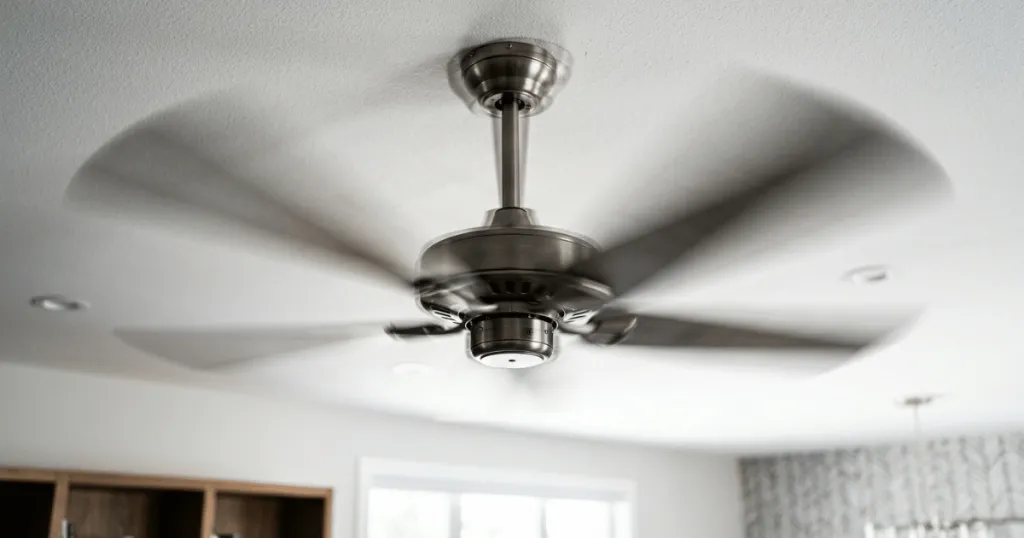
Climate and Humidity Factors
The effectiveness of a fan is heavily dependent on the relative humidity of your home. In very humid environments, the air is already saturated with moisture, which makes it difficult for your sweat to evaporate. In these cases, even a high-powered fan may struggle to provide relief because the air cannot absorb more moisture from your skin. This is why fans feel less effective in damp, muggy climates compared to dry, arid ones.
If you live in a high-humidity area, a ceiling fan is best used as a supplement to air conditioning rather than a replacement. The fan can help circulate the conditioned air, preventing hot spots and allowing you to set your thermostat a few degrees higher without sacrificing comfort. This dual approach is one of the most efficient ways to manage indoor climate during the peak of summer.
Why Understanding This Matters for Homeowners
Recognizing why fans feel cool allows you to stop expecting them to function as cooling appliances. When you stop viewing a fan as a device that lowers the room temperature, you start using it as a device that manages personal comfort. This shift in perspective prevents the common mistake of leaving fans running in empty rooms.
Since fans cool people and not rooms, a fan running in an unoccupied space provides zero benefit. It consumes electricity to move air that no one is feeling, which is an unnecessary waste of energy. The most practical rule of thumb is to turn off the fan when you leave the room. If you are not there to feel the wind chill, the fan is not doing its job.
Optimizing Energy Efficiency
By using the wind chill effect to your advantage, you can reduce the load on your HVAC system. During warmer months, you can raise your thermostat setting by several degrees if you have a ceiling fan running. Because you feel cooler due to the increased evaporation, you remain comfortable even though the actual air temperature in the room is higher. This strategy can lead to noticeable savings on energy costs over time.
However, be mindful of the trade-offs. If the room temperature is extremely high, the air moved by the fan may actually feel like a hot breeze, which can be uncomfortable. In extreme heat, the fan should be used alongside other cooling methods. Always prioritize your physical comfort; if the air feels hot rather than refreshing, it is time to rely on other cooling systems.
Common Misconceptions About Ceiling Fans
One of the most persistent myths is that ceiling fans actually lower the temperature of a room. Many people believe that if they leave a fan on for an hour, the room will be cooler when they return. This is physically impossible because the motor of the fan actually adds a small amount of heat to the room through its operation. The fan does not have a refrigeration cycle; it simply redistributes the air that is already present.
Another misconception is that all fans are equally effective regardless of their blade pitch or motor quality. In reality, the design of the fan—specifically the angle of the blades—determines how much air is moved. A fan with a very flat blade pitch will push less air than one with a steeper pitch, even if the motor speed is the same. When choosing a fan, look for models that are designed to maximize airflow for your specific room size and layout.
Finally, some people fear that fans are inherently noisy or disruptive. While older or poorly maintained fans can be noisy, modern, high-quality fans are designed for silent operation. If you find your fan to be distracting, it may be due to improper installation, loose screws, or an unbalanced blade. Addressing these mechanical issues usually restores the quiet, cooling breeze you expect, proving that comfort does not have to come at the cost of peace and quiet.
Expanding the Scope: Thermal Comfort Beyond the Breeze
Thermal comfort is a complex interaction between the individual and their environment. While the wind chill effect is the primary mechanism for why fans feel cool, other factors like radiant heat and air distribution play significant roles. For example, if your home has large windows that allow direct sunlight to hit your skin, you may feel warm even if the air temperature is moderate. A ceiling fan can help mitigate this by keeping air moving, but it cannot block the radiant heat itself. Understanding these limitations helps you make better decisions about window treatments and insulation alongside your fan usage.
Furthermore, consider the direction of the airflow. In the summer, you want your fan to spin counter-clockwise to push air downward, creating that direct breeze. In the winter, reversing the fan to a clockwise direction at a low speed can help circulate warm air that has risen to the ceiling back down into the living space. While this doesn’t create a cooling wind chill, it improves the overall thermal comfort of the room by reducing temperature stratification, ensuring that the air near the floor is not significantly colder than the air near the ceiling.
Practical Guidance for Daily Operation
To maximize the benefits of your ceiling fan, focus on the relationship between the fan speed and your activity level. When you are active, such as exercising or cleaning, your body produces more heat and moisture, making the cooling effect of a fan more pronounced and desirable. Conversely, when you are resting or sleeping, you may find that a lower speed is more comfortable to prevent the air from feeling too intense or causing dryness in the eyes and throat.
Maintenance also plays a crucial role in how effectively a fan provides that cooling sensation. Dust buildup on the leading edges of the blades can disrupt the aerodynamic efficiency of the fan, causing it to move less air than it is capable of. Regularly cleaning your fan blades ensures that the motor is not working harder than necessary to move the intended volume of air, which maintains both the cooling performance and the energy efficiency of the unit.
Ultimately, the goal is to create a balanced environment. By integrating ceiling fans into your home climate control strategy, you gain a versatile tool that enhances comfort without the high energy costs associated with traditional cooling systems. Remember that the sensation of coolness is subjective; what feels like a refreshing breeze to one person might feel like a draft to another. Experimenting with different speeds and mounting heights will help you find the perfect balance for your specific living space and personal preferences.
FAQ
Should I leave my ceiling fan on when I am not in the room?
No, you should turn it off. Since fans cool people through the wind chill effect rather than cooling the room itself, a fan running in an empty room provides no benefit and wastes electricity.
Can a ceiling fan help if the room is already very hot?
It depends. If the air temperature is extremely high, the fan may just blow hot air at you, which can feel uncomfortable. In extreme heat, fans are most effective when used in conjunction with air conditioning to circulate the cooled air.
Does the number of blades on a fan affect how cool it feels?
The number of blades is largely a matter of style and balance. While it can affect the sound and the ‘choppiness’ of the airflow, the cooling effect is determined more by the motor power, blade pitch, and the speed at which the blades rotate.