The History & Evolution of the Ceiling Fan is a journey from manual labor to sophisticated, energy-efficient engineering. What began as a simple mechanical solution to circulate air in hot climates has transformed into a central component of modern home climate control. Understanding this progression helps homeowners appreciate why specific features, such as blade pitch and motor type, remain critical for daily comfort.
By looking at how these devices moved from steam-powered belts to silent DC motors, you can better evaluate what you need for your own space. Rather than just a decorative fixture, the ceiling fan serves as a functional tool that manages air stratification and thermal comfort throughout the year.
The Origins of Mechanical Airflow
Long before electricity powered our homes, the need for consistent airflow drove early innovation. The earliest precursors to the modern fan were known as punkah fans, which appeared in India and the Middle East centuries ago. These were essentially large, fabric-covered frames suspended from the ceiling and operated by a servant pulling a rope. While primitive, they established the fundamental principle that moving air across skin creates a cooling sensation through evaporation.
In the mid-19th century, the industrial era brought steam power into the mix. Engineers began connecting ceiling-mounted blades to central steam engines via a series of pulleys and belts. This was a significant leap forward, as it removed the need for manual labor. However, these systems were dangerous, loud, and limited to large commercial spaces like factories or high-end hotels. They were rarely found in private homes due to the complexity of the installation and the constant maintenance required for the belt-driven mechanisms.
Also Check: How Ceiling Fans Work?
The Electric Revolution
The true turning point arrived in the 1880s when Philip Diehl, a German immigrant and engineer, mounted a fan blade assembly directly onto the motor of a sewing machine. This invention, the first electric ceiling fan, eliminated the need for complex pulley systems. It allowed for individual control and safer, more reliable operation. This innovation shifted the ceiling fan from a luxury industrial accessory to a viable appliance for the average household.
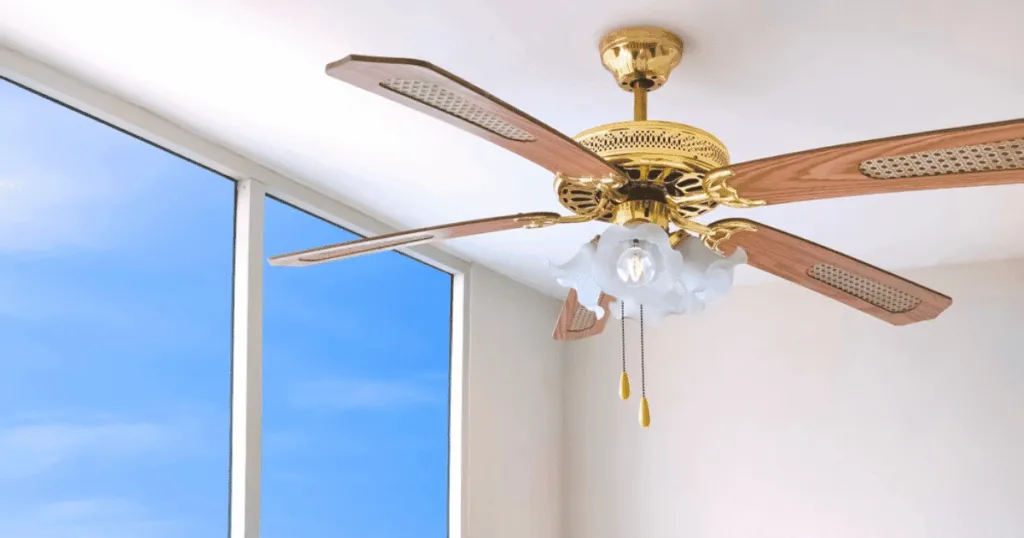
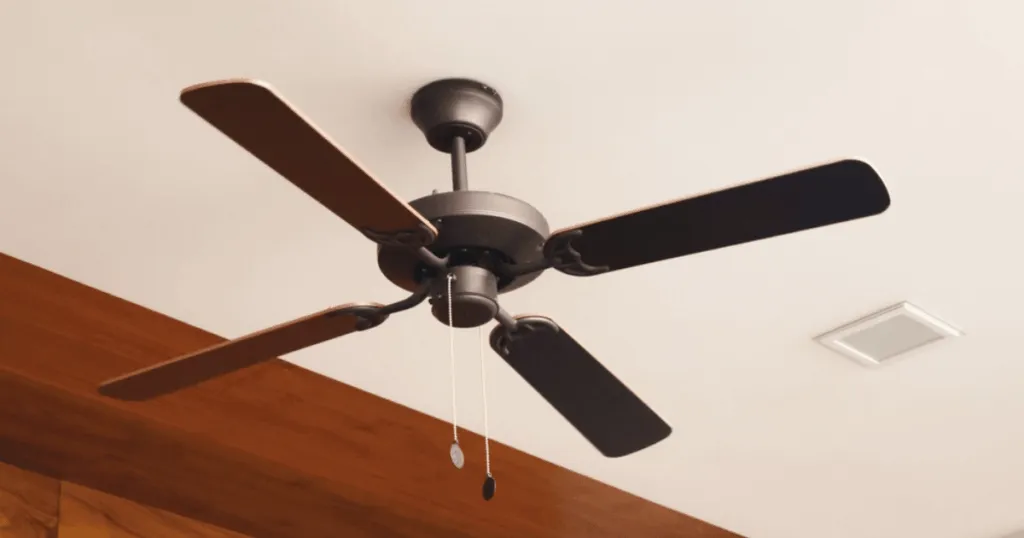
By the early 20th century, the design had stabilized into the classic four-blade configuration that many still recognize today. Manufacturers began experimenting with materials like brass and cast iron, creating durable, heavy-duty units. These early electric fans were expensive, but they offered a level of reliability that made them a staple in the homes of the affluent, eventually becoming more accessible as mass production techniques improved.
Technological Advancements and Design Shifts
As the 20th century progressed, the focus shifted from simple movement to efficiency and aesthetics. The post-war era introduced lighter materials, such as stamped steel and eventually plastics, which allowed for more diverse blade shapes and finishes. This was the period where the ceiling fan transitioned from a purely utilitarian device to a design element that could complement a room’s interior style.
The energy crisis of the 1970s played a pivotal role in the evolution of the ceiling fan. As air conditioning became common but also increasingly expensive to operate, homeowners looked for ways to reduce their reliance on central cooling. This led to a resurgence in popularity for ceiling fans, which were marketed as a way to lower energy bills by allowing thermostats to be set higher while maintaining comfort. This period also saw the widespread adoption of the reversible motor, a feature that allowed fans to push air upward in the winter to destratify heat.
The Shift to Modern Efficiency
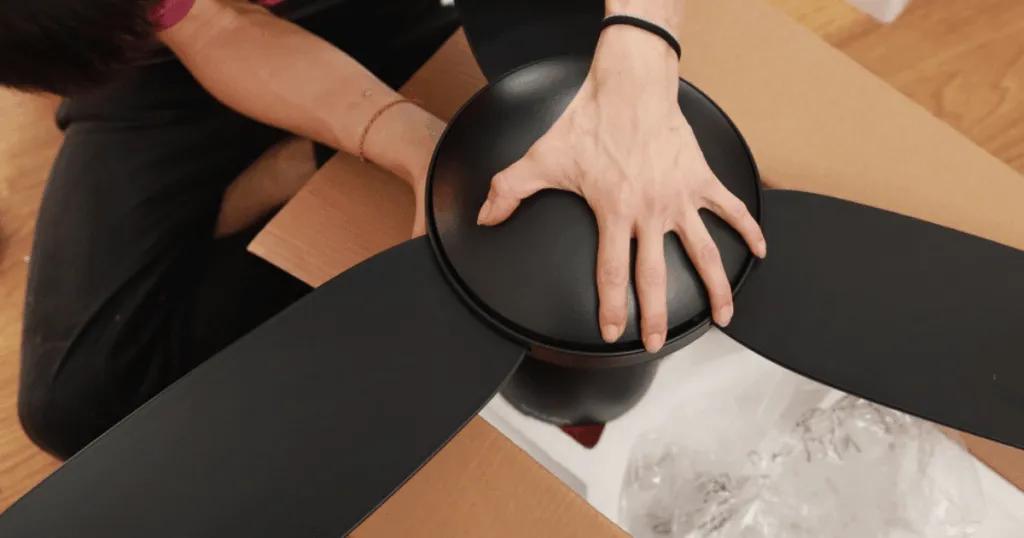
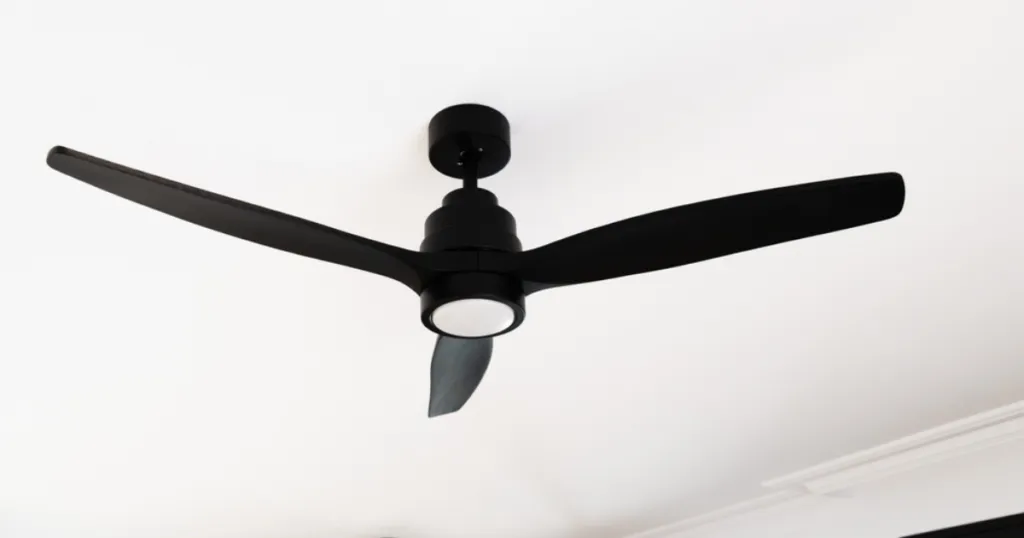
In recent decades, the industry has prioritized motor efficiency and noise reduction. The introduction of Direct Current (DC) motors has been the most significant technical advancement in the last twenty years. Unlike traditional Alternating Current (AC) motors, DC motors are lighter, run cooler, and consume significantly less electricity. They also allow for much finer control over speed and direction, often enabling near-silent operation.
This evolution means that today’s fans are vastly different from those of the past. Modern engineering focuses on blade aerodynamics, ensuring that the shape and pitch of the blade move the maximum amount of air with the least amount of motor strain. For a homeowner today, this translates to better performance in larger rooms and a much quieter experience, which is essential for bedrooms and home offices.
Why This History Matters for Homeowners
Understanding the history & evolution of the ceiling fan helps you make better decisions when selecting a new unit. Many people mistakenly believe that more blades equal more airflow, a misconception rooted in the aesthetic designs of the 1980s. In reality, modern engineering shows that fewer, well-designed blades often move air more efficiently than a high number of decorative, poorly pitched blades.
The shift toward DC motors also highlights the importance of checking technical specifications rather than just relying on brand reputation or visual appeal. When you know that the motor type dictates the energy efficiency and the noise level, you are less likely to choose a fan based solely on its finish. This knowledge allows you to prioritize long-term comfort and energy savings over temporary design trends.
Furthermore, the evolution of mounting systems has made it easier to install fans in rooms with various ceiling heights. Early fans were often fixed to a single height, but modern downrod systems and flush-mount options allow for precise placement. This ensures that the blades are at the optimal distance from the ceiling to maximize airflow, a detail that is often overlooked but critical for effective performance in a real-world living space.
Common Misconceptions About Fan Evolution
One of the most persistent myths is that ceiling fans actually lower the temperature of a room. In reality, fans do not change the ambient temperature; they create a wind-chill effect that makes the occupants feel cooler. This distinction is vital for managing expectations. A fan will not replace an air conditioner in extreme heat, but it will allow you to feel comfortable at a higher thermostat setting, which is the primary goal of modern residential airflow management.
Another common misconception is that older, heavy cast-iron fans are always better than modern, lightweight models. While those vintage fans are undeniably durable, they lack the precision engineering and energy efficiency of modern units. A modern fan with a high-quality DC motor will generally provide better airflow, quieter operation, and lower energy consumption than a restored antique. Unless you are restoring a historic home for aesthetic reasons, the modern option is almost always the more practical choice for daily use.
The Intersection of Aerodynamics and Interior Design
The evolution of the ceiling fan is not merely a story of motor technology; it is also a story of how we perceive air movement in our living spaces. In the mid-20th century, fans were often viewed as utilitarian, industrial-looking objects. As they moved into residential spaces, manufacturers began to prioritize aesthetics, leading to the “decorative fan” era of the 1980s and 90s. During this time, the focus was heavily on ornate finishes, brass accents, and elaborate light kits, sometimes at the expense of aerodynamic performance.
Today, we see a return to form where design and function are balanced. Modern fans often feature minimalist, sleek profiles that hide the motor housing, allowing the blades to be the focal point. This shift is driven by a better understanding of how blade pitch—the angle at which the blade is set—affects air displacement. A blade with a steep pitch can move a large volume of air at a lower RPM, which reduces noise and motor wear. This is a direct result of decades of research into fluid dynamics and residential airflow requirements.
Adapting to Modern Home Architecture
The history of the ceiling fan has also been shaped by changes in home architecture. In the early 20th century, homes often featured high ceilings, which necessitated long downrods to bring the fan into the occupied zone. As residential construction shifted toward lower, standard 8-foot ceilings, the industry responded with the development of low-profile or “hugger” fans. These units are designed to maximize the distance between the blade and the floor, ensuring safety and optimal airflow in rooms where vertical space is limited.
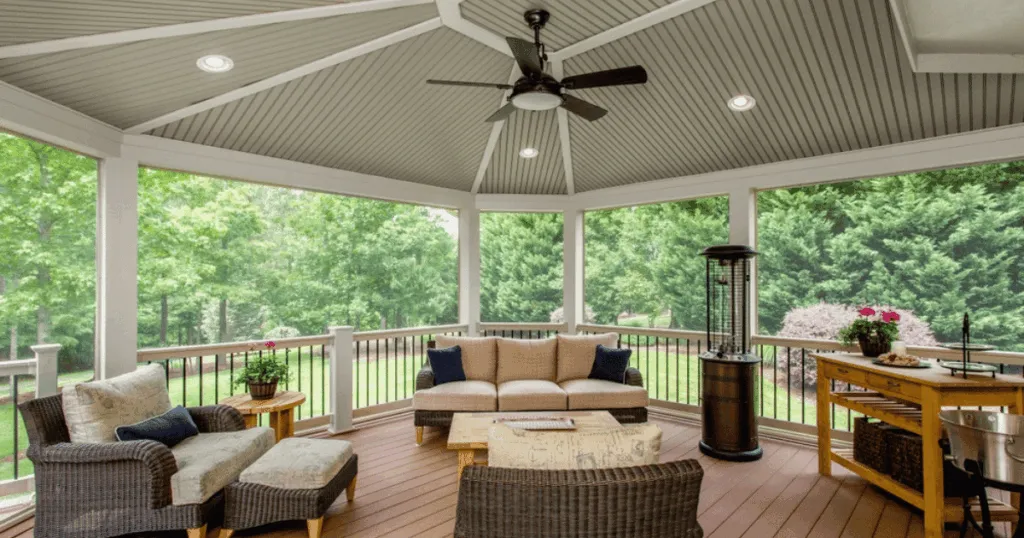
This evolution highlights the importance of matching the fan to the room’s architecture. A fan that is too large for a small room will create an overwhelming wind-chill effect, while a fan that is too small for a large space will fail to circulate air effectively. Understanding that ceiling fans are not one-size-fits-all is a critical takeaway from their history. Modern manufacturers now provide clear guidance on room sizing, which is a significant improvement over the “one-size-fits-all” approach of the past.
The Future of Airflow and Smart Integration
As we look at the trajectory of the ceiling fan, the next phase of its evolution is clearly in smart home integration. We have moved from manual pull-chains to wall-mounted switches, then to remote controls, and now to app-controlled and voice-activated systems. This allows for more sophisticated control over air movement, such as scheduling fans to run during specific times of the day or integrating them with smart thermostats to optimize HVAC efficiency.
This integration is not just about convenience; it is about energy conservation. By automatically adjusting fan speeds based on room occupancy or ambient temperature, modern fans can play a more active role in reducing the overall energy footprint of a home. This represents the latest chapter in the history & evolution of the ceiling fan: the transition from a passive appliance to an intelligent, responsive component of the modern smart home ecosystem.
FAQ
Why did the history & evolution of the ceiling fan move away from belt-driven systems?
Belt-driven systems were dangerous, loud, and required constant maintenance. The invention of the electric motor allowed for self-contained, safer, and more reliable units that could be easily installed in residential rooms.
Are modern ceiling fans more effective than older models?
Yes, modern fans are significantly more effective. Advances in aerodynamics, motor efficiency (specifically DC motors), and blade pitch allow modern fans to move more air with less noise and lower energy consumption than older, heavier models.
Does the number of blades affect the performance of a ceiling fan?
Contrary to popular belief, more blades do not necessarily mean more airflow. In modern engineering, the blade pitch and the motor’s ability to drive those blades are more important. Often, fewer, well-designed blades can be more efficient and quieter than a high count of decorative blades.