Bottom Line: Repair is recommended if the fan is under 10 years old and the issue is a minor electrical component like a capacitor, remote, or light kit. Replace the fan if it is over 10 years old, exhibits motor grinding, has structural instability, or if parts are no longer available from the manufacturer.
Deciding when to repair vs replace your ceiling fan often comes down to a simple calculation of age, safety, and the cost of proprietary parts. Many homeowners assume that any mechanical issue requires a full replacement, but minor electrical gremlins or simple capacitor failures are often easily fixed. Conversely, holding onto an aging fan that wobbles or hums can be a safety risk and a drain on your energy efficiency. The most practical approach is to evaluate the specific component failure against the remaining lifespan of the unit.
If your fan is over ten years old, produces a persistent grinding noise, or has a wobbling housing that cannot be corrected by balancing, replacement is usually the most cost-effective path. If the issue is limited to a non-functioning remote, a flickering light kit, or a slow start, repair is often a viable and affordable solution. By focusing on these specific failure points, you can avoid unnecessary waste while ensuring your home remains comfortable and safe.
A common misconception is that a fan that stops spinning is automatically a motor failure. In reality, the motor is often the most durable part of the assembly. Many fans are retired prematurely because the owner assumes the entire unit is broken when, in fact, a simple, inexpensive electrical component has reached the end of its service life. Distinguishing between a terminal motor failure and a replaceable peripheral component is the most critical step in your decision process.
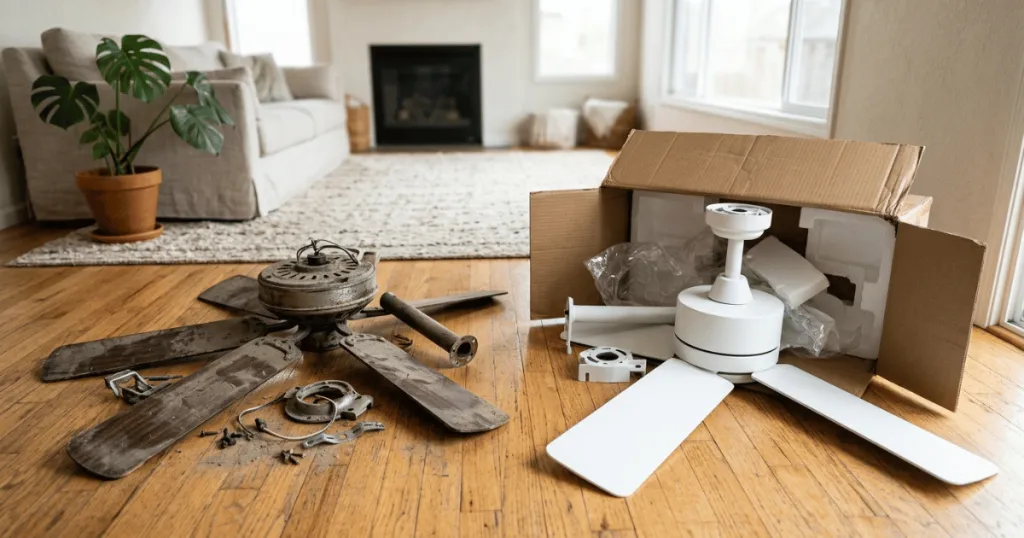
Comparison of Repair and Replacement Factors
Understanding the trade-offs between fixing an existing unit and installing a new one helps prevent wasted effort. The following table outlines the primary decision criteria for most residential ceiling fan scenarios.
| Factor | Repair | Replace |
|---|---|---|
| Age of Fan | Under 7-10 years | Over 10-15 years |
| Primary Issue | Capacitor, remote, light kit | Motor failure, housing, wobble |
| Cost Ratio | Less than 30% of new unit | More than 50% of new unit |
| Efficiency | Maintains current rating | Opportunity for DC motor upgrade |
| Safety | Minor electrical fix | Structural or motor burnout |
Analyzing the Repair Option
Repairing a ceiling fan is a sensible choice when the problem is isolated to a replaceable accessory or a common electrical component. Most fans are built around a motor housing that is designed to last for years, while the parts that connect to it are often the first to fail. If your fan is a high-quality model, such as one with a heavy-duty motor and a solid metal housing, it is almost always worth the effort to troubleshoot the specific failure.
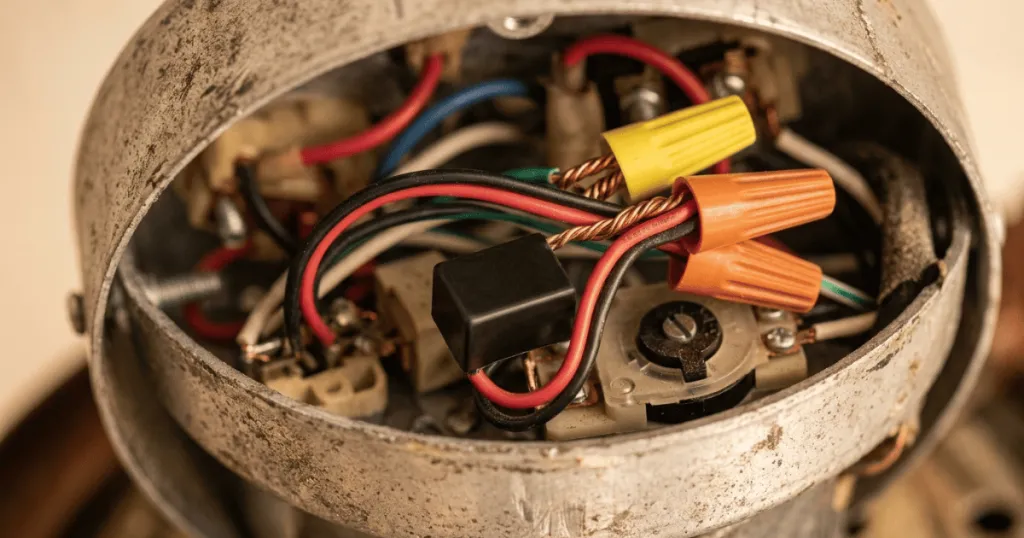
Common repairable issues include faulty capacitors, which are small, inexpensive components that regulate the motor speed. If your fan hums but refuses to spin, or if it only runs on one speed, a capacitor replacement is a standard DIY task that costs very little. Similarly, light kits and wall controls are modular components. If the light fixture stops working but the fan motor is still silent and smooth, replacing the light kit or the receiver unit is far more economical than discarding the entire assembly.
However, repair becomes less attractive when the manufacturer no longer supports the model. If you cannot find a replacement receiver for a proprietary remote system, you may find yourself stuck with a fan that cannot be controlled. Always check for the model number on the top of the motor housing before purchasing parts. If the parts are discontinued or require a custom order that exceeds the cost of a basic, new, reliable fan, it is time to move on.
When performing repairs, always prioritize safety by ensuring the power is completely disconnected at the breaker. For those dealing with older fans, check for signs of wire insulation degradation. If the wiring inside the canopy looks brittle or discolored, this is a sign of heat damage that goes beyond a simple capacitor swap. In such cases, the cost of professional rewiring often exceeds the value of the fan, making replacement the safer, more logical choice.
Analyzing the Replacement Option
Replacement is the necessary path when the core of the fan is compromised or when the technology in your home has evolved beyond the capabilities of your current unit. A failing motor, characterized by a persistent grinding or scraping sound, is a clear sign that the internal bearings have worn down. Once motor bearings fail, the fan is essentially at the end of its life, and attempting to rebuild a consumer-grade motor is rarely practical or safe.
Beyond mechanical failure, replacement allows you to address outdated technology. Older fans often use AC motors, which are less energy-efficient and can be noisier than modern DC motors. If your current fan is a significant source of noise in a bedroom or living space, or if it lacks the airflow performance you need for your climate, upgrading to a modern DC-powered unit can provide a quieter, more efficient experience. These newer models also often feature integrated LED lighting, which eliminates the need for frequent bulb changes.
Safety is the final, non-negotiable factor. If the fan housing shows signs of structural fatigue, such as cracks in the mounting bracket or excessive movement that persists after balancing, the unit should be replaced immediately. A ceiling fan is a heavy, rotating appliance, and any compromise in its structural integrity poses a risk to the room below. In these instances, the cost of a new fan is a small price to pay for peace of mind and home safety.
Furthermore, consider the evolution of mounting systems. Modern fans often feature improved, user-friendly mounting brackets that make installation significantly easier than the systems used twenty years ago. If you find yourself struggling with a complex, outdated mounting system that makes cleaning or maintenance difficult, a replacement provides an opportunity to install a unit that is easier to service in the future. This is a practical consideration for homeowners who prefer to handle their own routine maintenance.
Feature-by-Feature Differences
When comparing these two paths, it is helpful to look at the long-term impact on your home environment. Repairing a fan maintains the status quo, which is ideal if you have a high-end, vintage, or architecturally significant fan that matches your home decor perfectly. You are essentially preserving the aesthetic consistency of the room. However, you are also retaining the existing energy consumption levels and the limitations of the original design.
Replacement offers a clean slate. It allows you to optimize for current room needs, such as adding a longer downrod for a vaulted ceiling or selecting a fan with a higher CFM rating for better air circulation. One common mistake is replacing a fan with an identical model just because it is familiar. Instead, use the replacement process to evaluate if your current fan was actually the right size or style for the room. A different blade span or a more aerodynamic blade pitch can significantly improve comfort in a way that a repair never could.
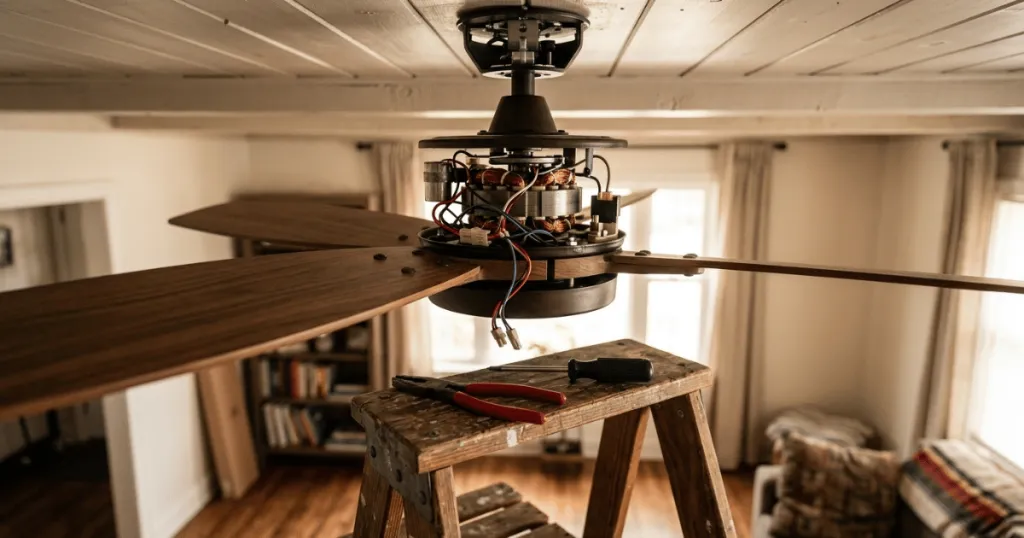
Another key difference is the installation effort. Repairing a fan often involves working on a ladder with the unit still mounted, which can be physically demanding and requires careful attention to wiring. Replacing a fan requires removing the old unit and installing a new mounting bracket, which is a more involved process but ensures that all connections are fresh and secure. If you are not comfortable with electrical work, both options may require professional help, but the labor cost for a full replacement is often predictable and straightforward compared to the diagnostic time required for complex repairs.
Consider also the environmental impact of your choice. While repairing keeps a unit out of the landfill, an extremely inefficient AC motor that runs for several hours a day may have a higher environmental footprint over time due to increased electricity demand. If your goal is to reduce your home energy footprint, replacing an inefficient, older fan with an Energy Star certified DC model is a proactive step toward long-term sustainability.
Best Use Cases for Repair vs Replacement
Repair is best suited for fans that are less than a decade old and have a specific, identifiable problem. If you have a high-quality fan from a reputable manufacturer, the cost of a new capacitor or a replacement remote receiver is a fraction of the price of a new unit. This is the most sustainable choice and keeps functional equipment out of the landfill. It is the right move for the DIY-minded homeowner who enjoys troubleshooting and wants to extend the life of a reliable, well-made appliance.
Replacement is the superior choice for fans that are showing signs of motor wear, structural instability, or are simply no longer meeting your airflow needs. If you find yourself constantly adjusting the speed or dealing with a persistent wobble that no balancing kit can fix, you are likely wasting time on a lost cause. Replacement is also the better path if your current fan is an entry-level model that was inexpensive to begin with; these units are rarely designed to be repaired and often lack the parts availability to make it feasible.
Consider your long-term goals for the room. If you are planning a renovation or want to improve the energy efficiency of your home, replacing an old, inefficient fan with a modern DC model is a high-value upgrade. The reduction in noise and the improvement in air movement will be immediately noticeable, providing a better return on your investment than a repair that leaves you with the same outdated performance.
For edge cases, such as fans installed in high-ceiling areas where access is difficult, the cost of labor for a repair can quickly approach the cost of a new unit. In these scenarios, it is almost always better to replace the fan with a high-quality, reliable model that is unlikely to require service for many years. This minimizes the number of times you need to rent specialized equipment or hire a professional to reach the ceiling, effectively paying for the replacement through reduced future maintenance labor.
Which One Should You Choose?
Choosing between repair and replacement requires an honest assessment of the fan’s current state and your own comfort level with maintenance. If the fan is a high-quality unit and the issue is a simple electrical component like a capacitor, remote, or light kit, we generally recommend repair. These parts are inexpensive and replacing them can add years of life to a fan that is otherwise performing perfectly well. It is a practical way to maintain the character of your home while keeping costs low.
However, if the fan is making grinding noises, has a wobbly housing that suggests structural fatigue, or is an older, low-end model that is struggling to move air, replacement is the safer and more logical choice. Professionals often prioritize safety and reliability over the potential savings of a repair. If you are spending more than half the cost of a new, quality fan on parts and labor, you are likely over-investing in an aging asset. The risk of the motor failing shortly after a repair is high, which would leave you back at square one.
Ultimately, the decision should be driven by the motor’s health and the availability of parts. If you can identify the specific, minor component that has failed and source a replacement, go ahead and repair it. If the motor itself is the problem, or if you cannot find the necessary parts, do not hesitate to replace the unit. A new fan provides a fresh start, better energy efficiency, and the security of a manufacturer warranty, which is often the most sensible path for long-term home comfort.
Remember that a ceiling fan is not just a decorative piece but a functional appliance that works hard to circulate air and regulate temperature. When the cost of keeping that appliance running exceeds the value of its performance, the most practical decision is to upgrade. By evaluating your fan against these criteria, you ensure that your home remains both comfortable and safe for years to come.
FAQ
How can I tell if my ceiling fan motor is actually failing?
A failing motor usually produces a persistent grinding, scraping, or humming sound that persists even when the blades are removed. If the motor feels excessively hot to the touch or if the fan struggles to reach full speed despite a new capacitor, the internal bearings or windings are likely at the end of their life.
Is it dangerous to keep using a wobbly ceiling fan?
Yes, a persistent wobble can lead to structural fatigue in the mounting bracket and the ceiling junction box. Over time, this stress can cause the fan to loosen from its mount, creating a significant safety hazard. If balancing the blades does not resolve the issue, the fan should be replaced.
Are all ceiling fan parts universal?
No, most ceiling fan components like remote receivers, light kits, and mounting brackets are proprietary to the specific brand and model. Always check the model number on the motor housing before attempting to order replacement parts to ensure compatibility.
When to Repair vs Replace Your Ceiling Fan if it is just noisy?
If the noise is a clicking or ticking sound, it is often a loose screw or a misaligned blade that can be repaired. If the noise is a deep mechanical grind or a loud electrical buzz from the motor housing, it is usually an internal failure that necessitates replacement.