Affiliate Disclosure: As an Amazon Associate, I earn from qualifying purchases.
When homeowners begin researching high-performance cooling solutions, Big Ass Fans often emerges as a distinct category of interest. Originally known for massive industrial air movement, the brand has transitioned into the residential market with a focus on engineering-heavy designs and high-volume, low-speed airflow. This brand tends to suit homeowners who prioritize functional efficiency, minimalist or industrial aesthetics, and long-term durability over decorative or traditional ceiling fan styles.
Understanding whether this brand fits your specific environment requires looking past the marketing and evaluating how their signature airflow technology interacts with standard residential room dimensions and ceiling heights. While their reputation for moving large volumes of air is well-established, the practical application in a living room, bedroom, or covered patio involves specific trade-offs regarding noise, installation requirements, and visual footprint.
Brand Reputation and Market Positioning
Big Ass Fans occupies a unique space in the residential market. They are rarely categorized alongside standard hardware store brands because their origins are rooted in commercial and agricultural ventilation. This heritage influences their design philosophy, which emphasizes structural integrity and motor efficiency above ornate detailing or seasonal trends. For many, the brand represents a premium tier where the primary value proposition is the quality of air movement rather than the fan acting as a lighting fixture or decorative centerpiece.
The company maintains a reputation for being a high-end, engineering-focused manufacturer. Their positioning is not aimed at the budget-conscious consumer looking for a quick, inexpensive replacement. Instead, they target homeowners who are designing or renovating spaces where airflow is a critical component of comfort. This includes large open-concept great rooms, vaulted ceilings, and outdoor living areas where standard fans often fail to provide adequate coverage.
Because of this positioning, the brand is often viewed as a serious investment. Their market presence is built on the premise that a fan should be a long-term appliance, not a disposable home accessory. This creates a clear divide in the market: those who view fans primarily as decor often find the brand too utilitarian, while those who prioritize technical performance and build quality find the brand’s approach to be exactly what they need for effective climate control.
Product Line and Category Range
The residential product line from Big Ass Fans is intentionally curated rather than sprawling. Unlike manufacturers that offer dozens of variations in blade shape, finish, and light kit combinations, this brand focuses on a few core designs that can be adapted to different environments. Their residential offerings generally fall into categories defined by size, mounting capability, and environmental rating, such as indoor-only models versus those rated for damp or wet locations.
Most of their residential models utilize high-efficiency DC motors, which are standard for modern, high-performance fans. These motors allow for precise speed control and quieter operation compared to older AC motor designs. The product range typically includes options that range from compact sizes suitable for standard bedrooms to larger diameter models designed for expansive living spaces. A key differentiator is the inclusion of smart home integration, which has become a standard feature across their newer lines.
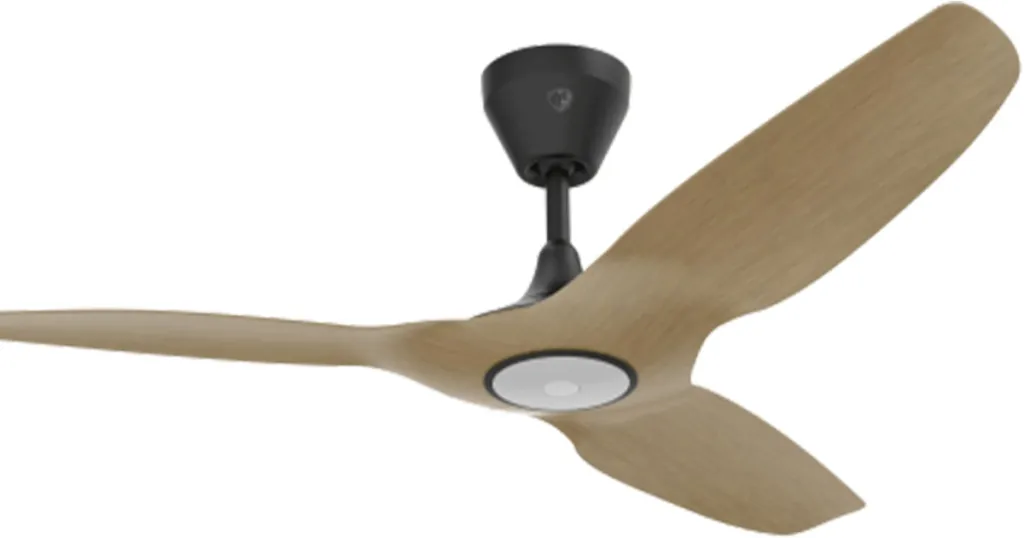
The aesthetic range is narrow but consistent. You will generally find finishes that lean toward matte black, brushed aluminum, or wood-tone accents. This intentional limitation helps the brand maintain a cohesive look that fits well in modern, transitional, or industrial-style homes. By focusing on a smaller number of high-quality designs, the company ensures that their inventory remains focused on performance rather than trying to capture every possible interior design trend.
Typical Quality Tier and Build Reputation
In terms of build quality, Big Ass Fans is widely regarded as a top-tier manufacturer. The construction of their fans often involves aircraft-grade aluminum or high-quality polymers, chosen for their strength-to-weight ratio and resistance to warping. This focus on materials is a direct carry-over from their industrial background, where equipment is expected to run for extended periods without mechanical failure.
The motor housing and blade attachments are engineered to minimize wobble and vibration, which are common complaints with lower-tier fans. When you handle the components of one of these fans, the weight and finish quality usually signal a level of durability that is absent in entry-level models. This build quality is not just for show; it serves a functional purpose in maintaining consistent airflow and reducing the noise profile of the fan during high-speed operation.
Another aspect of their quality reputation is the attention to balance. A fan that is properly balanced from the factory requires less maintenance and operates more smoothly over its lifespan. While any fan can experience issues if installed improperly, the structural design of these units tends to be more forgiving and robust. This makes them a frequent choice for professional installers who prefer working with equipment that arrives with high manufacturing tolerances and clear, logical assembly instructions.
Common Strengths and Weaknesses
The primary strength of Big Ass Fans is their ability to move large volumes of air at low speeds. This is the hallmark of their engineering, and it provides a cooling sensation that is distinct from the choppy, high-velocity air produced by smaller, traditional blades. In a large room, this creates a gentle but pervasive breeze that can significantly improve comfort without the noise or turbulence often associated with running a fan at its maximum setting.
Smart technology integration is another significant strength. Their control systems are generally well-integrated, allowing for automated schedules, voice control, and seamless connectivity with smart home ecosystems. For a homeowner who wants to automate their indoor climate, these features are often more reliable and intuitive than the universal remote kits found with generic fan brands.
However, there are notable weaknesses to consider. The most common critique is the visual footprint. Because these fans are designed for performance, they can look oversized or out of place in smaller rooms with low ceilings. If you are working with an eight-foot ceiling, even their smaller models can feel visually heavy. Additionally, the price point is a barrier for many. Because they are positioned as a premium, long-term appliance, the initial cost is significantly higher than what a typical homeowner might expect to pay for a ceiling fan.
Another potential weakness is the limited range of aesthetic variety. If your home features a traditional, farmhouse, or ornate Victorian style, you may find it difficult to integrate a Big Ass Fans model without it clashing with your decor. Their design language is strictly modern and minimalist, which is a strength for some but a limitation for others. Finally, while the fans are quiet, they are not silent; at high speeds, the sheer volume of air being moved creates a sound that some users may find distracting in a quiet bedroom environment.
Warranty, Support, and Ownership Considerations
Ownership of a Big Ass Fans product generally comes with a high level of support. The company is known for standing behind their products, and their warranty terms are typically more comprehensive than those of mass-market manufacturers. This is a critical factor for homeowners who view their fan as a long-term investment. If a motor or control board fails, the likelihood of receiving support or a replacement part is much higher than with a generic brand that may have discontinued the model or gone out of business.
When considering the purchase, it is important to factor in the installation process. These fans are often heavier and more complex than standard residential models. While a DIY-minded homeowner can certainly install one, the weight and the precision required for the mounting hardware mean that a second pair of hands is almost always necessary. In some cases, professional installation is recommended to ensure that the fan is properly secured to the ceiling joists, especially if you are installing a larger diameter model.
Maintenance is generally straightforward, consisting mostly of periodic cleaning of the blades and checking the mounting hardware for tightness. Because the motors are sealed and high-quality, they do not require the oiling or internal maintenance that older fan designs once needed. This makes them a low-maintenance option once they are correctly installed, which aligns with the needs of busy homeowners who want reliable performance without constant tinkering.
Who This Brand Is and Is Not a Good Fit For
Big Ass Fans is an excellent fit for the homeowner who values performance, longevity, and modern design. If you have a large open-concept living space, a high-ceilinged great room, or a covered patio that needs consistent, quiet airflow, this brand is likely a top contender. They are also ideal for those who are building a smart home and want a fan that integrates seamlessly into their existing automation setup. If you are willing to pay for quality and appreciate a minimalist, industrial-inspired aesthetic, you will likely be satisfied with the performance and build of these fans.
Conversely, this brand is not a good fit for everyone. If you are looking for a decorative statement piece to match a traditional, cottage, or highly ornate interior design, you will likely find their catalog too limited. Similarly, if your primary goal is to find the most affordable fan for a small bedroom or a guest room, the cost-to-value ratio may not align with your needs. You can find perfectly functional fans for much less, and the extra cost of this brand may not be justified for a room where you do not spend the majority of your time.
Finally, if you are strictly limited by ceiling height or room size, you should proceed with caution. A fan that is too large for a space can create a tunnel effect or simply overwhelm the room visually. Always measure your ceiling height and the dimensions of the room before making a decision. If you find that their smallest model is still too large for your specific room, it is better to look at other brands that specialize in compact, high-quality residential fans rather than forcing a fit that will not look or feel right in your home.
FAQ
Are Big Ass Fans too loud for bedroom use?
While they are engineered for efficiency, they are not silent. At lower speeds, they are very quiet, but at higher speeds, the movement of a large volume of air creates a noticeable sound. Most users find the sound to be a consistent, non-intrusive white noise, but light sleepers may prefer to keep them on lower settings at night.
Do I need professional installation for these fans?
While many DIY-minded homeowners can install them, these fans are often heavier and more complex than standard models. Due to the weight and the importance of secure mounting for high-performance motors, having a second person to assist is highly recommended, and professional installation is a safe choice if you are not comfortable working with heavy electrical fixtures.
Can these fans be used in outdoor spaces?
Yes, the brand offers specific models rated for damp or wet locations. It is essential to check the specific rating of the model you are considering to ensure it is designed to withstand the humidity and moisture levels of your outdoor environment.